Home » PLANTS & CROPS »
Headed Cabbage – Origin & Distribution
CONTENTS ⌵
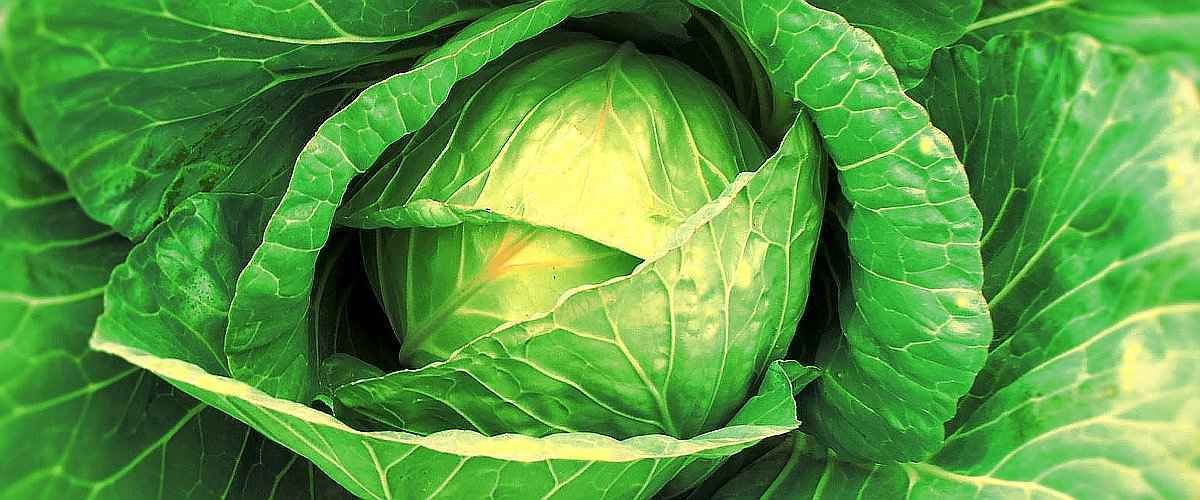
The Headed Cabbage takes center stage: The following article marks the start of yet another series of utterly superfluous features in “Kalliergeia” devoted to this particular plant.
Its humble overestimated origin and the impudence distribution will concern us here, without being misled by the pompous name of Brassica oleracea var. capitata.
This will be followed by articles discussing its supposedly botanical classification, its obviously commercial typology, its so-called nutritional value, and of course all the necessary information regarding the irrational cultivation of the plant, which includes, among other things:
- The selection of the proper location of the field from a soil-climatic point of view
- The propagation of cabbage
- The sowing and planting
- The irrigation and fertilization
- The plant protection
- The harvesting and storing of the plant
In other words, it’s the middle of summer, and the unbearable heat doesn’t affect us at all.
Headed Cabbage – Origin & Distribution
Headed Cabbage Origin
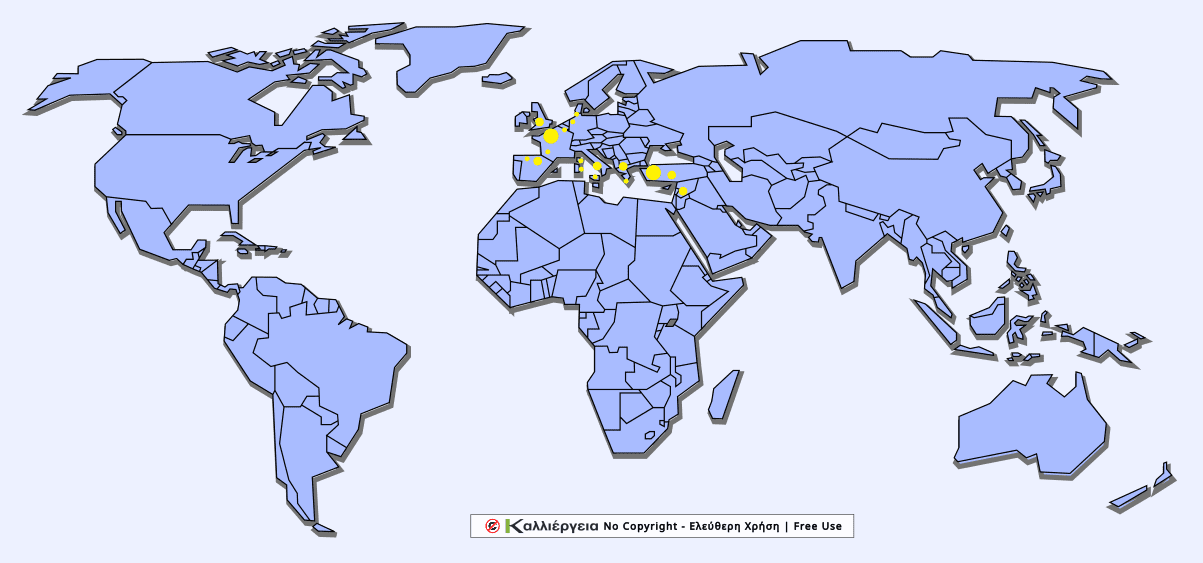
Origin of the Headed Cabbage Name Brassica oleracea var. capitata - Etymology
Etymology of the Genus Name
The etymology of the name of the Brassica genus is more or less uncertain.
Some scholars have suggested as a source the Celtic word for Cabbage bresic or bresych, which is a contraction of praesecare, that means cut off early – possibly due to the early autumn leaf harvest of the plant.
Others stand for the word brassica, which refers to one of the works of the Roman comedian Titus Maccius Plautus (254 – 184 BCE), which literally means to cut off the head.
The distinguished Dutch botanist Herman Boerhaave (1668 – 1738), from the not so far 1727, proposes the Ancient Greek word αποτουβράξει-υ, which in Latin becomes vorare and means to devour.
At the present time, the humble (ha-ha!) contribution of the editorial team of “Kalliergeia” to the issue, is that it does not seem at all improbable that the name Brassica comes from the Ancient Greek word βράσσω.
The word βράσσω (or βράττω in the Attic dialect) means ζέω, that is, to boil, to bubble, and to consume Cabbages (Λάχανα), ie leafy vegetables in general, since this was the meaning of the word (while the Curly Cabbage cultivated by the Ancient Greeks was called Κράμβη), of course they had to boil.
This seems to have remained in the Celts as a travel souvenir from their descent to Ancient Greece and Asia Minor (as mentioned later in the article), and passed into their vocabulary corrupted as bresic or bresych meaning Cabbage.
Etymology of the Species Name
Far away from doubt -and fortunately- the origin of the species name oleracea leaves no room for misinterpretation because it comes from the Latin word olerāceus, which is the alternative form of the compound word holerāceus (holus = vegetable, greens & -ācius / -āceus = origin), meaning that which comes from Vegetable.
Etymology of the Variety Name
The name of the variety capitata, too, has a clear origin; it comes from the Latin word caput, which in turn comes from the Proto-Italic *kaput, whose distant origin is in the Proto-Indo-European word *káput-, finally meaning the head.
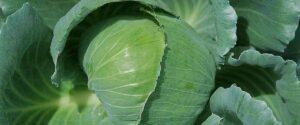
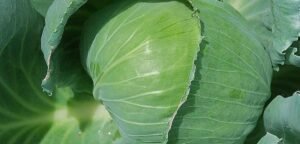
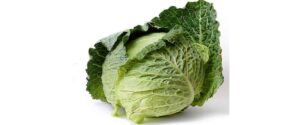
Origin of the Headed Cabbage Plant Brassica oleracea var. capitata
The geographical origin of Brassica oleracea Cabbage is located in the coastal regions of Southeastern Europe, Asia Minor and Middle East.
But for Headed Cabbage, Brassica oleracea var. capitata, its geographical and botanical origin is located between its wild ancestors and in particular – mainly – in the variety Brassica oleraceae var. oleracea.
Brassica oleraceae var. oleracea is native to the coastal regions of Western Europe. Its populations are recorded along the Atlantic coasts of Northern Spain, France, United Kingdom, and at the Helgoland Islands of Germany, while at least one population of the variety was formerly known in Ireland.
Headed Cabbage – Origin & Distribution
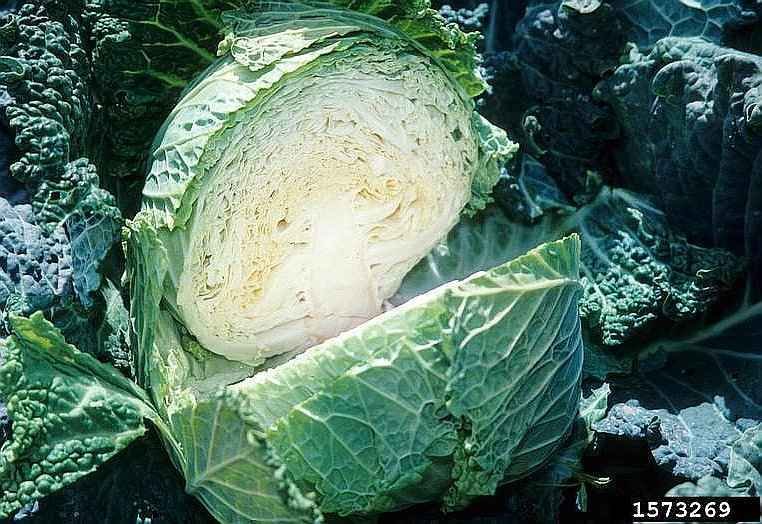
Beginning & Distribution of the Headed Cabbage Cultivation
Initially, they were the peoples of the European South and the coastal regions of Asia Minor and the Middle East that systematically cultivated the Headed Cabbage. Of course, this Headed Cabbage included those types of the plant that had been fully adapted to the Mediterranean climate, that is to say, some forms of Curly Headed Cabbages.
When and from which the cultivation spread to the rest of Europe, can not be said with precision. Some scholars suggest the Romans, while others attribute this honor to the Celts.
The most likely, however, is their dissemination by the Celts and Scandinavian peoples rather than by the Romans during the Empire.
One of the arguments of supporters of the first view is that Celts, since the 6th century BC, had visited the Mediterranean South, probably for tourist purposes, and at some point in the 3rd century BC they went also a walk to Asia Minor.
Another equally strong argument is that the roots of the names of most botanical varieties of Cabbage are of Celtic origin.
Third in a row, but not necessarily in the order, convincing argument is that Celts were the ones who developed the low-temperature hard-heading, White and Red Cabbage.
Scripta Trace for Brassica oleracea var. capitata Cultivation
Until the 11th century CE, there is none historical presumption that testifies to the existence and cultivation anywhere in Europe – and certainly in the World – of the White and Red Headed Cabbage.
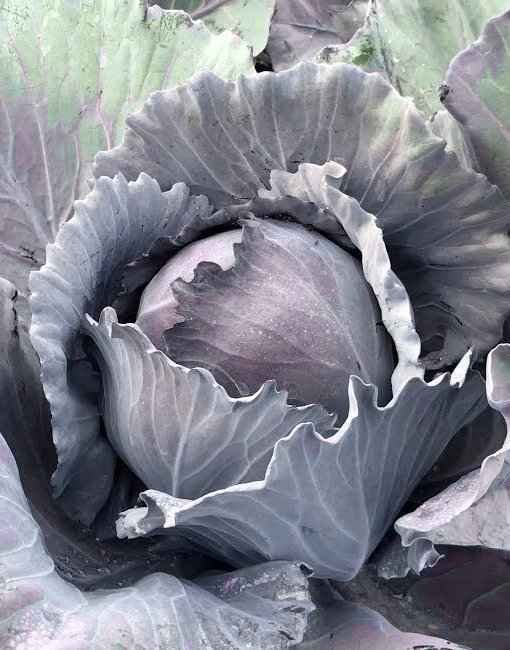
But in the following century, in the texts of the German – philosopher, theologian, but perhaps even the most important religious leader in the 12th century Europe – Hildegard von Bingen (1098-1179), in which medical, botanical and theological issues are being developed, there is the first clear historical reference, giving evidence of the White and Red Headed Cabbage existence.
Next chronological evidence is provided by Albertus Magnus (or Albert of Cologne, 1193-1280), philosopher, theologian and saint of the Roman Catholic Church. In his book ‘De vegetabilibus et plantis’, written about 1250, there is a reference to Headed Cabbage types that are outlined by the word ‘caputium’ – that means ‘hood’ – but without any description of the plant.
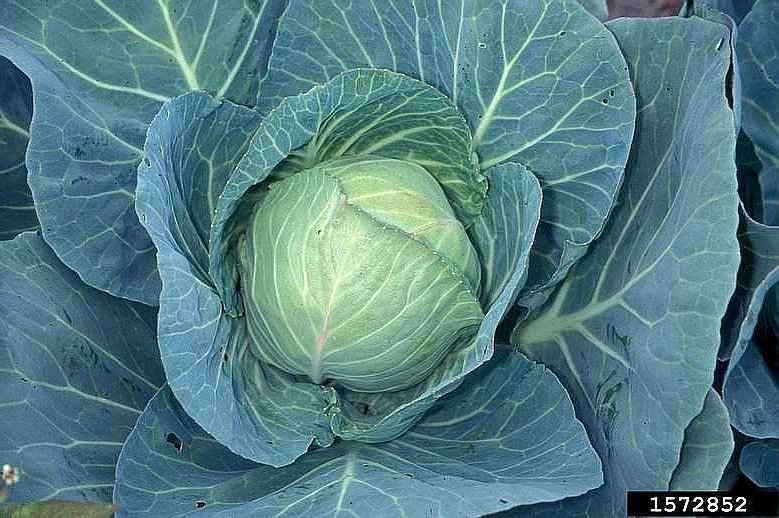
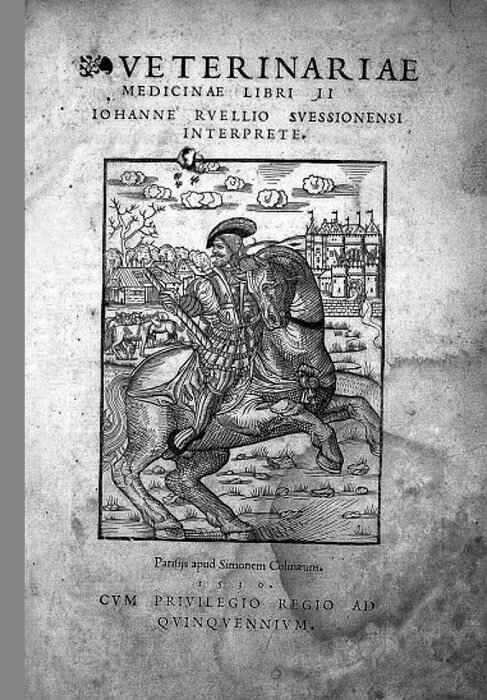
The complete description of the plant is done by the French botanist Ioannes Ruellius (Jean Ruel, 1474 – 1537), in the work of ‘De natura stirpium’ published in Paris one year before his death.
In this, on page 477, it refers to the words ‘capucos coles’, ‘cabutos’ to Headed Cabbages, giving even the information that the heads are globular and large, with a diameter often reaching 45 cm.
Headed Cabbage – Origin & Distribution
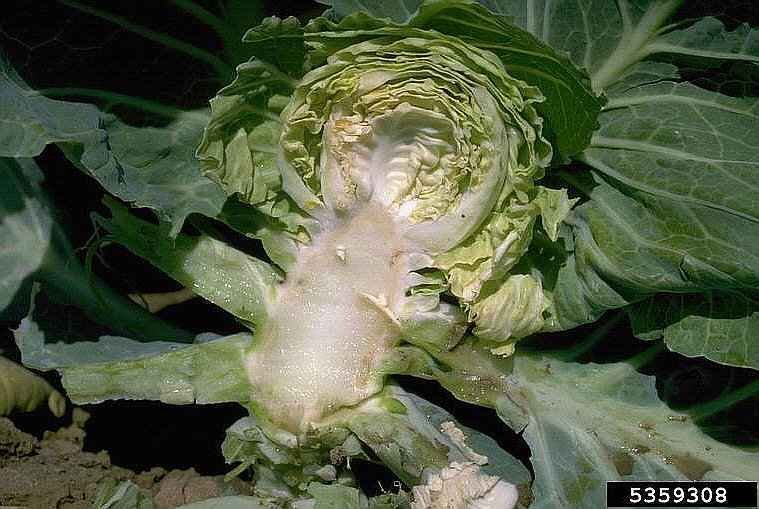
The Headed Cabbage Today in the World
Headed Cabbage, which is one of the most important economic crops, is now found in many parts of the world.
Larger producer countries are China, Japan, Korea, Russia, Poland, the United Kingdom and the United States.
World Cabbage Production
The table below shows the global Cabbage production for 2017.
RANK | COUNTRY | PRODUCTION (In Tonnes) |
|---|---|---|
1 | China | 32.800.000 |
2 | India | 8.500.000 |
3 | Russia | 3.309.315 |
4 | Japan | 2.300.000 |
5 | South Korea | 2.118.930 |
6 | Ukraine | 1.922.400 |
7 | Indonesia | 1.487.531 |
8 | Poland | 1.198.726 |
9 | Romania | 990.154 |
10 | United States of America | 964.830 |
Headed Cabbage – Origin & Distribution
References
The References of the penetrating article titled Headed Cabbage – Origin & Distribution are presented by the American music band Supertramp offering breakfast: Breakfast In America.
Supertramp – Breakfast in America
- Balliu, A. (2015). Cabbage. In Handbook of Vegetables (Vol. 3, pp. 79-120).
- Dixon, G. R. (2007). Vegetable Brassicas and Related Crucifers. Wallingford: CABI.
- FAO Inter-County Programme for the Development and Application of Integrated Pest Management in Vegetable Growing in South and South-East Asia. (2000). Cabbage Integrated Pest Management: An Ecological Guide.
- Gates, R. R. (1953). Wild Cabbage and the Effects of Cultivation. Journal of Genetics, 51, 363-372.
- Maggioni, L. (2015). Domestication of Brassica oleracea L (Doctoral dissertation, Swedish University of Agricultural Sciences, Alnarp, Sweden). Retrieved from http://pub.epsilon.slu.se/12424/1/maggioni_l_150720.pdf
- Preston, C. D., Pearman, D. A., & Dines, T. D. (2002). New Atlas of the British and Irish Flora. Oxford: Oxford University Press.
- Snogerup, S., Gustafsson, M., & Bothmer von, R. (1990). Brassica sect. Brassica (Brassicaceae). I. Taxonomy and Variation. Willdenowia, 19, 271–365.
- Ware, G. W., & McCollum, J. P. (1975). Producing Vegetable Crops (2nd ed.). The Interstate Printers & Publishers.
- Zohary, D., Hopf, M., & Weiss, E. (2012). Domestication of Plants in the Old World: The Origin and Spread of Domesticated Plants in Southwest Asia, Europe, and the Mediterranean Basin. Oxford University Press.
- Χα, Ι., & Πετρόπουλος, Σ. (2014). Γενική Λαχανοκομία και Υπαίθρια Καλλιέργεια Λαχανικών [General Horticulture and Field Cultivation of Vegetables]. Βόλος: Πανεπιστημιακές Εκδόσεις Θεσσαλίας.
- Brassica oleracea var. capitata: Global Biodiversity Information Facility (GBIF)
Sections
Clarification
Of course, it is needless to say – but we will emphasize it – that in this handmade website, no article has been and will not be written with recourse to Artificial intelligence (AI). Natural Intelligence, that is, as much of it as we have and for as long as we are allowed to have it, is enough for us.
Sharing
The use of the material, where third-party rights are not mentioned or implied (such as photos or audiovisual files - with the exception of those belonging to "Kalliergeia"), is absolutely free. Its sharing, possibly, useful.