Home » PLANTS & GARDEN »
Crapemyrtle Planting in Garden, Pots & Containers
CONTENTS ⌵
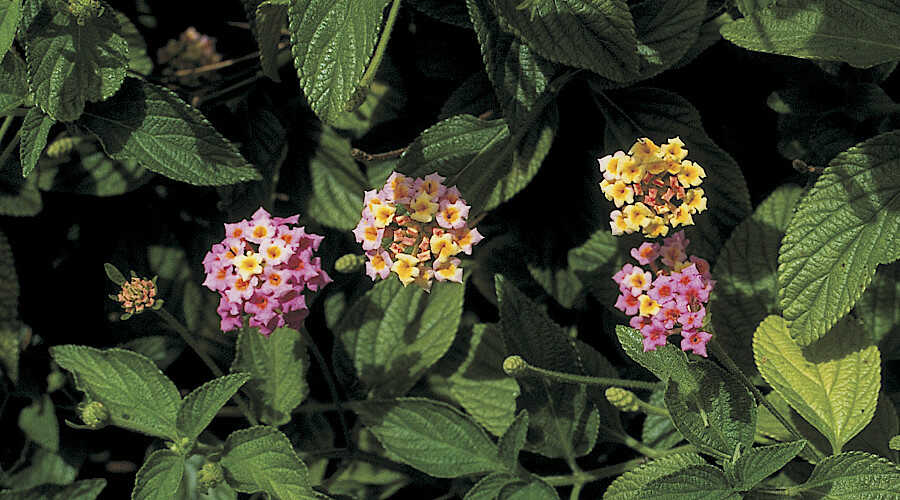
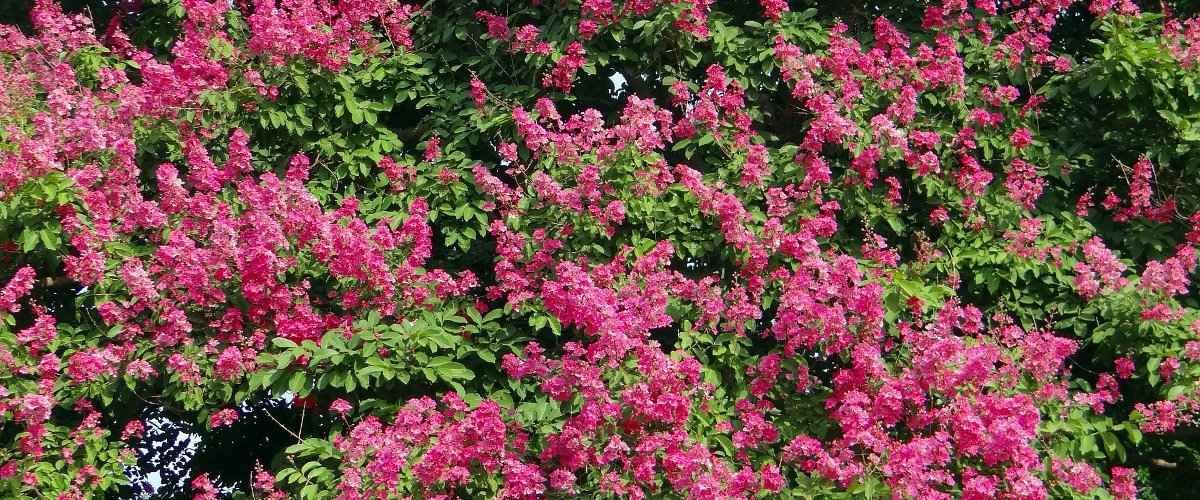
The Crapemyrtle (Lagerstroemia indica) has over a century of remarkable presence in the gardens and landscapes, urban or countryside, almost in all areas of the planet with a temperate, tropical or subtropical climate. The planetary spread of the plant is due to two main reasons:
- a) its amazing and long-lasting flowering
- b) its amazing and long-lasting flowering
In the following article, the Crapemyrtle planting in the garden, as well as in the pots and containers, will be the main topic on which we will try to provide all the necessary information that will help for successfully install and consequently to the future healthy and normal growth of the plant.
For its amazing and long-lasting flowering, no further reference will be made.
Crapemyrtle Planting in Garden, Pots & Containers
Prerequisites for Crapemyrtle Planting
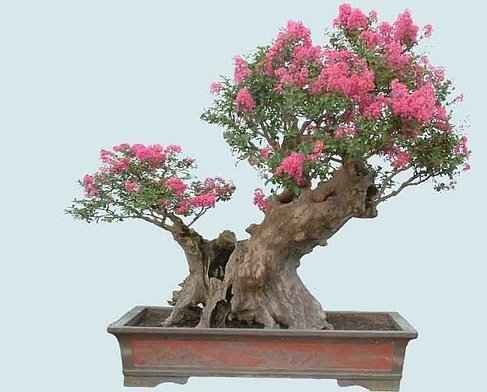
The process of Crapemyrtle planting begins before planting. And that is because in this way avoids the bad habit of many plant-lovers, to planting plants in inappropriate locations, unfavorable conditions and prohibitive environments.
It is entirely understood that, against the amazing and long-lasting flowering of the plant (for which no further reference will be made), it is difficult to resist the plant lover.
However, it must also be entirely understood by the plant lover that: The Lagerstroemia indica is not just a decorative element but a living organism which will thrive in a certain climatic type, planted on the right soil, with proper exposure and uninterrupted care for nutrition, irrigation and protection, at least until the plant is fully established – that is for the first 3 to 4 years.
If these conditions, which are outlined in Crapemyrtle (Lagerstroemia indica) article, are not met, it is preferable for the plant lover give a chance to another plant that will endure in the given circumstances instead of throwing away its money and along with it the disgusting Crapemyrtle.
Crapemyrtle Planting in Garden, Pots & Containers
Soil Type and Substrate Composition for Crapemyrtle Planting
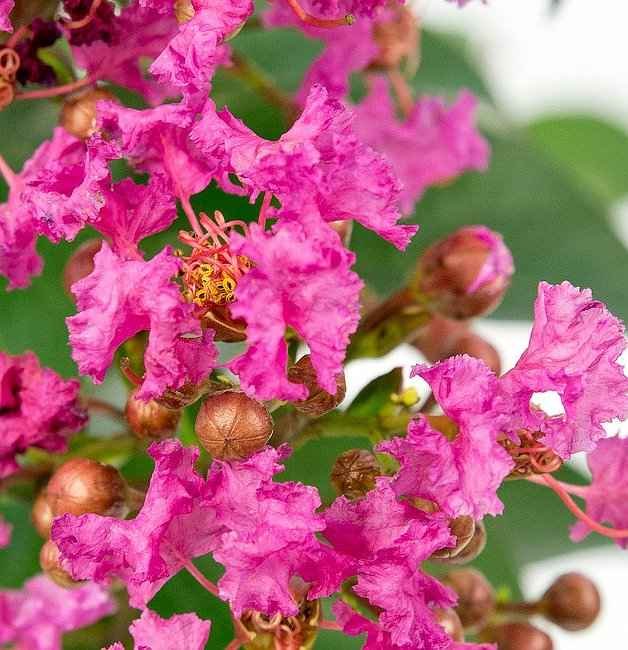
Crapemyrtle Planting can be done both in the garden and in pots or containers. In the garden all the cultivars, varieties and hybrids of the plant can be planted.
In pots and containers it is preferable to plant varieties of medium height, semi-dwarf and dwarf. However, the dimensions of the pots or containers must be proportional to the final dimensions of the plants of each selected Crapemyrtle variety.
Suitable soil for Crapemyrtle planting in the garden is the heavy loam with excellent drainage. Any deviation from this type of soil makes it almost compulsory to improvement it.
In general, we can say that the more sandy the soil is, the more it is necessary to add to it a fine structure peat moss, while the more clayey, the more necessary it is to add in it aggregates such as river sand, zeolite or pumice stone for agricultural use.
For Crapemyrtle planting in pots and containers, things are simpler: the composition of the appropriate soil substrate can be done by mixing 2/5 of a healthy loam soil, 2/5 of aggregate (1,6-3 mm of granular zeolite or pumice stone for agricultural use) and 1/5 compost of neutral pH.
Referring to pH, we should at this point say that Crapemyrtle grows at a pH of between 5 and 7.5 but thrives at pH ranging from 5 to 6.5.
If it is known that the soil deviates from these values, lime is added to increase its alkalinity, while sulfur is added to make it more acidic.
Crapemyrtle Planting in Garden, Pots & Containers
When to Plant Crapemyrtle
The nusrery potted plants of Crapemyrtle or those which are balled and burlapped can be planted almost all year round – except for the periods that occur extreme climatic phenomena.
On the contrary, bare root plants can be planted only during the winter.
If there is a possibility of choice, it is preferable for potted plants to be planted either in autumn or early spring.
To the question what exact season is better, the answer is that depending on the climatic conditions of the area.
The more severe it is in winter, the better it is to Crapemyrtle planting in the spring.
On the contrary, the hotter the summer is, the better it is to plant the Crapemyrtle shrubs in the autumn.
Crapemyrtle Planting in Garden, Pots & Containers

Crapemyrtle Planting in Garden
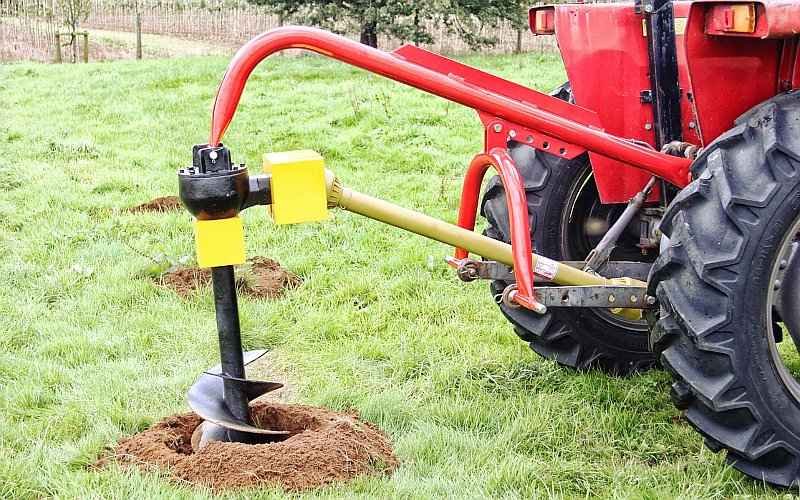
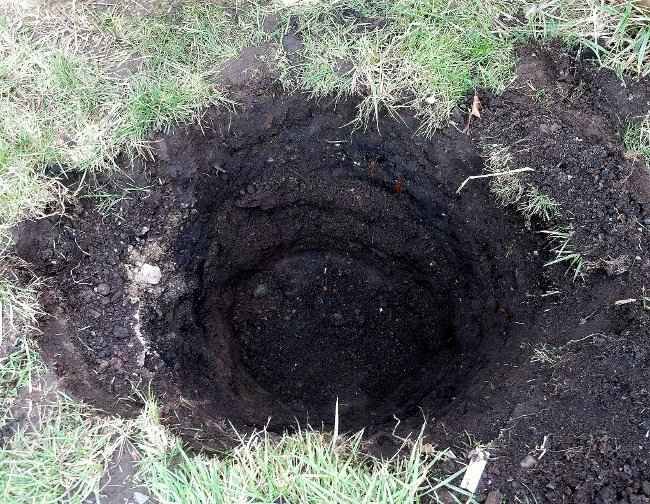
To make the planting on the ground of garden, a hole is drilled, at a depth just as the height of the plant’s pot or the soil ball and a width of twice the respective sizes. Then, and as long as there is no time pressure, the hole is left open for about a week in order to ‘disinfect’ the soil.
Then, taking into account the above mentioned for soil, a part of aggregate (1,6-3 mm granulometric zeolite or pumice stone for agricultural use) and a part of neutral pH compost are added to the excavated soil so that the proportion of materials is formed to Soil 2: Aggregate 1: Compost 1.
The quantity of 30 to 50 g of a slow-release fertilizer (ratio N-P2O5-K2O: 1: 1: 1) are applied, or in the case of planting in autumn, a corresponding amount of phosphorus and kalium only fertilizer is added. Then mix all the materials so that the final product is as homogeneous as possible.
With this homogeneous soil, the hole is filled until the point where the plant is placed in a way that its top soil surface will be at the same level as the ground. Consequently, fill the hole with the homogenised soil and lightly press.
After that, a 30 to 50 g of the same slow-release fertilizer (P2O5-K2O: 1: 1: 1) is evenly applied around the plant at a distance of at least 30 to 40 cm around the plant.
Then there is abundant watering and stake of the plant if it is deemed necessary. Finally, on the planting area is placed geotextile, which is covered with pine bark or some similar organic material, 7 to 15 cm thick, leaving the plant’s collar almost bare.
Crapemyrtle Planting in Garden, Pots & Containers

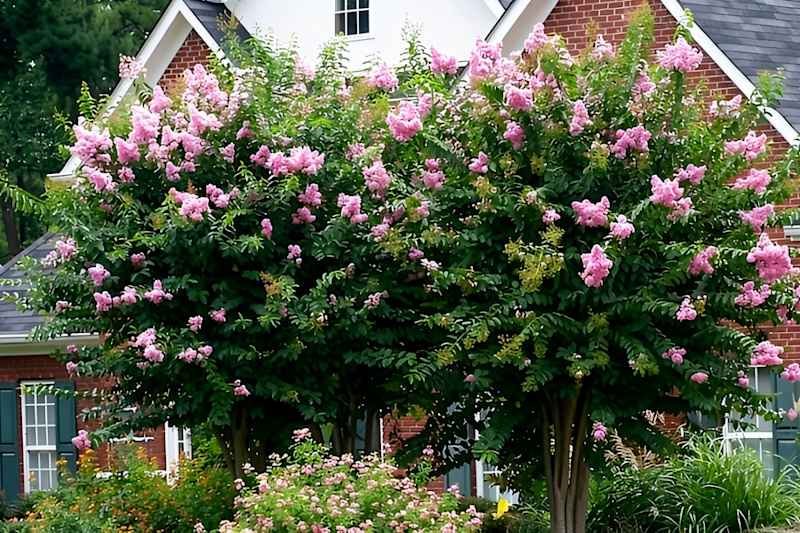
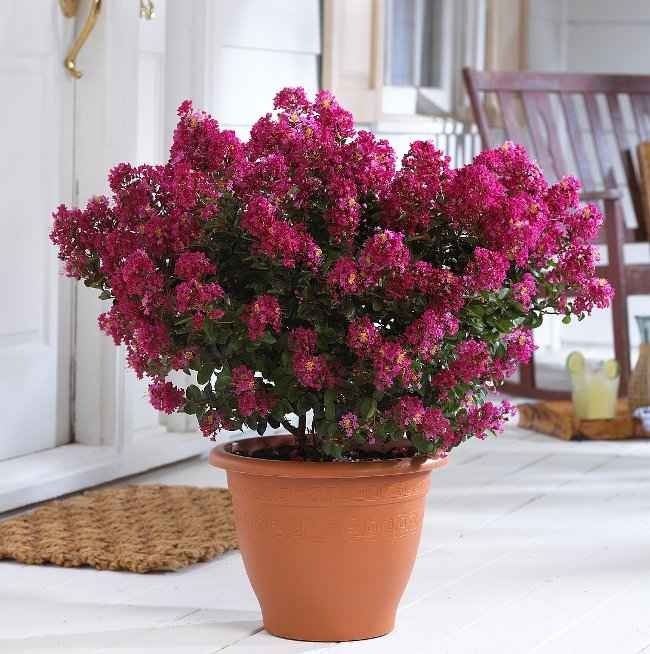
Crapemyrtle Planting in Pots & Containers
Having abandoned the best of the planting process in the garden, it is recommended to plant-lover to choose a bottle of fine wine – a color corresponding (or so) to the color of Crapemyrtle that is to be planted – before the planting in pot.
After enjoying a glass, he/she can lift the sleeves again and start work – just as he/she does.
What is he/she doing?
He/she uses as a soil substrate what is mentioned above as suitable for the pot, adds 10 to 30 g of a slow-release fertilizer (ratio N-P2O5-K2O: 1: 1: 1) to it, homogenizes the material and stops.
He/she stops because is going to put a layer of pumice stone or fine gravel about 5 to 7 cm in thickness at the bottom of the pot – which of course has holes.
Then, he/she repeats the steps described for Crapemyrtle planting in garden – with the exception of geotextile.
And after the pant lover completes his/her work, he/she allows himself the pleasure that another glass of wine offers – or two, three, four and so on.
Crapemyrtle Planting in Garden, Pots & Containers

References
The References of the article bearing the weighty title Crapemyrtle Planting in Garden, Pots & Containers are presented by the starting from Morocco band Tasuta N-Imal with the song Azenzy.
- Bennett, R. (1991). Amenity Horticulture. Palgrave.
- Chappell, M. R., Braman, S. K., Williams-Woodward, J., & Knox, G. (2012). Optimizing Plant Health and Pest Management of Lagerstroemia spp. in Commercial Production and Landscape Situations in the Southeastern United States: A Review. Journal of Environmental Horticulture, 30(3), 161-172.
- Dirr, M. (1983). Manual of Woody Landscape Plants: Their Identification, Ornamental Characteristics, Culture, Propagation and Uses (3rd ed.). Stipes Publishing, LLC.
- Dirr, M. A., & Warren, K. S. (2019). The Tree Book, Superior Selections for Landscapes, Streetscapes, and Gardens. Timber Press (OR).
- Lagerstroemia. (2006). In A. Cheifetz, C. Double, L. Barnard, & D. Imwold (Eds.), Botanica’s Pocket Trees & Shrubs (1st ed., p. 493). Tandem Verlag GmbH.
- Lonnee, D., & Rose, N. (2011). Growing Shrubs and Small Trees in Cold Climates. University of Minnesota Press.
- Manual of Arriyadh Plants. (2014). High Commission for the Development of Arriyadh, Saudi Arabia.
- Osman, K. T. (2018). Management of Soil Problems. Springer.
- Young, C. (2017). Encyclopedia of Landscape Design: Planning, Building, and Planting Your Perfect Outdoor Space. Dorling Kindersley Limited.
- Crapemyrtle: Virginia Tech Dendrology
With Pomp and Circumstance
VIDEO
Berber (or/and Amazigh) musicians Tasuta N-Imal – a name meaning “future generation” – perform their song Azenzy, at the Afrika Festival Hertme in the Netherlands, in 2025.
Clarification
Of course, it is needless to say – but we will emphasize it – that in this handmade website, no article has been and will not be written with recourse to Artificial intelligence (AI). Natural Intelligence, that is, as much of it as we have and for as long as we are allowed to have it, is enough for us.
Sharing
The use of the material, where third-party rights are not mentioned or implied (such as photos or audiovisual files - with the exception of those belonging to "Kalliergeia"), is absolutely free. Its sharing, possibly, useful.