Home » PLANTS & CROPS »
Headed Cabbage – Headed Cabbage Soil Requirements
CONTENTS ⌵
The Headed Cabbage Soil Requirements is the main subject of this article and – in addition – the presentation of the characteristics and properties that must have the proper soil for its cultivation.
It is the third of the series devoted to the cultivation of Headed Cabbage, namely Brassica oleracea var. capitata – a series that is in no way hurt by the continued loss of readers – and which is designed to be completed in 32,725 sequences.
Based on the rates at which works the editorial team of “Kalliergeia” – particularly in the months of summer sluggishness – it is almost certain that first will find a suitable soil for growing cabbage on Mars by the early settlers of planet and then will be completed the series.
That is why it is planned that, alongside this series, we will begin a similar tribute to the cultivation of the Headed Cabbage, to our nearby Planet.
In fact, about the Red Head Cabbage cultivation in the Red Planet.
Headed Cabbage Soil Requirements
The Headed Cabbage Soil Requirements
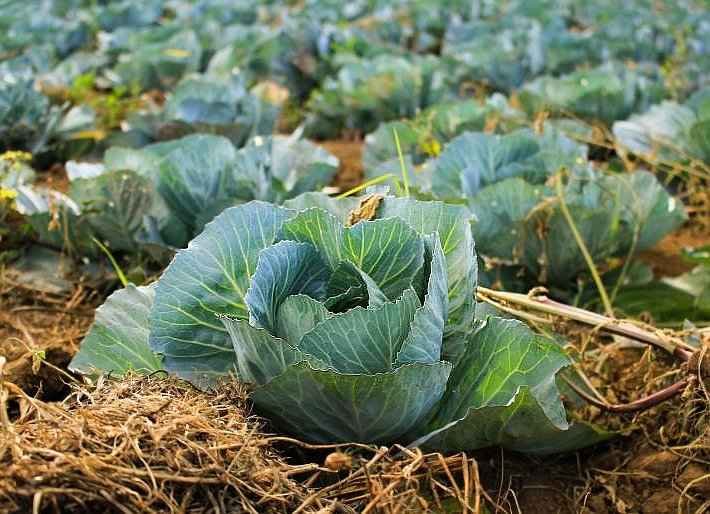
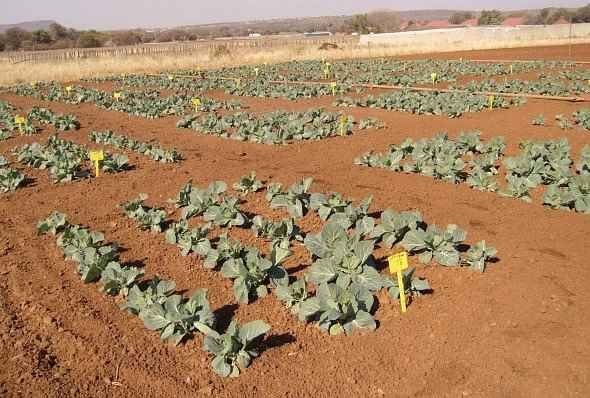
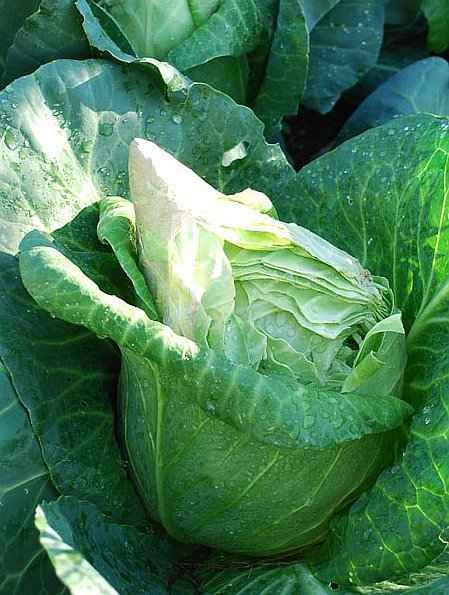
Headed Cabbage (Brassica oleracea var. capitata) grows in a wide range of soil types with more or less satisfactory yields. However, the most suitable soil for Headed Cabbage cultivation is what is described as of medium texture, it is fertile and productive, has a depth of 60 cm and retains moisture but also drains perfectly.
The ability to retain soil moisture is of great importance for the normal development and yield of Headed Cabbage crop. And the reason lies in the ‘inadequate’ of the size of the root system of the plant in relation to the overground part and its consequent inability to adequately feed the plant with water – especially when the Cabbage is in the phase of the head formation.
On the other hand, fertility and productivity of the soil – concepts closely related but not identical – are the guarantee of adequate and uninterrupted feeding of the plant with nutrients and mainly with nitrogen (N) and potassium (K), since cabbage has high input requirements in these two macroelements.
Headed Cabbage Soil Requirements
The Particularity of Headed Cabbage in Relationship to Soil & Soil pH
The Particularity of Headed Cabbage in Relationship to Soil
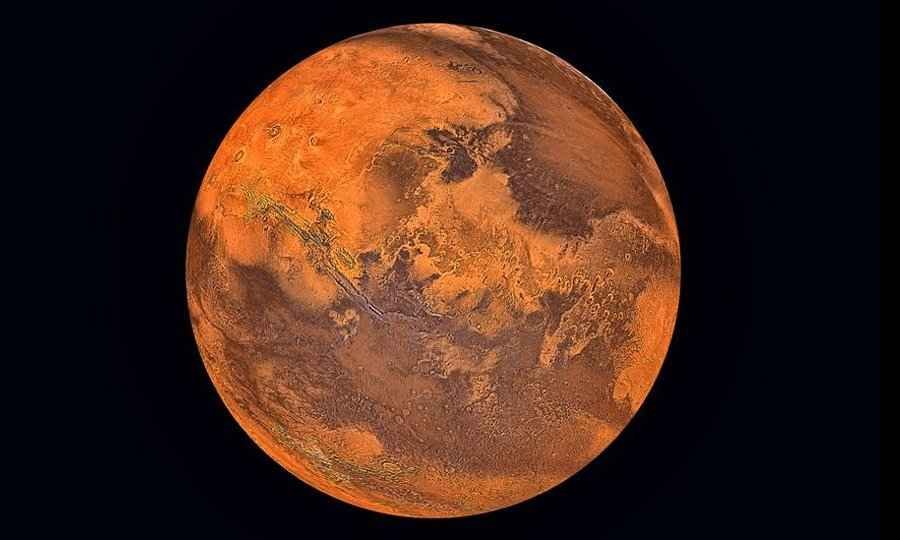
Headed Cabbage stands out from many other crops in relation to the soil conditions that favor its development at least to one point: Headed Cabbage soil requirements are determined and differentiated according to the season of its planting.
So, for fall and early winter planting heavier loam soils are proper. On the contrary, for spring plantings, sandy or sandy loam soils are preferable.
Appropriate Soil pH Range
Soil pH, as is the case with almost all of the cultivated plants, plays a decisive role both in the properly movement of nutrients in the soil solution and in creating favorable or unfavorable conditions for the growth of various phyto-parasitic organisms.
Taking this into account, it could be said that with regard to soil pH, the Headed Cabbage soil requirements coveraged in a slightly acidic to slightly alkaline soil reaction, ranging between 6 and 7.5. However, the optimum soil pH ranges between 6 and 6.8.
When soil pH is below 6, the availability of nutrients, and in particular of trace elements, which are necessary for the properly development of the Headed Cabbage plants, is negatively affected. Then liming – the addition of calcium to the soil – is absolutely necessary.
The Relevance of Soil Analysis
A useful and up-to-date tactic to determine if the field is suitable for the planting and development of Headed Cabbage is soil analysis.
And it is more important if the field for cultivation is planted with Cabbage for the first time.
The image that the soil analysis will present for all parameters of interest to the producer will be the compass that will direct him.
How important is the soil analysis, which should be repeated regardless of the kind of crop if not year by year, then at least once every two, will be immediately demonstrated: if the field has acidic soils, the addition of calcium to correct soil pH, it should be done 60 to 90 days before Headed Cabbage planting.
Any other calcium application outside this time limit will be meaningless for the properly development of the crop and the result will be, among other things, its unsatisfactory to problematic yield.
Headed Cabbage Soil Requirements
The Effect of Soil Salinity on Headed Cabbage Cultivation
In terms of salinity, Headed Cabbage soil requirements coveraged at the one that has a minimum to moderate salt content.
Deviation from these scales implies a decrease in the expected yield of the Headed Cabbage. To show the magnitude of the loss – and with a measure of comparison the EC electrical conductivity of the saturated soil solution that when it is up to 1.8 mmhos / cm the loss is zero – states what:
- With ECe 1.9 to 2.8 mmhos / cm the decrease is up to 10% of the expected yield.
- With ECe 2.9 to 4.4 mmhos / cm the decrease is up to 25% of the expected yield.
- With ECe 4.5 to 7 mmhos / cm the decrease is up to 50% of the expected yield.
- With ECe 7.1 to 12 mmhos / cm the yield decrease can be reach to the total destruction of the crop
Plasmodiophora brassicae and the Headed Cabbage
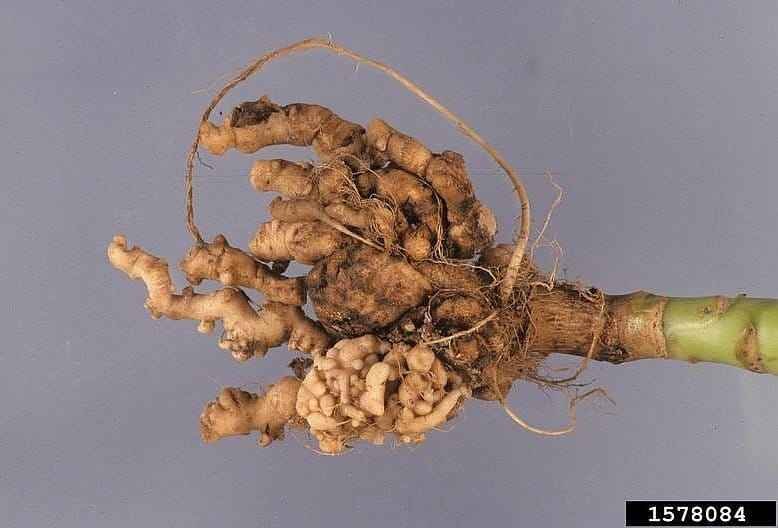
As long as the soil is more acidic and wet, the higher the risk of the occurrence of Plasmodiophora brassicae phytopathogenic soil fungus, which causes the club root of crucifers.
It is a severe disease that is difficult to treat, but also difficult to recognize. Because the diagnosis of the club root, though that the symptoms are obvious, it is impossible to become macroscopic, since the exact same symptoms appear after Headed Cabbage invasion of nematodes.
The best way to diagnose is by using a microscope to see or not its asexual reproductive organs, sporangia, that carry spores (zoospores).
Headed Cabbage Soil Requirements
Plasmodiophora brassicae and the Headed Cabbage Grower
The grower of Headed Cabbage should be aware of the following:
- The growth of Plasmodiophora brassicae is favored in acidic soils and is limited to alkaline
- The extremely durable zoospores can stay on the ground for 6-7 years
- High humidity and temperatures between 18 and 23 °C favor its development
The Headed Cabbage grower to avoid infestation by the plant parasite if it exists in the soil should:
- To follow a seven-year crop rotation, during which it will not plant any species of the Cruciferae (Brassicaceae) family
- To eradicate and burn any weed of this family
- To liming the soil so that the pH rises to 7 to 7.5
Headed Cabbage Soil Requirements
References
The references of another profound article of “Kalliergeia”, entitled “Headed Cabbage Soil Requirements“, are presented by Count Basie with the Good Morning Blues.
Count Basie – Good Morning Blues
- Balliu, A. (2015). Cabbage. In Handbook of Vegetables (Vol. 3, pp. 79-120).
- Decoteau, D. (2000). Vegetable Crops. Prentice Hall.
- Hadfield, J., & Page, N. (1987). The A-Z of vegetable gardening in South Africa. Cape Town: Struik.
- Koike, S. T., Gladders, P., & Paulus, A. (2007). Vegetable Diseases: A Colour Handbook. Manson Publishing Ltd.
- Leike H. (1988) Cabbage (Brassica oleracea var. capitata L.). In: Bajaj Y.P.S. (eds) Crops II. Biotechnology in Agriculture and Forestry, vol 6. Springer, Berlin, Heidelberg
- University of California, & University of California. (1992). Integrated Pest Management for Cole Crops and Lettuce. California: University of California, Division of Agriculture and Natural Resources.
- Vidhyasekaran, P. (2004). Concise Encyclopedia of Plant Pathology. The Haworth Press, Inc.
- Ware, G. W., & McCollum, J. P. (1975). Producing Vegetable Crops (2nd ed.). The Interstate Printers & Publishers.
- Winch, T. (2007). Growing Food: A Guide to Food Production. Springer Science & Business Media.
- Χα, Ι., & Πετρόπουλος, Σ. (2014). Γενική Λαχανοκομία και Υπαίθρια Καλλιέργεια Λαχανικών [General Horticulture and Field Cultivation of Vegetables]. Βόλος: Πανεπιστημιακές Εκδόσεις Θεσσαλίας.
- Cole Crop Production (Broccoli, Cabbage, and Cauliflower): Oklahoma State University Extension
Clarification
Of course, it is needless to say – but we will emphasize it – that in this handmade website, no article has been and will not be written with recourse to Artificial intelligence (AI). Natural Intelligence, that is, as much of it as we have and for as long as we are allowed to have it, is enough for us.
Sharing
The use of the material, where third-party rights are not mentioned or implied (such as photos or audiovisual files - with the exception of those belonging to "Kalliergeia"), is absolutely free. Its sharing, possibly, useful.