Introduction
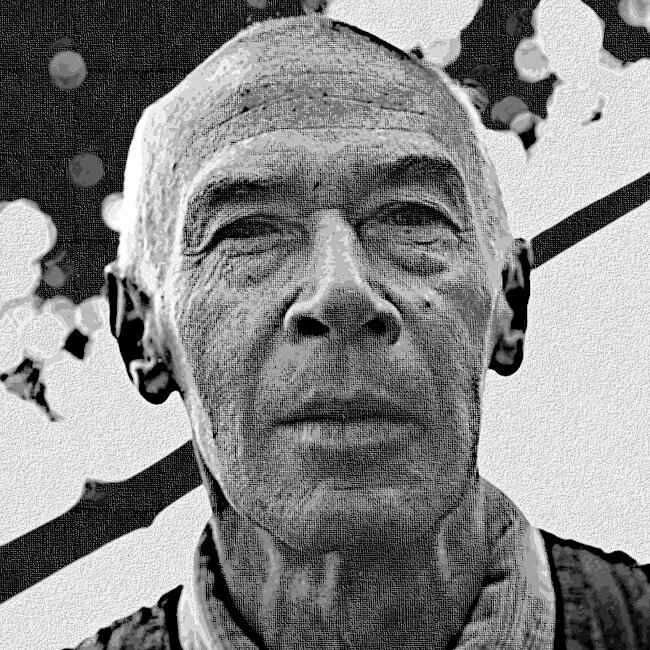
The Air-conditioned Nightmare travelogue was written by Henry Valentine Miller (26 December 1891 – 7 June 1980) in 1940, during the author’s travels in the United States, and published in 1945 by New Directions, New York.
The work relates the impressions left on the author, who had just returned from Europe, and the thoughts that this long journey to his native land gave rise to. And the impressions were generally unpleasant, and the thoughts discouraging about the United States of his time and the condition of his countrymen.
In particular, this great American writer, who saw some of his most important books, such as Tropic of Cancer and Tropic of Capricorn, banned from being published in the US for over 3 decades on the convenient grounds that they were obscene, he did not hesitate to depict in the travel narrative The Air-conditioned Nightmare, the definitive evaporation of the bubble called the American Dream, and to recolour the ideological construct called the American Way of Life in the saddest colours.
Something Like a Condensed Biography
Henry Miller was born in Manhattan, New York and raised in Brooklyn. In 1909 he attended the City College of New York for just 2 months and after dropping out began practicing various trades.
In 1924 he gave up all professional activities to devote himself exclusively to literature. From 1928, with short breaks, he settled in Paris until 1939. And it is there that his first major work, The Tropic of Cancer, was published in 1934, which was very well received by the reading public, selling two million copies in its first two years of publication.
In 1939, at the invitation of his friend Lawrence Durell, author of the important The Alexandria Quartet, he came to Greece, where he stayed for about six months. The result of his stay in Greece was the writing of his famous book The Colossus of Maroussi.
In 1940 he returned to the United States and resided in New York. This is followed by his trip to the country, which yields the work The Air-Conditioned Nightmare.
In 1944 he settled in Big Sur, California, where he remained until 1963. There, among other works, he would write the important trilogy The Rosy Crucifixion.
For the last 16 years of his life, from 1964 to 1980, he would be a permanent resident of Los Angeles. He will stop writing every day and devote more time to his other passion, painting.
Selective Ergography of H. Miller
Without Europe there would certainly be no Europeans, but probably not the literary figure of Henry Miller either. Miller found in the Old Continent of the interwar years what was not present in the United States: a fertile effervescence that included all forms of fine art and literature, among others.
His great talent came into contact with currents, trends, manifestos, persons. Modernism, already from the beginning of the 20th century, centred in France, but also in Germany and Italy, posed new questions which brought through contradictions, elaborations, dialogue and counter-dialogue, new positions and perspectives on art issues.
In this environment, Miller, in discovering his literary form, reinvented an old literary genre and forged a unique style. Autobiography met inspirationally disguised fiction, and through his pen he produced works of unique scope and timeless value.
From a certain point of view he could be considered the forefather of beat literature.
Regarding the works he wrote, perhaps the most important of them are:
- Tropic of Cancer (1934)
- Black Spring (1936)
- Tropic of Capricorn (1939)
- The Colossus of Maroussi (1941)
- The Air-Conditioned Nightmare (1945)
- The Time of the Assassins: A Study of Rimbaud (1946)
- Sexus-Book one of The Rosy Crucifixion (1949)
- Plexus-Book two of The Rosy Crucifixion (1953)
- Quiet Days in Clichy (1956)
- Nexus-Book three of The Rosy Crucifixion (1960)
The Story Behind the Book
Miller had the idea of writing a travel book on the United States as early as 1935. He had just returned to Paris after a brief trip to New York, and sufficiently negatively prejudiced about the situation in which he found the country and its people to write to his friend Hilaire Harzberg Hiler (16 July 1898 – 19 January 1966), a similarly expatriate American artist and colour theorist, that he planned to write such a book which would be “a loaded gun to the head of America.“
But it was not until 1940 that he would be given the opportunity – having now resettled in the US. Perhaps his greatest work, The Colossus of Maroussi, had been rejected by 10 or more publishers, and his agent pointed out that a travelogue book written by a repatriate would be of editorial interest.
Indeed, he makes a deal with Doubleday publishing house, receives an advance of $500, and proposes to Anais Nin – his girlfriend and longtime lover, and also the mistress of his then-wife June Mansfield – to accompany him on the trip. She declined and the painter Abraham Rattner (8 July 1895 – 14 February 1978) took her place.
The journey of about 1 year was done and the book was written. The Doubleday rejected, and Miller in turn rejected the publishing house, since not a single one of his books was ever published by Doubleday.
The Excerpt from the Chapter "VIVE LA FRANCE!"
The excerpt listed here belongs to the chapter with the enthusiastic title VIVE LA FRANCE!, and could even be seen as a shrewd critique of the functioning of American urban parks of its time or more precisely their non-functioning.
… But only of American urban parks and only of its time?
The Air-Conditioned Nightmare - VIVE LA FRANCE! (1/4)
THE LITTLE park-between June and Mansfield Streets, curiously enough. It’s a melancholy place, even in full sunshine. I have never found a park in America that filled me with anything but sadness or ennui. I would a thousand times rather sit in an abstract park such as Hilaire Hiler gave us in his early canvases. Or a park such as Hans Reichel sometimes sits in when he is doing a water color of his amnesic self.
The American park is a circumscribed vacuum filled with cataleptic nincompoops. Like the architecture of the American home, there is never an ounce of personality in the park. It is, as they so rightly call it, “just a bit of breathing space”, an oasis amidst the stench of asphalt, chemical fumes and stale gasoline. God, when I think of the Luxembourg, the Zapion, the Prater! For us there are only the natural parks-great tracts of land studded with astounding freaks of nature and peopled with ghosts.
The Air-Conditioned Nightmare - VIVE LA FRANCE! (2/4)
Of all the little man-made parks I think the one in Jacksonville, Florida is perhaps the meanest, drabbest, shabbiest. It belongs in a George Grosz picture. It reeks with tuberculosis, halitosis, varicose veins, paranoia, mendacity, onanism and occultism. All the misfits, the unfits, the has-beens and the would-bes of America seem to drift here eventually. It is the emotional swamp which one has to wade through in order to get to the Everglades.
Fifteen years ago, when I first sat in this park, I attributed my feelings and impressions to the fact that I was down and out, that I was hungry and could find no place to sleep. On the return visit I was even more depressed. Nothing had been altered. The benches were littered as of yore with the dregs of humanity-not the seedy sort as in London or New York, not the picturesque sort that dot the quais of Paris, but that pulpy, blemished American variety which issues from the respectable middle class: clean clots of phlegm, so to speak.
The kind that tries to elevate the mind even when there is no mind left. The flotsam and jetslfm which drifts like sewer water in and out of Christian Science churches, Rosicrucian tabernacles, astrology parlors, free clinics, evangelist meetings, charity bureaus, employment agencies, cheap lodging houses and so on.
The kind that may be reading the Bhagavad Gita on an empty stomach, or doing setting up exercises in the clothes closet. The American type par excellence, ever ready to believe what is written in the newspapers, ever on the look-out for a Messiah. Not a speck of human dignity left. The white worm squirming in the vise of respectability!
The Air-Conditioned Nightmare - VIVE LA FRANCE! (3/4)
Sometimes the sight of these human dump heaps touches a button off and I have to run for a taxi in order to get to the type-writer and put down the mad, fiendish irrelevancies whose genesis not even the smartest of critics would suspect to be an American park.
It may happen in such instances that I suddenly remember a cow which I had seen ages ago, or it may be a recent cow like the one at Ducktown, Tennessee, the cow with ninety-seven ribs and nothing to chew but a piece of tin foil.
Or I may suddenly recall a moment such as the one in Algiers, Louisiana, talking to a railway fireman and his saying-“now it’s a strange thing about this town but there ain’t a single hotel in it; the people here ain’t got no ambition.” The words hotel and ‘lmbition associated oddly in my mind, and at that instant, while I was wondering what was so strange about these two words, a bus passed going to Venice and then everything seemed astoundingly strange and unreal.
Algiers on the Mississippi, a Louisiana Venice, the copperized cow evaporating under a scorching sun, the synagogue music in Jacksonville which because of hunger reduced me to tears, my nocturnal walks back and forth over the Brooklyn Bridge, the medieval castles along the Dordogne, the statues of the queens in the Jardin du Luxembourg, six Russian lessons with an hysterical countess in a dressing booth in the rear of an employment agency, an interview with Dr. Vizetelly, during which I learned that I ought to have a vocabulary of at least seventy-five thousand words though Shakespeare had only about fifteen thousand … A thousand and one such grotesque items could Bit through my brain in a few moments.
The Air-Conditioned Nightmare - VIVE LA FRANCE! (4/4)
The cow is tremendously obsessive-and I will never know why. Maybe in the American park I am just a cow chewing a bit of discarded tin foil. Maybe everything I care about has been eroded away and I am just a gaunt idiot whose ribs are cracking under a Southern sun. Maybe I am standing on a dead planet in a scientific film and because everything is strange and new I miss the beauty of it. Maybe my desires are too human, too tangible, too immediate.
One must be patient, one must be able to wait not thousands of years, but millions of years. One must be able to outlive the Sun and moon, outlast God or the idea of God, outstrip the cosmos, outwit the molecule, the atom, the electron. One must sit in these parks as in a public toilet, fulfilling one’s function-like the spareribbed cow on the red hill.
Do not think of America as such, America per se, America ad astra: think of skies without atmosphere, of canals without water, of inhabitants without clothes, of words without thought, of life without death, of something going on endlessly and having no name, no rhyme or reason, yet making sense, making grand sense once you lose the obsession of time and space, of destiny, of causality, of logic, of entropy, of annihilation, of Nirvana and of Maya. (…)
Henry Miller, The Air-Conditioned Nightmare (1945)
The Henry Miller Odyssey (1969) - Documentary
The documentary The Henry Miller Odyssey was directed by Robert Snyder and released in 1969 in the United Kingdom. It lasts 1 hour and 50 minutes and narrates the author’s life through his own words, his own comedic wince, his own grotesque grimace and actions, according to the cinematographic convention.
- Baxter, A. (1961). Henry Miller: Expatriate. University of Pittsburgh Press.
- Burnside, J. (2018). On Henry Miller: Or, How to Be an Anarchist. Princeton, NJ: Princeton University Press.
- Miller, H. (1970). The Air-Conditioned Nightmare. New York, NY: New Directions Publishing.
- Miller, H., & Kersnowski, F. L. (1994). Conversations with Henry Miller. University Press of Mississippi.
- Μίλερ, Χ. (2009). Κλιματιζόμενος Εφιάλτης (Γ. Ι. Μπαμπασάκης, Μεταφρ.) [The Air-Conditioned Nightmare]. Αθήνα: Μεταίχμιο.
- How Henry Miller’s Anti-Establishment Rant Liberated me from Little England: John Vidal (The Guardian)
- The Filmgoer The Henry Miller Odyssey: Theodore Sedgwick (The Harvard Crimson)
Clarification
Of course, it is needless to say – but we will emphasize it – that in this handmade website, no article has been and will not be written with recourse to Artificial intelligence (AI). Natural Intelligence, that is, as much of it as we have and for as long as we are allowed to have it, is enough for us.
Sharing
The use of the material, where third-party rights are not mentioned or implied (such as photos or audiovisual files - with the exception of those belonging to "Kalliergeia"), is absolutely free. Its sharing, possibly, useful.