Home » PLANTS & ART »
Parc Andre Citroen: The Controversial Beautiful Park
CONTENTS ⌵
Parc Andre Citroen: The Controversial Beautiful Park
The Opposite
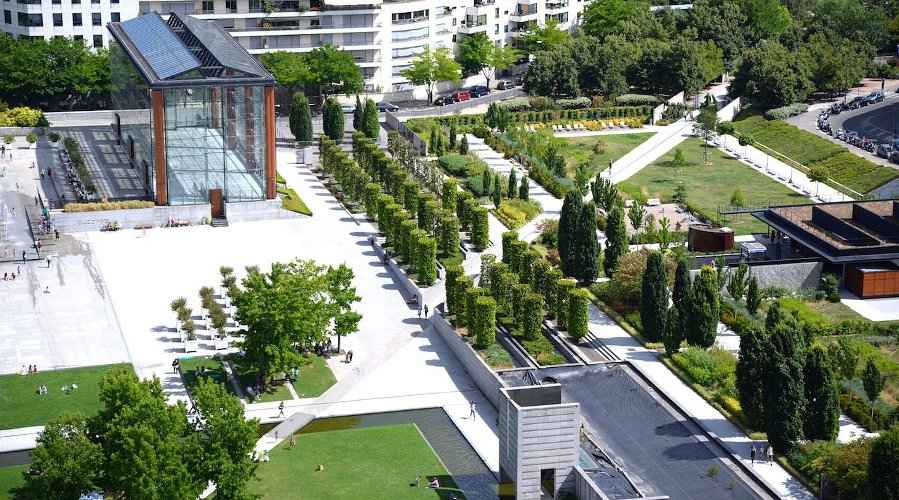
Parc Andre Citroen, located in the south-west of the French capital, is the subject of a series of articles on its design, implementation and functionality.
As it is a special conception and aesthetic public park and one of the most important landscape architecture works of the 20th century, it will also receives special treatment for its presentation.
In other words, while it is customary to first present a work and then, possibly, critique it, here the opposite will happen: first the critique will be unfolded, and then the presentation will follow.
Why;
Because, as the English say, “there’s method in our madness“ (Shakespeare’s Hamlet – Act 2, Scene 2) – or as Chilon of Sparta said, sometime around 600 BCE, “wisdom is shown in clarity“.
… Huh?
Parc Andre Citroen: The Controversial Beautiful Park


Parc Andre Citroen and Postmodern
In the view of the French, the garden and the park have different conceptual content: the garden is a place of reverie, meditation and thought while the park is a place of action.
At the Parc Andre Citroen, these two concepts are parathesised next to each other, the garden as a dynamically ‘motionless‘ place, and the park as a non-action place ‘in motion’.
The logic of the parathesis but not of the synthesis (composition) serves the postmodern design fable. Its constitutive pursuit is through the simultaneous use of different historical styles to create aesthetic entities where the unifying element is itself the creation.
A tangible demonstration of this is the choice of the two landscape architects, of the two different but rather similar designs and proposals, to collaborate parathetically – as can be seen from the result – for the creation of the park. In this parathetical way, they also managed to break out of the stalemate the jury of the competition, which was unable to mark one as the winner.
The co-operation of Alain Provost and Gilles Clement resulted in Park Andre Citroen.
The whole process, as well as the Parc Andre Citroen, is an excellent example of the postmodern.
Parc Andre Citroen: The Controversial Beautiful Park
The Critics Against Parc Andre Citroen
Such an approach may be re-positioned the criticizing about the Parc Andre Citroen at least as its usable dimension on a new basis. The criticism of the park focuses mainly on two things:
- In its ‘antisocial’ character
- To its discouragement of action and activities
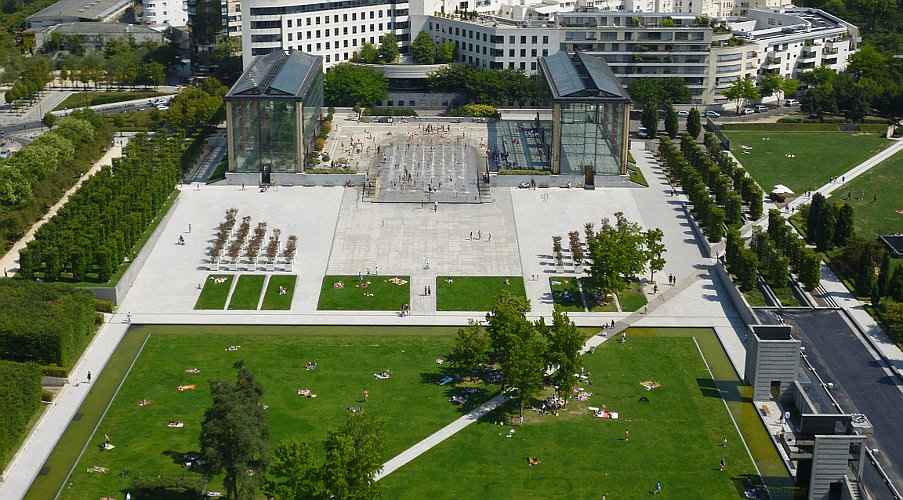
Its ‘antisocial’ character is highlighted by the ‘provocatorial’ disproportionate lack of seats. Lack of seats undermines the ability of visitors, potential or real communities to come closer.
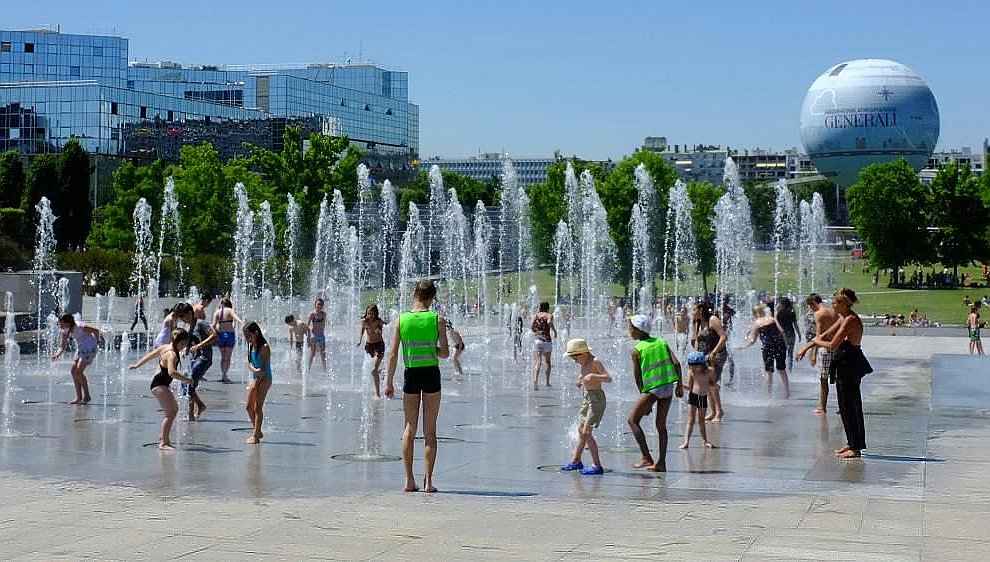
The discouragement of activities starts from an outset of design absence of such character spaces and culminates in a symbolic level of prohibitions through sign boards that do not allow swimming or playing in the fountains.
It could be a ‘provocator’ to say – whatever the designer’s intentions – the Parc Andre Citroen is offered as the public green place equivalent of the private food chain stores (fast-food).
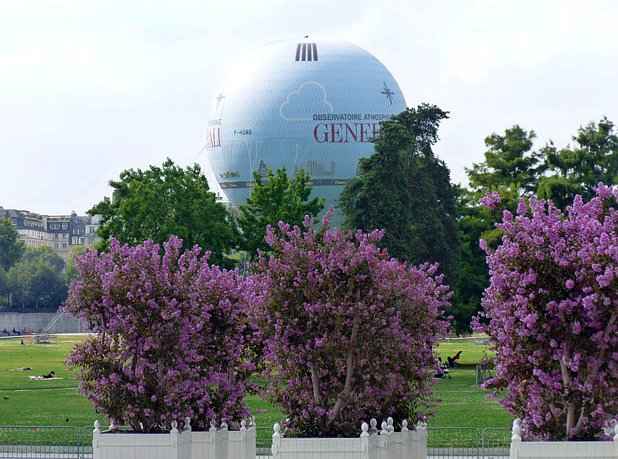
Perhaps this logic also includes the presence and paid use of the famous balloon of the park since 1999.
Parc Andre Citroen: The Controversial Beautiful Park
The 50% Declaration Failure
The stated intention of the Park Andre Citroen creators was beyond the deliverance to the local community or – generally – to the public of a perfectly green aesthetic green space – which they did – also to give the stimulus to think about the real ecological problem – which they failed.
The 50% failure is based partly on the nature and location of the Parc Andre Citroen itself – a park embedded in the urban fabric of the metropolis, Paris, can not embody and highlight ecological issues.
On the other hand, is also based partly on the postmodern perception of the work itself – the postmodern concept, which is distrustful of the ‘post-fables’, that is to say the philosophical view of things.
The philosophy of the point of view of postmodernism is more or less a pseudoscience, whose only real duty is to solve the pseudo-problems created by the influence of language on intellect.
If the ecological issue, which is first and foremost a matter of social relations and its effect on nature, does not have strong philosophical foundations, then it is not really ecological, but a discussion about the proper or non-management of nature, that is, man-made environment.
But the environmental issue is not ecological. If it is considered as such, then by analogy, it is nothing more than the ‘carnival’ of ecology.
Parc Andre Citroen: The Controversial Beautiful Park
A Minimal Visual Flavor from Parc Andre Citroen
Before we dive into the deep waters of the park’s great canal – in the next part of the tribute – let’s first read its novel.
Novel?
What kind of novel?
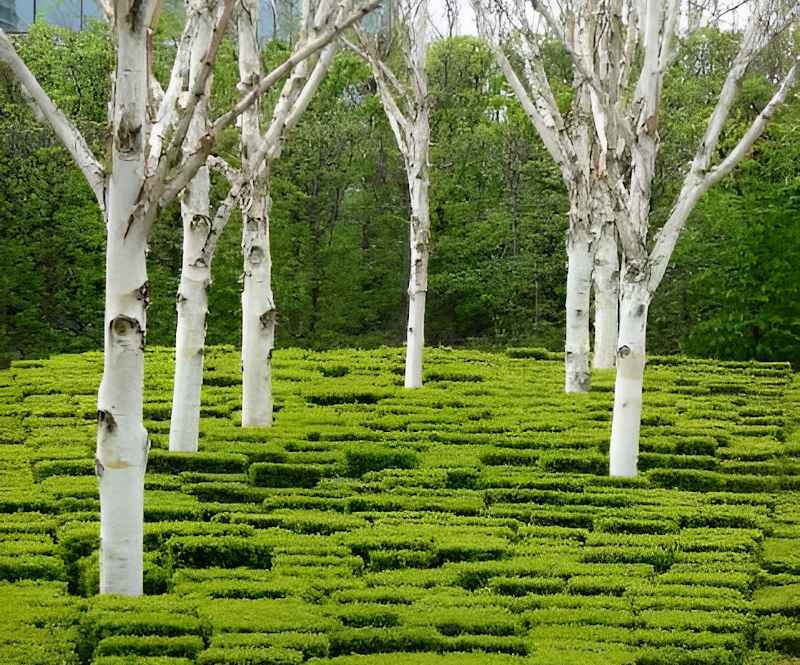
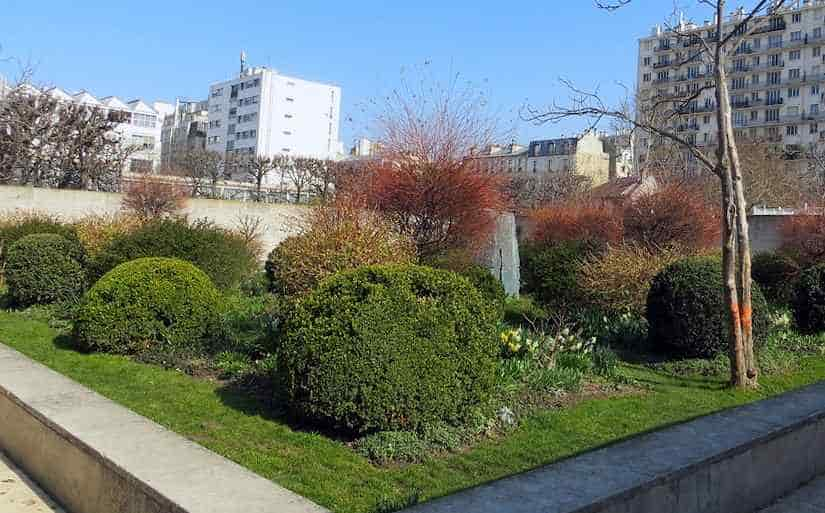
But if a picture is worth a thousand words, then 6 photos are equal to a novel – that kind.
The Novel
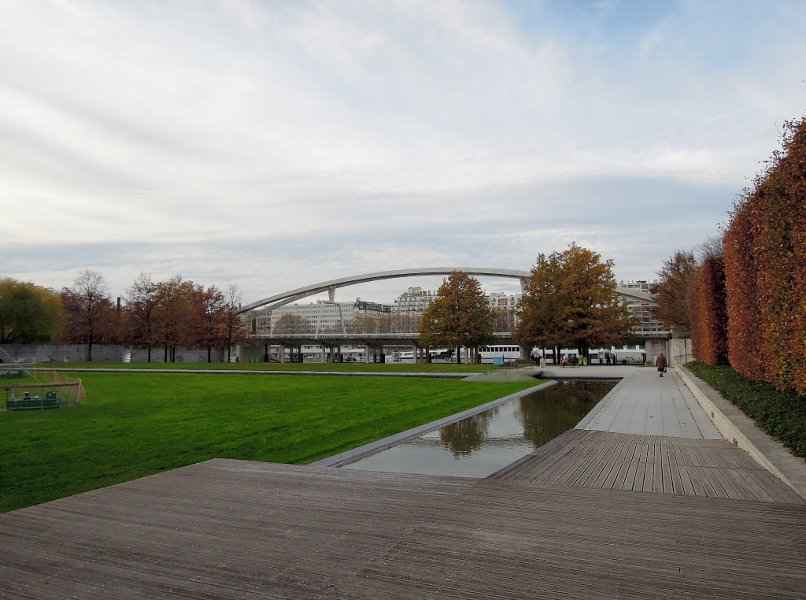
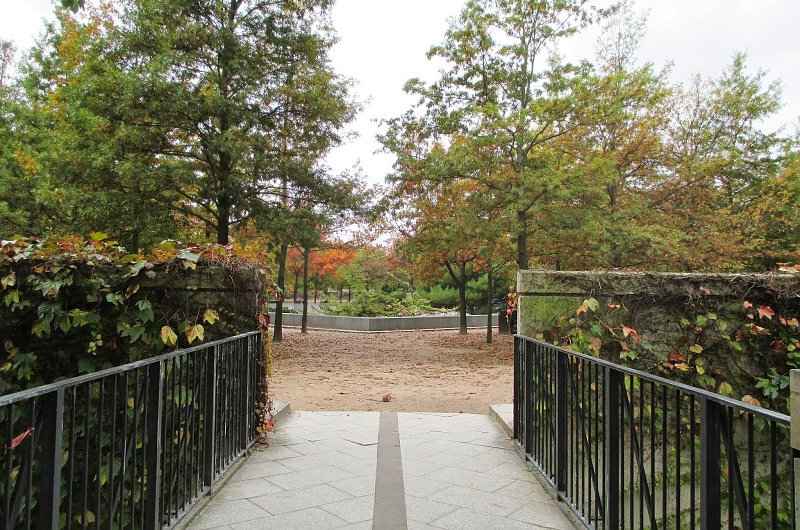
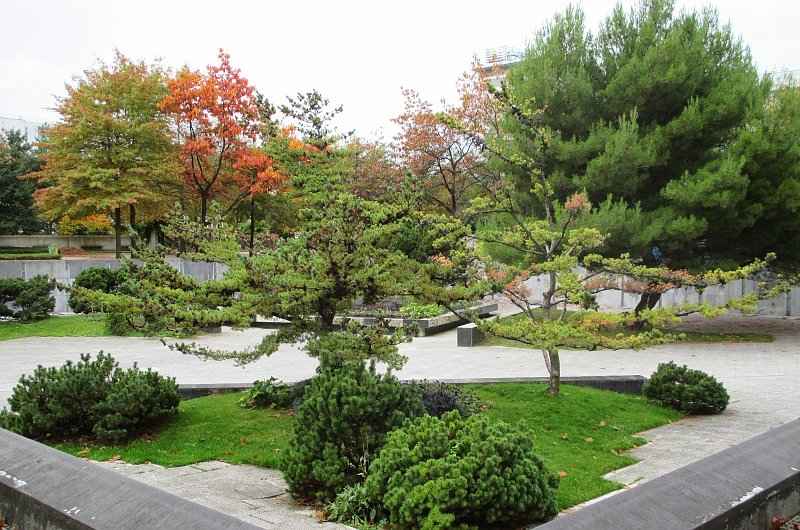
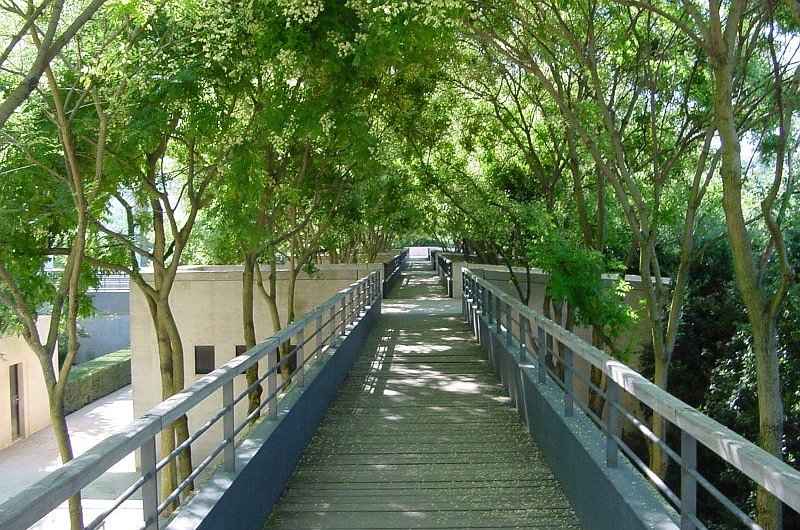
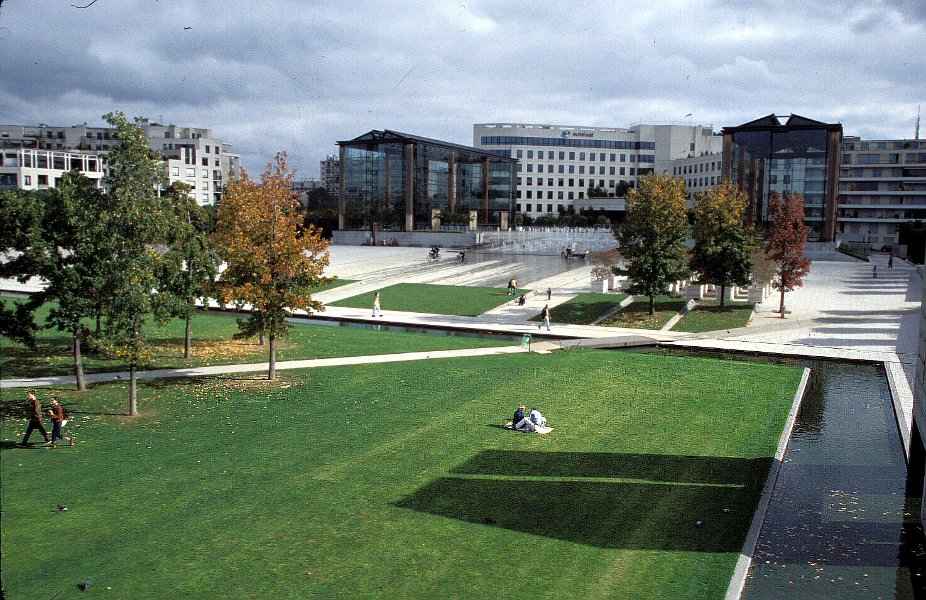
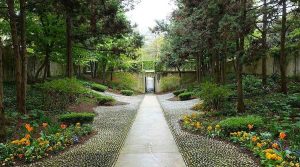
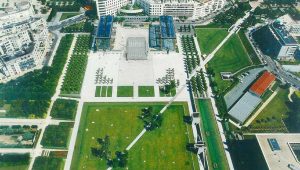
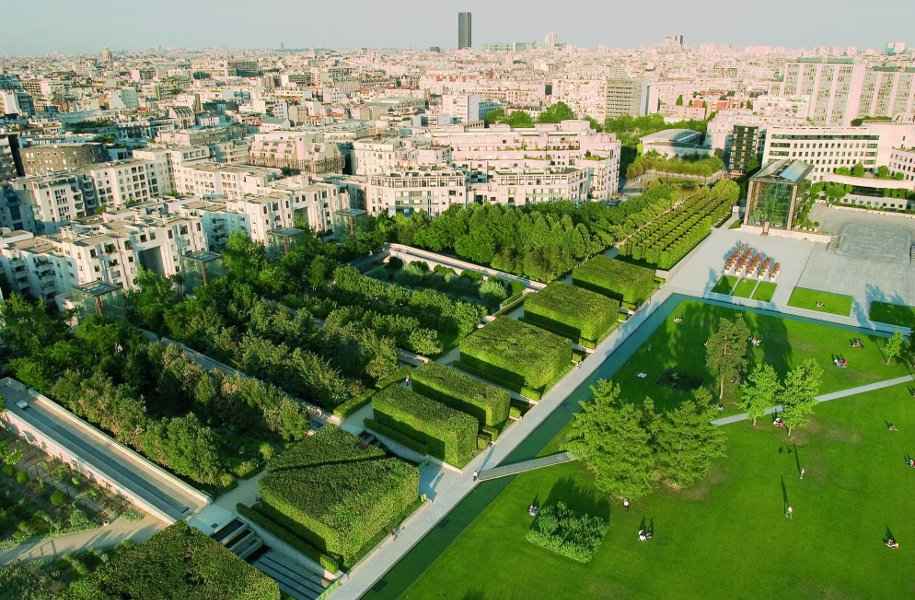
From Left to Right: 1. Birches and buxus in a part of the Park Andre Citroen, 2. In the White Garden the Esplanade Max Guedj, 3. Park Andre Citroen & the central lawn, canal, train bridge and the Seine, 4. Autumn view of a Park Andre Citroen section, 5. Part of Andre Citroen Park in early fall, 6. A peripheral elevated walkway in the Park Andre Citroen.
References
And how is a novel read? Well, in this case, the novel about Park Andre Citroen is read with the accompaniment of the musical creation of the excellent Tinariwen desert artists – a collective of Tuareg musicians.
Tinariwen and Chet Boghassa.
- Ayers, A. (2004). The Architecture of Paris: An Architectural Guide. Edition Axel Menges.
- Boults, E., & Sullivan, C. (2010). Illustrated History of Landscape Design. John Wiley & Sons.
- Chisholm, L. A. (2018). The History of Landscape Design in 100 Gardens. Hachette UK.
- Racine, M., Provost, A., & Baridon, M. (2004). Allain Provost, Landscape Architect, Invented Landscapes ’64-’04. Oostkamp : Stichting Kunstboek.
- Rocca, A. (2008). Planetary Gardens: The Landscape Architecture of Gilles Clément. Birkhauser.
- Weeding Out the Tradition: The André Citroën Park in Paris. (2003). In B. J. Day (Ed.), The Garden: Myth, Meaning and Metaphor (pp. 1-22). Humanities Research Group, University of Windsor.
- Parc André Citroën-Cévennes: Patrick Berger (World Architecture Community)
Clarification
Of course, it is needless to say – but we will emphasize it – that in this handmade website, no article has been and will not be written with recourse to Artificial intelligence (AI). Natural Intelligence, that is, as much of it as we have and for as long as we are allowed to have it, is enough for us.
Sharing
The use of the material, where third-party rights are not mentioned or implied (such as photos or audiovisual files - with the exception of those belonging to "Kalliergeia"), is absolutely free. Its sharing, possibly, useful.