Home » PLANTS & CROPS »
Headed Cabbage – Seeding Cabbage Methods
CONTENTS ⌵
Seeding Cabbage methods and techniques is the subject of the following article, which is contained in the lamentable series of articles devoted to cultivation of this so popular leafy vegetable with endless scientific name Brassica oleracea var. capitata.
And we have to say that we call the series lamentable because, after the completion of the tribute, we have the solid, firm belief that Cabbage will not be lost, at least, its popularity, as opposed to ‘Kalliergeia’ site, that will lose even those few brave – first degree relatives and friends – readers who have left.
However, be that as it may, something will remain: the self-admiring -albeit decimated- editorial team of this unfortunate website.
Headed Cabbage – Seeding Cabbage Methods
Seeding Cabbage Methods
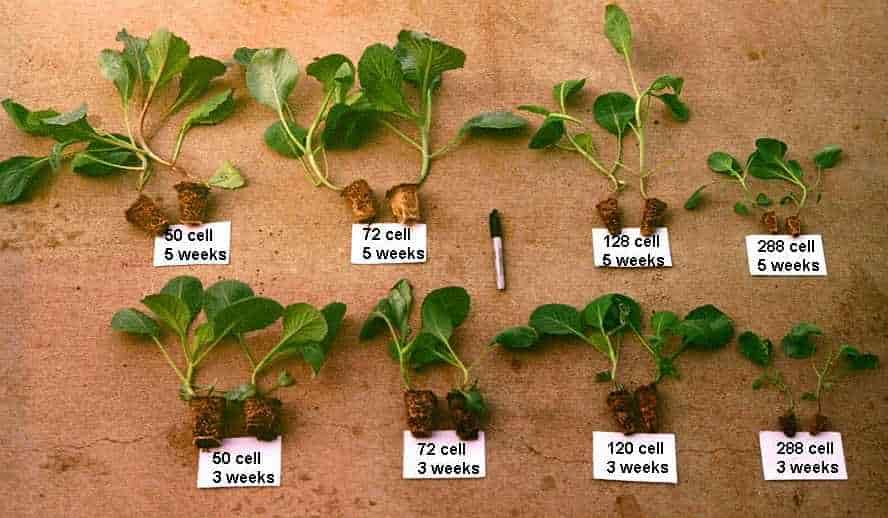
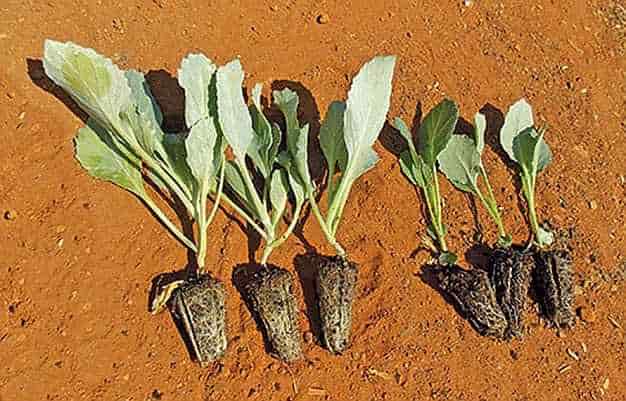
Seeding Cabbage methods – Cabbage sowing – is carried out in two ways: either by direct seeded into the field at the definitive sites of the crop or by sowing it in specially protected spaces in a controlled environment – cold frames, hotbeds, hothouses and greenhouses – followed by transplantation of the seedlings in the field.
Each of these seeding Cabbage methods has advantages and disadvantages. Listed below are generally the advantages and disadvantages thereof.
Headed Cabbage – Seeding Cabbage Methods
Seeding Cabbage Methods - Direct Seeded Pros & Cons
Cons of Direct Seeding
- Cabbage’s direct seeding requires a perfect flat form of the field – the field must be nearly level
- By Cabbage’s direct seeding is more difficult weeds control and that increasing the production costs of either conventional or organic crop cultivation
- Direct seeding requires optimal stands formation using special mechanical equipment -e.g. precision seeders- to control depth of planting and in-row spacing.
Pros of Direct Seeding
- Cabbage crops started by direct seeding mature, regardless of variety, 15 to 20 days earlier
- Early harvesting also entails an increase in income for the producer.
Headed Cabbage – Seeding Cabbage Methods
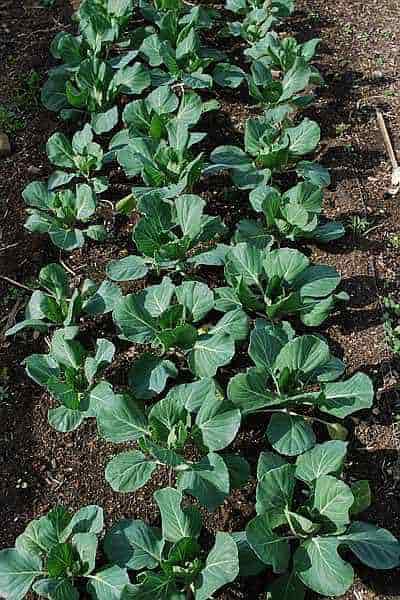
Seeding Cabbage Methods - Protected Seedbeds Pros & Cons
Cons of Seeding in Protected Seedbeds
- The sowing of Cabbage in protected seedbeds requires the existence of special spaces – constructions and farm building projects
- Depending on the type of the protected seedbed, the corresponding equipment is also required
- The sowing of Cabbage in protected seedbeds increases the production costs of either conventional or organic crop cultivation
Pros of Seeding in Protected Seedbeds
- Exploitation of the very low and inadequate temperatures period for unprotected Cabbage sowing and therefor extend the growing season
- The transplanted Cabbage seedlings develop a richer and strongest root system
- Weed control is easier and more cost-effective for the producer

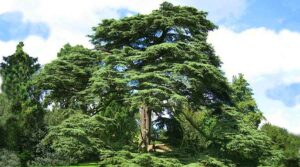

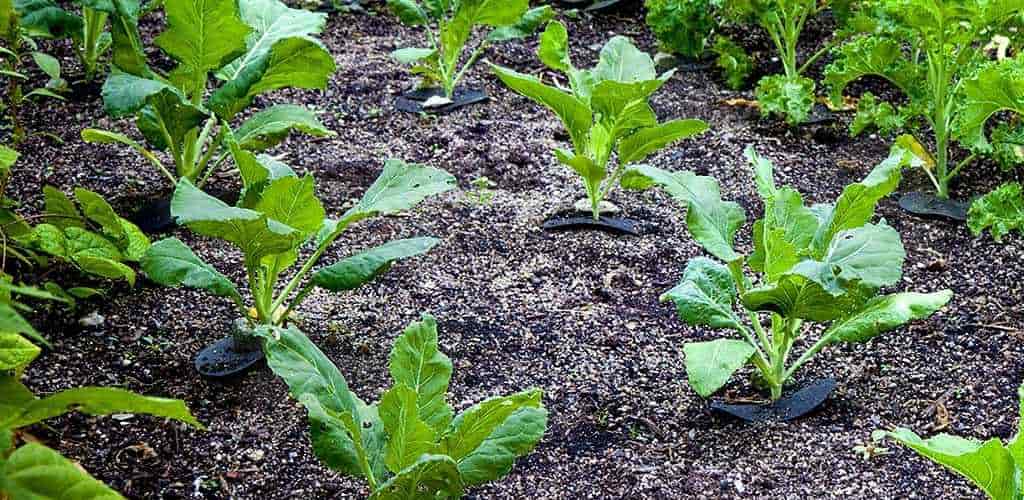
Direct Seeding of Cabbage in the Field
The first of seeding Cabbage methods gives remarkable results in fields whose soil is mainly sandy and have a permanent irrigation system. It is applied throughout the year in climatically favorable areas of this type of sowing, while in cold climates the direct sowing of Cabbage is carried out in the summer or autumn.
The seed of Cabbage is sown at a depth of 1 to 2 cm (0.4-0.8 in) followed by watering. If the soil is heavy, roller is required to bring the seed into contact with the soil.
According to researches, the best results – produced yields and head weights similar or higher – have been given by the precision seeding of one seed per hill and at 30 cm in-row, compared to the usual practice of sowing per 10 cm apart and thinned to 30 cm.
The amount of seed required is 2 to 5 kg/ha.
Headed Cabbage – Seeding Cabbage Methods
Seeding Cabbage in Cold Frames
Sowing of Cabbage in cold frames is a practice with remarkable results mainly for the spring cultivation of the cabbage.
If the cold frame consists of a soil substrate, then its preferred composition is 2 parts of black peat, 1 part compost (or disinfected manure) and 1 part of perlite.
The seed is sown in March or April (depending on the climatic conditions of each region). After sowing, the seed is covered with the soil mixture up to 1 to 2 cm, pressed gently and then watered.
The required amount of seed is 1.4 to 1.6 g/m2.
If the cabbage is sown in seed trays, which will then be placed in the cold seedbed, then the soil mixture is proposed to consist of 2 parts of black peat and 1 part of perlite.
Headed Cabbage – Seeding Cabbage Methods
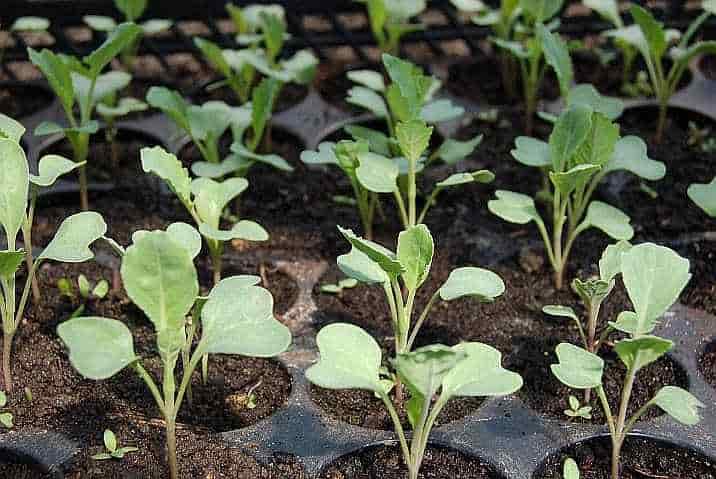
Seeding of Cabbage in Hotbeds - Greenhouses
By sowing cabbage in hotbeds and hothouses, seedlings are produced during the winter.
This method of course presupposes the existence of the space, the necessary means and equipment as well as a certain basic, at least, level of knowledge and skills on the part of the producer.
And in this case the Cabbage is sown in seed trays whose soil mixture also consists of 2 parts of black peat and 1 part of perlite.
Once plants have 4 to 6 leaves, they are hardened (3-10 days) and after the risk of frost has passed, they are transplanted into the field.
Headed Cabbage – Seeding Cabbage Methods
References
The References to this lamentable methodical article entitled Headed Cabbage – Seeding Cabbage Methods are presented by the George Thorogood & The Destroyers band with their One Bourbon, One Scotch, One Beer song – to go away our (readers lost) worries.
- Balliu, A. (2012). Cabbage. In H. K. V. & P. Hazra (Eds.), Handbook of Vegetables (Vol. 3, pp. 79-120). Studium.
- Bracy, R. P., Parish, R. L., Bergeron, P. E., Moser, E. B., & Constantin, R. J. (1993). Planting Cabbage to a Stand with Precision Seeding. Hortscience, 28(3), 179-181.
- Decoteau, D. R. (2000). Vegetable Crops. Pearson.
- Norman, J. C. (1992). Tropical Vegetable Crops. Hyperion Books.
- Perkins-Veazie, P. M., Cantliffe, D. J., & White, J. M. (1989). Improved Stand Establishment of Direct-Seeded Cabbage with Seed Covers. J. Amer. Soc. Hort. Sci, 114(1), 36-39.
- Χα, Ι., & Πετρόπουλος, Σ. (2014). Γενική Λαχανοκομία και Υπαίθρια Καλλιέργεια Λαχανικών [General Horticulture and Field Cultivation of Vegetables]. Βόλος: Πανεπιστημιακές Εκδόσεις Θεσσαλίας.
- Cabbage Production: Government of Saskatchewan
Clarification
Of course, it is needless to say – but we will emphasize it – that in this handmade website, no article has been and will not be written with recourse to Artificial intelligence (AI). Natural Intelligence, that is, as much of it as we have and for as long as we are allowed to have it, is enough for us.
Sharing
The use of the material, where third-party rights are not mentioned or implied (such as photos or audiovisual files - with the exception of those belonging to "Kalliergeia"), is absolutely free. Its sharing, possibly, useful.