Home » PLANTS & CROPS »
Headed Cabbage – Propagation of Headed Cabbage
CONTENTS ⌵
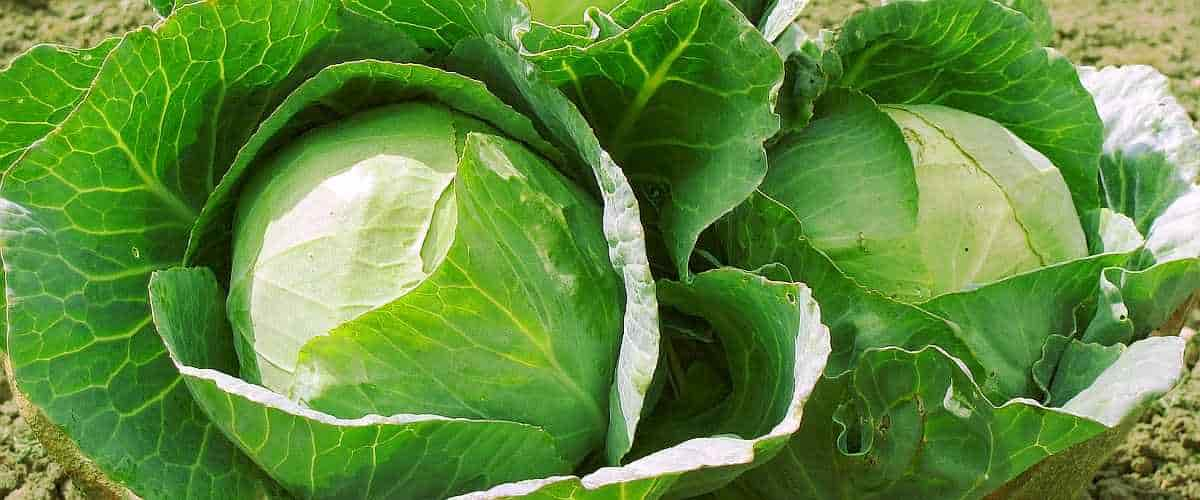
The propagation of Headed Cabbage and the factors that affect the germination of its seed are the main subject of this article.
Which, if we did not lose the count, is the fourth of the series devoted to the cultivation of the Headed Cabbage, Brassica oleracea var. capitata.
A Brassica oleracea var. capitata, which inevitably leads us to think—due to its shape (?) and season—about the coming autumn.
And which makes us, in a way, doubt the correctness of the title we chose for this article.
Perhaps, we now say, a less pompous title such as “The Epic Propagation of Headed Cabbage Farewell to the Inappropriate Summer on the Bare Terrace with the Wild Sinks“ would be more appropriate for the occasion.
If not, so much the worse for the occasion.
If so, so much the worse for the article.
Headed Cabbage – Propagation of Headed Cabbage
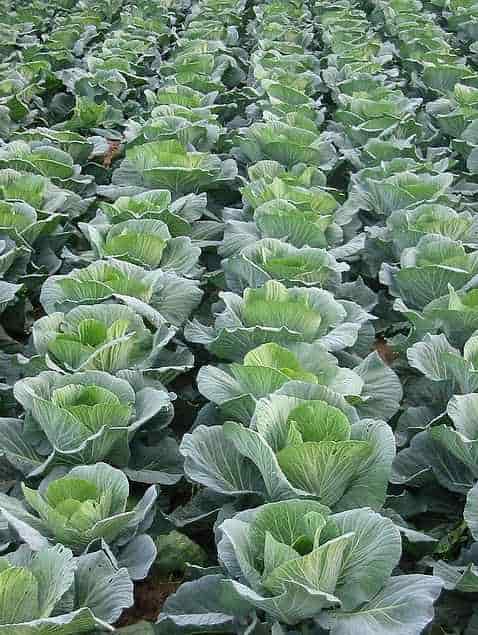
The Propagation of Headed Cabbage
Headed Cabbage (Brassica oleracea var. capitata), whether grown on a commercial scale or in a small vegetable garden to meet family needs, is propagated mainly by seed.
The Headed Cabbage propagation is carried out either by sowing directly to the definitive sites in the field or in specially covered areas ( greenhouses, germination rooms e.t.c) from where after the seedlings reach a certain stage of development, they will be transplanted into the field.
Headed Cabbage – Propagation of Headed Cabbage
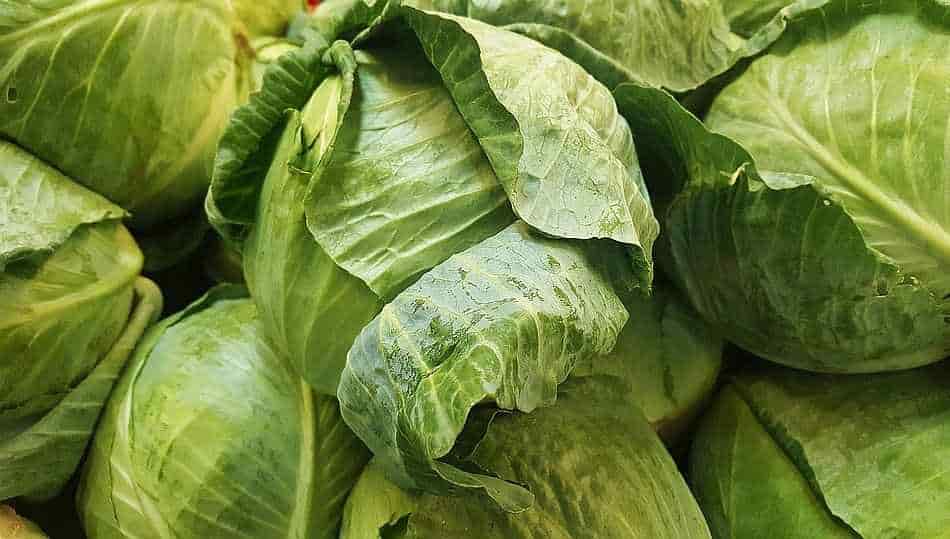
Factors affecting the Headed Cabbage Seeds Germination
The successful propagation of Headed Cabbage depends on a variety of factors. Some of the factors are biological and other environmental.
All of these have a different effect on seed germination.
However, for successful germination and consequently the successful growth of seedlings decisive role play:
- The season and the time of the Headed Cabbage seed harvest
- The quality of the harvested seeds
- The temperature of the soil (or the soil medium) and air
- Soil Moisture (or soil medium) and atmospheric humidity
- The air and oxygen of the soil (or the soil medium)
Headed Cabbage – Propagation of Headed Cabbage
Season, Time of Seed Harvest And Quality of the Headed Cabbage Seed
As with all species, the germination of Headed Cabbage seeds is maintained at high rates for a certain period of time, which for most varieties reaches up to 4 to 6 years.
Of course, as much close to the seed harvested period as possible is the best, but it is to be taken into account that, especially for simple varieties, where the growers collects the seeds by themselves and sowing again, they must be at least 90 to 120 days, because in a different case the seeds are in dormancy phase.
As regards to the quality of the harvested seeds, they should come from healthy plants and be themselves healthy, belong to the specific variety and of course have the desirable characteristics of this particular variety.
Of course, the grower who buys the seed has no control over the process and the final product of the seed production.
That is why the credibility of the seed companies as well as the validity of the quality certificates, which accompany in particular those seeds intended for commercial cultivation, is of great importance.
Headed Cabbage – Propagation of Headed Cabbage
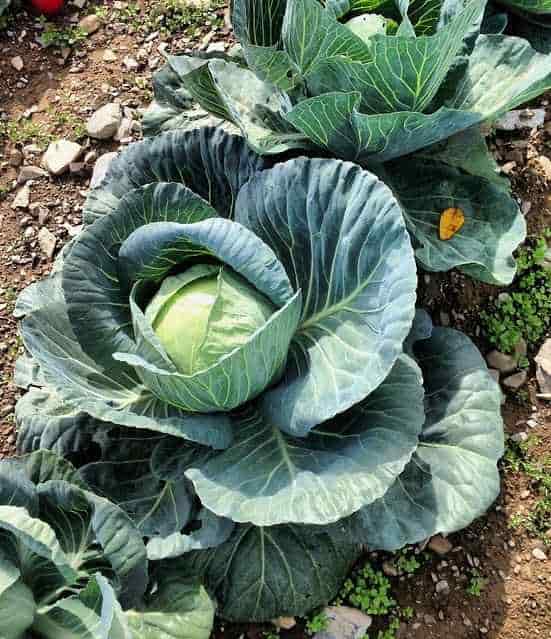
The Temperature Effect on Headed Cabbage Propagation
Successful propagation of Headed Cabbage depends – as has been said above – to a large extent on both soil and atmospheric factors.
Among them, the soil temperature (or the seed medium temperature) plays a key role.
In general, it could be said that the seeds used for the Headed Cabbage propagation germinate at soil temperatures between 10 (50 °F) and 30 °C (86 °F). Typically, it is reported that for a depth of 1.2 cm:
- At 10 °C (50 °F) the seeds germinate in 10 days
- At 15 °C (59 °F) the seeds germinate in 9 days
- At 20 °C (68 °F) the seeds germinate in 6 days
- At 25 °C (77 °F) the seeds germinate in 5 days
- At 30 °C (86 °F) the seeds germinate in 4 days
However, the optimum soil temperatures for the germinate of Headed Cabbage seeds, ranging from 93 to 99%, are considered to be between 15 and 20 °C (59-68 °F).
Headed Cabbage – Propagation of Headed Cabbage
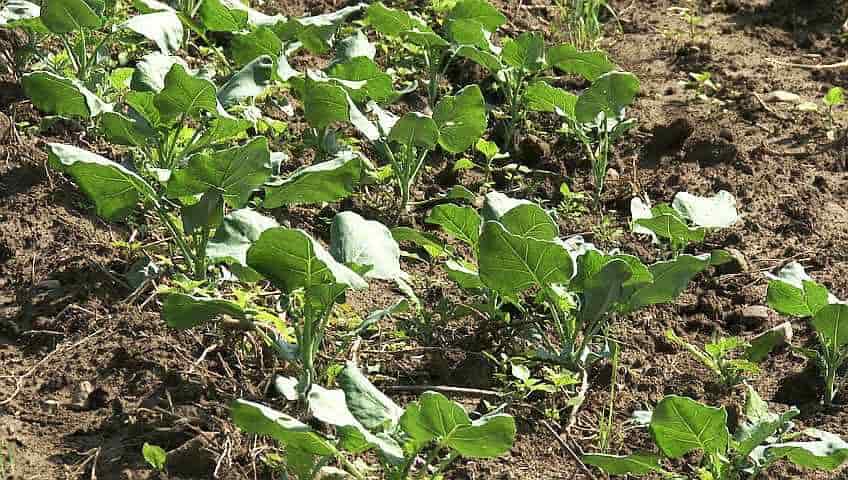
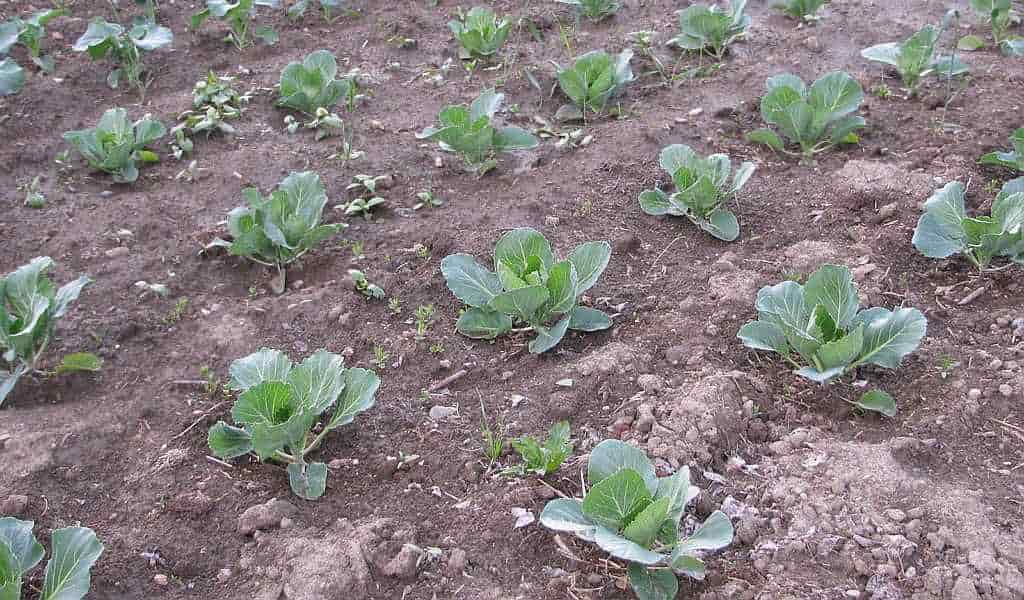
The Soil Moisture and Atmospheric Humidity Factors
Successful propagation of Headed Cabbage is also affected to a significant extent by atmospheric humidity and soil moisture rates.
Initially, during sowing, high moisture content is necessary for germination of the seeds.
Then, and especially in the soil (or in the soil medium of sowing), the high percentages, if left, will result in abnormal air circulation, oxygen deficiency to the rhizosphere, disease development, and consequently decay seedlings.
Headed Cabbage – Propagation of Headed Cabbage
References
The References to this ultra-propagate article, entitled Headed Cabbage – Propagation of Headed Cabbage, are presented by the excellent Mr. Howlin’ Wolf with the song Spoonful, of his excellence Willie Dixon.
- Balliu, A. (2015). Cabbage. In Handbook of Vegetables (Vol. 3, pp. 79-120).
- Decoteau, D. R. (2000). Vegetable Crops. Prentice Hall.
- Dixon, G. R., & Dickson, M. H. (2007). Vegetable Brassicas and Related Crucifers. Wallingford: CABI.
- George, R. A. (2009). Vegetable Seed Production. Wallingford, England: CABI.
- Swiader, J. M., Ware, G. W., & McCollum, J. P. (1992). Producing Vegetable Crops (4th ed.). Vero Media Inc.
- Χα, Ι., & Πετρόπουλος, Σ. (2014). Γενική Λαχανοκομία και Υπαίθρια Καλλιέργεια Λαχανικών [General Horticulture and Field Cultivation of Vegetables]. Βόλος: Πανεπιστημιακές Εκδόσεις Θεσσαλίας.
- Growing Cabbage: Utah State University Extension
Clarification
Of course, it is needless to say – but we will emphasize it – that in this handmade website, no article has been and will not be written with recourse to Artificial intelligence (AI). Natural Intelligence, that is, as much of it as we have and for as long as we are allowed to have it, is enough for us.
Sharing
The use of the material, where third-party rights are not mentioned or implied (such as photos or audiovisual files - with the exception of those belonging to "Kalliergeia"), is absolutely free. Its sharing, possibly, useful.