Ethnobotany
Home »
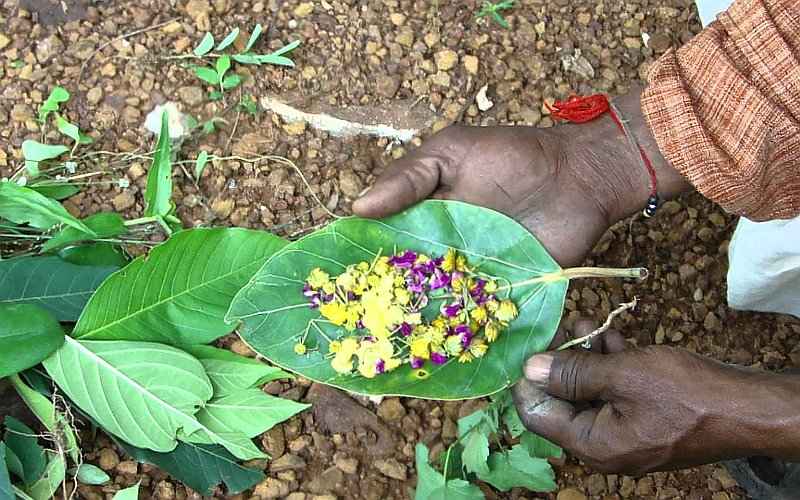
Ethnobotany is the science that studies the relationships between humans and human societies with plants. It has the purpose of recording, describing, interpreting and explaining the whole range of these relationships, as well as the connections created by human cultures with the local flora.
CONTENTS ⌵
Ethnobotany

Ethnobotany Research and Contribution
Plants as a source of food, their therapeutic use, the contribution of plants as raw material of clothing, their use as building materials, their use in the ritual aspects of social life are areas of research for ethnobotanists.
But the concentration of ethnobotanic cognitive material goes further. The search for and suggestion of new plant food sources as well as the emergence, management and increase of biodiversity are also part of the cognitive load but at the same time the contribution of this field of knowledge to science and to modern civilization.
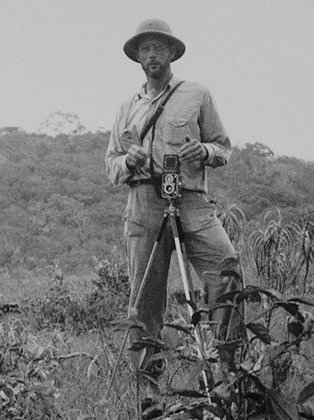
Richard Evans Schultes is the founder of ethnobotany, although he was not the author of this term, while Mark Plotkin is among the top scientists.
Ethnobotany
Invention of the Term
The invention of the term is credited to the important American botanist John William Harshberger (January 1, 1869 – April 27, 1929).
Giving a lecture in 1895 in Philadelphia, USA, and trying to describe his research work, he used the term Ethnobotany for the first time.
In this way, the content of his studies – in his own words – was nothing more than the study of “plants used by primitive and aboriginal people.”
Harshberger also gave the original definition of Ethnobotany as the field of science that deals with the study of how indigenous tribes use plants for food, construction, or clothing.
The value of Harshberger’s research was great, considering that at that time the scientific community did not consider such an engagement with indigenous peoples to be of any importance.
Ethnobotany
The Relationship between Ethnobotany and the Other Sciences
This subject can be considered as part of the science of Ethnobiology. Ethnobiology is that branch, which among other things includes the study of direct interactions between humans and biota.
As it may be understood, this is a very wide field of knowledge, where ethnozoologists, ethnoecologists, ethnomycologists, ethnobotanologists, but also other scientists deal with it.
Ethnobotany
References
The References in the article Ethnobotany are accompanied by the Argentine artist Loli Cosmica with her own version of the traditional song Tzen Tze Re Rei by Shuar, where Shuar is an indigenous people of Ecuador and Peru.
- Anderson, E. N., Pearsall, D., Hunn, E., & Turner, N. (2011). Ethnobiology. John Wiley & Sons.
- Cotton, C. M. (1996). Ethnobotany: Principles and Applications. Wiley.
- Davis, W. (2016). The Lost Amazon: The Pioneering Expeditions of Richard Evans Schultes. Earth Aware Editions.
- Prance, G. T. (1991). What is Ethnobotany Today? Journal of Ethnopharmacology, 32(1-3), 209-216.
- Rätsch, C. (2005). The Encyclopedia of Psychoactive Plants: Ethnopharmacology and its Applications. Park Street Press.
- Young, K. J., & Hopkins, W. G. (2007). Ethnobotany. Chelsea House Pub.
Ethnobotany – Where History and Medicine Meet the Forest: Carrie Stevenson (UF/IFAS Extension – University of Florida)
Clarification
Of course, it is needless to say – but we will emphasize it – that in this handmade website, no article has been and will not be written with recourse to Artificial intelligence (AI). Natural Intelligence, that is, as much of it as we have and for as long as we are allowed to have it, is enough for us.
Sharing
The use of the material, where third-party rights are not mentioned or implied (such as photos or audiovisual files - with the exception of those belonging to "Kalliergeia"), is absolutely free. Its sharing, possibly, useful.