Something Like Introduction
Eleonora, a poem by Nikos Engonopoulos, is included in the poetry collection “Do Not Distract the Driver”, the first of the surrealist artist, which was published by Kyklos editions in 1938 in 200 numbered copies.
Although Eleonora, as a poetic conception, inspiration and – possibly – presence, was not one but two, and if the poetry collection in which this Eleonora is included did not go unnoticed when it was first released, this will be discussed a little later.
In the meantime, it is deemed necessary to precede:
- First, a very concise biography of Engonopoulos, which may partially highlight his origins and resources during his long career in art
- And secondly, a promise, that relatively soon – and in any case no later than the end of this century – a full tribute is planned, which will include both the poetic and painting work of the artist.
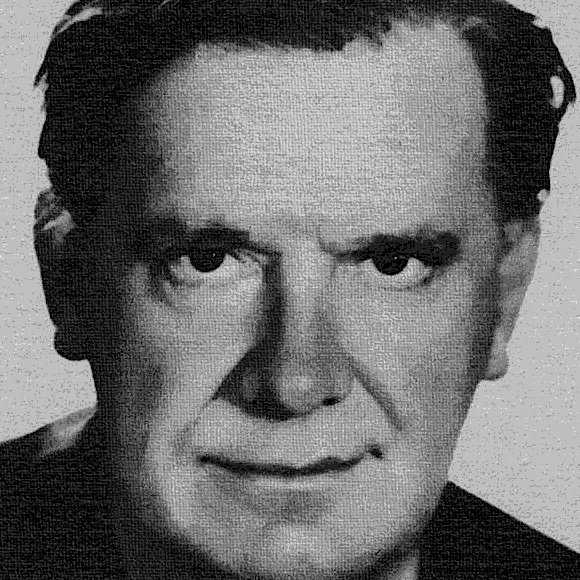
Brief Biography of Engonopoulos
Nikos Engonopoulos was born in Athens, on October 21, 1907. He was the second son of Panayotis and Errietti nee Ioannidis. Panayotis came from an old Phanariot family, and Errietti had roots in Himarë, while her mother and grandmother of Engonopoulos Penelope was the daughter (one of fourteen!) of King Otto’s head gardener and agronomist, of German origin, Dimitrios Friedrich Schmidt.
In 1927 Engonopoulos finished high school in Paris. He enrolls in medical school, but soon gives up the stethoscope for the pen and brushes – and France for Greece. Thus, in 1932 he enrolls the School of Fine Arts from which he graduated in 1938 – although he would receive his diploma in 1956.
However, 1938 is a landmark year for the artist, since then he makes his first dynamic public appearance in letters while participating for the first time with his works in the Painting Exhibition “Art of Modern Greek Tradition”.
In 1941, he was drafted and necessarily participated in the Second Planetary Carnage. With the collapse of the Albanian Front, he was captured by the Germans and held “illegally” in “prisoner labor” camps, until his escape and his return to Athens.
In 1945 he assumed the position of assistant lecturer in the Department of Architectural Design and Drawing at the National Technical University of Athens. The following years find him participating in numerous group exhibitions of paintings, while in 1954 he will be invited to represent Greece at the 27th Venice Biennale. In 1956 he was elected permanent curator of N. T. University of Athens and in 1969 full Professor in the Department of Drawing – a position from which he will retire.
A very realistic heart attack cuts the thread of his life in Athens, on October 31, 1985.
Reception of the "Do Not Distract the Driver" Collection
The poet and painter Nikos Engonopoulos was one of the most important Greek artists of the 20th century, a pioneer of surrealism in the country, together with Andreas Embirikos, Nikitas Randos (or Nikolas Kalas) and early Odysseas Elytis.
But to be a surrealist in the Greece of the previous century 4th decade, for the then local dominant intelligentsia, was to be a “surrealist“: a bipedal, artless, irrational, moonraker, who was outside of all artistic, social and political South Balkan Cartesian reality.
By the publishing in 1938 his collection “Do Not Distract the Driver”, Engonopoulos unwittingly found himself confronting not directly the “giants” of the smarty Southern Balkan ruling intelligentsia (after all, what smarty would be?), but mainly with their philological and other ordinances: hiding for the most part behind them, enjoyed the mockery and public derision they unleashed more against the poet himself and less against his work itself.
But how can they talk about Engonopoulos’s poetry in a truly critical mood, when the majority of them were really uneducated about surrealism and the new currents of modernism?
And even more so, when in the midst of the Metaxas dictatorship, where one of the dominant ideologies of the regime was a return to the roots, to tradition, could the regime officials of thought and aesthetics bite the hand that fed them?
It is typical of the climate of intimidation and ridicule that they created, that even Apostolos Melachrinos, the publisher of the Kyklos, never included this collection in any list of Kyklos publications.
In any case, the fact that the patina of time erased from the foreground the idols of the ugly, and not that of the great poet and painter Nikos Engonopoulos, is a desirable reality.
Eleonora & Eleonora II
As we write in the introduction, there are two Eleonoras: one (Ελεωνόρα) from the poetry collection Do Not Distract the Driver, and another, Eleonora (Ελεονώρα) from the poetry collection The Return of the Birds. So that the reader does not get confused, the poet takes care that both visually when writing they differ (Ελεωνόρα / Ελεονώρα) – and indeed they do -, but also aurally, when speaking they are similarly distinguishable – and indeed they are distinguishable -, since he comprehensively calls the latter Eleonora II (Ελεονώρα II) – much like ship owners do with a whole line of their ships.
Without wanting to preempt the readers, we must point out that:
- The first Eleonora, is the poetic equivalent of the aesthetic joy and enjoyment of the female body, with the right amount of humor.
- The second, Eleonora II, is that of lovers and love, but also of the prospect of the sad end of all existence – here the parody is barely discernible and the humor everywhere absent.
Of course, if we take into account the release time of the two collections, 1938 and 1946 respectively, then we can conclude that the intervention of the World War II Massacre and the beginnings of the Greek civil war shed some light on the stylistic imprint and the included – get away from us – message of each poem. And the spelling of the names, we guess, shed even more light: if we attempt to etymologize them in Greek language, that which at first glance is invisible becomes apparent.
Nikos Engonopoulos - Eleonora
for hands she hath non, nor
eyes, nor feet, nor golden
Treasure of hair
(front view)
her hair is like cardboard
and like a fish
her two eyes are
like a dove
her mouth
is like civil war
(in Spain)
her neck is a red
horse
her hands
are
like the voice
of the dense
forest
her two breasts are
like my painting
her belly is
the tale
of Belthandros and Chrysantza
the tale
of Tobias
the tale
of
the ass
the wolf and the fox
her sex
is
shrill whistling
in the calm
of midday
her thighs are
the last
flickerings
of the modest joy
of steam-rollers
her two knees
Agamemnon
her two adorable
tiny
feet
are the green
tele-
phone with the red
eyes
(rear view)
her hair
is
an oil lamp
that burns
in the morning
her shoulders
are
the hammer
of
my desires
her back
is the
sea’s
spectacles
the plough
of deceptive
ideograms
whirs
sorrowfully
at her waist
her buttocks
are
fish-glue
her thighs
are
like
a thunderbolt
her tiny heels
light
the
morning’s
bad
dreams
and after all
she is
a woman
half
hippocampus
and half
necklace
perhaps
she’s even
part pine
and part
elevator
Translated by David Connolly
Poem by Nikos Engonopoulos from the Collection Μην Ομιλείται εις τον Οδηγόν (Do Not Distract the Driver), 1938
- Engonopoulos, N.(2015). Selected Poems ( Connolly, Trans.). Cambridge, MA: Harvard University Press Department of the Classics.
- Αμπατζοπούλου, Φ. (2008). Εισαγωγή στην Ποίηση του Εγγονόπουλου: Επιλογή Κριτικών Κειμένων. Πανεπιστημιακές Εκδόσεις Κρήτης.
- Εγγονόπουλος, Ν. (1999). Ποιήματα. Αθήνα: Ίκαρος.
- Εμπειρίκος, Α., Εγγονόπουλος, Ν., & Γιατρομανωλάκης, Γ. (1999). Νικόλαος Ἐγγονόπουλος ἤ Τό Θαῦμα τοῦ Ἐλμπασάν καί τοῦ Βοσπόρου: Διάλεξη γιά τόν Νίκο Ἐγγονόπουλο. Αθήνα: Άγρα.
- Χαχλά, Α. (2010). Νίκος Εγγονόπουλος: Ο Ζωγράφος και ο Ποιητής : Πρακτικά Συνεδρίου Παρασκευή 23 & Σάββατο 24 Νοεμβρίου 2007. Αθήνα: Μουσείο Μπενάκη.
- Nikos Engonopoulos: Official Site
Clarification
Of course, it is needless to say – but we will emphasize it – that in this handmade website, no article has been and will not be written with recourse to Artificial intelligence (AI). Natural Intelligence, that is, as much of it as we have and for as long as we are allowed to have it, is enough for us.
Sharing
The use of the material, where third-party rights are not mentioned or implied (such as photos or audiovisual files - with the exception of those belonging to "Kalliergeia"), is absolutely free. Its sharing, possibly, useful.