Home » PLANTS & GARDEN »
Correcting Nitrogen Deficiency in Ornamental Trees
CONTENTS ⌵
In the following article, entitled Correcting Nitrogen Deficiency in Ornamental Trees, “Kalliergeia” addresses the issue of the lack of this essential element in such a way that, with its addition, the trees in the garden and landscape can thrive, supported by an effective level of nitrogen nutrition.
On the other hand, it should be noted at this point that Correcting Nitrogen Deficiency in Ornamental Trees inaugurates yet another unnecessary series of articles on this website related to the fertilization of ornamental plants.
Nevertheless, in order to avoid any misunderstandings, we can clearly state here our strong commitment that we will make every serious effort to ensure that the level of the articles is such that it discourages even the most well-meaning reader from reading them.
If, unfortunately, this is not achieved, the editorial team of “Kalliergia” is ready to take full karmic responsibility.
Sagittarius in Leo can take care of the rest.
Correcting Nitrogen Deficiency in Ornamental Trees
Nitrogen and its Role in Plants
Nitrogen – which play a significant role in most soil fertility management programs – belongs in this basic category of nutrients that:
- Are involved in the formation of organic constituents of plants
- Are essential in large quantities
Therefore, the role of nitrogen in the nourishment and growth of plants is essential and fundamental.
In general, it could be said that nitrogen contributes decisively to the production of biomass. Its lack leads to reduced growth of plants as a whole and their plant parts in particular.
Insufficient plant nourishment with nitrogen which results in symptoms of lack in these is called nitrogen deficiency.
Correcting Nitrogen Deficiency in Ornamental Trees

The Nitrogen Deficiency in Ornamental Trees
The nitrogen deficiency in garden and landscape trees can also occur in those that have been planted in the soil but also in those planted in pots and containers. Here we will focus on the lack of nitrogen in the soil, and in particular on those soils most commonly observed.
Soils with reduced nitrogen concentrations are mainly:
- The sandy
- Those lacking organic substance
- Those in which the nutrient leaching phenomenon is particularly intense
Soil nitrogen is available in plants in two forms, nitrate and ammonium. From these, the nitrate form is soluble in soil water.
So if the nitrogen is mainly contained in its nitrate form, then in the light sandy as well as in the leached ones, a lack of this element will occur. Failure to feed the plants with nitrogen will result in nitrogen deficiency.
Correcting Nitrogen Deficiency in Ornamental Trees
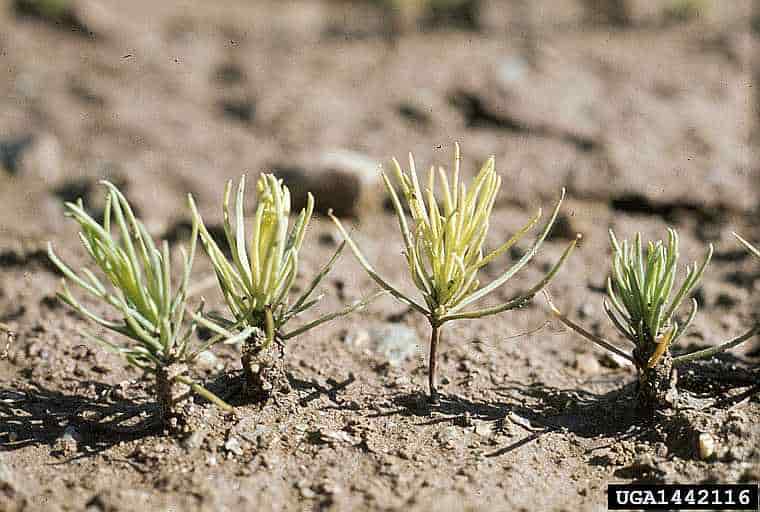
Symptoms of Nitrogen Deficiency in Ornamental Trees
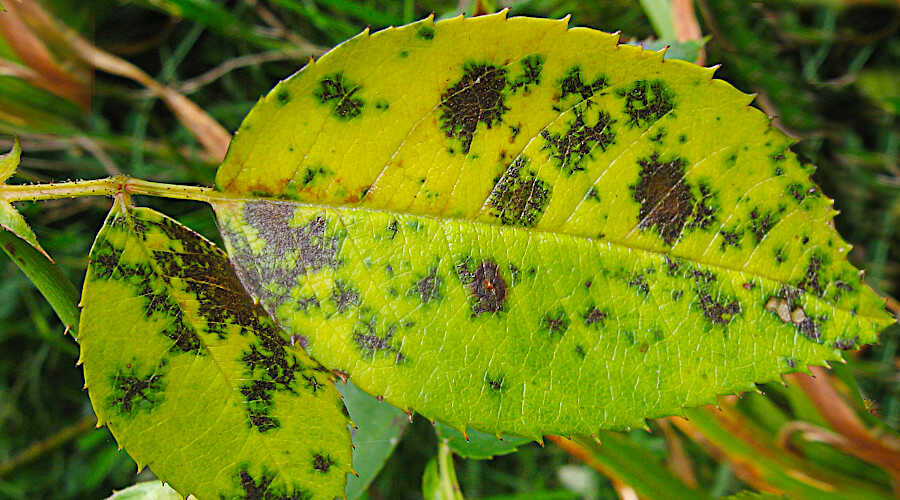
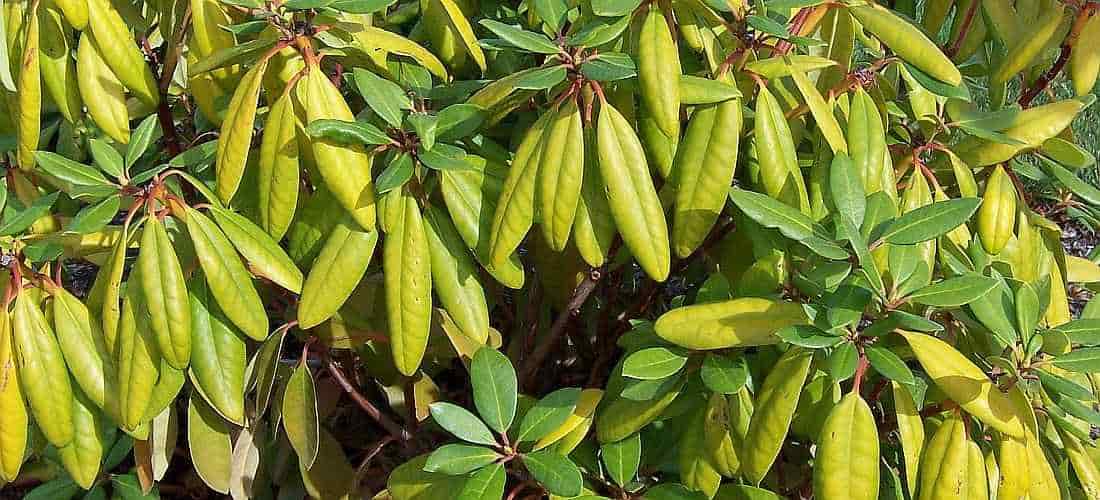
The nitrogen deficiency in all ornamental trees is manifested by an overall decrease in plant vigor, the reduced growth of shoots (which becomes short and small in diameter), the appearance of small unusual leaves as well as the chlorosis of the leaves.
Chlorosis could be called the presence of yellowish-green to white color in them. Chlorosis appears first on bigger and older leaves and then to newer ones. Depending on the degree of nitrogen deficiency, the intensity of the manifestation of symptoms is also high. In severe nitrogen deficiency the entire foliage turns yellow or becomes almost white, the older leaves die and the growth of young leaves stops.
The nitrogen deficiency in ornamental trees belonging to the group of deciduous broad-leaved, apart from the above symptoms, includes:
- The appearance of brownish-red hues on branches and shoots
- Pronounced red or orange-yellow coloring of leaves in autumn
- Early defoliation
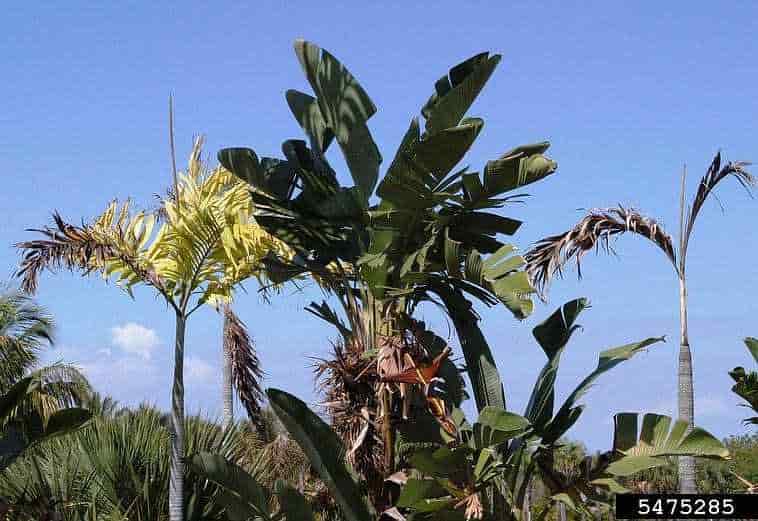
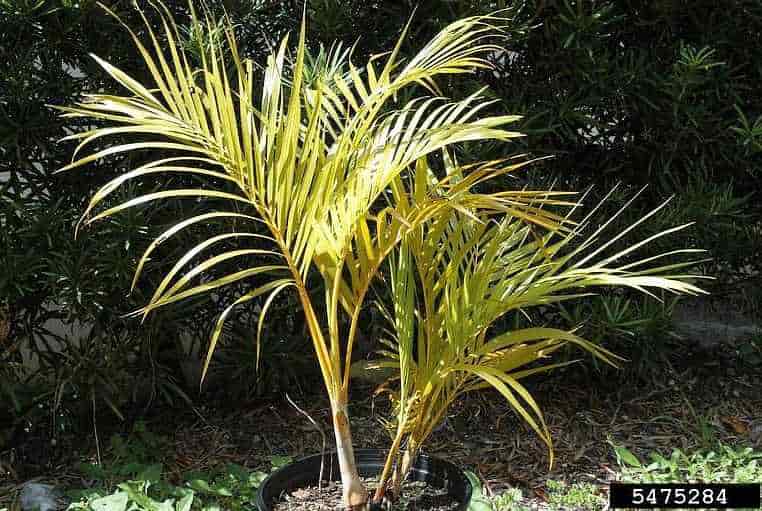
The nitrogen deficiency in ornamental trees belonging to the palm group includes:
- The uniform, to a large extent, discoloration of the older leaves
- Chlorosis of both the rachis and the petiole of the palm leaf
The gradual tapered of the trunk – especially in severe nitrogen deficiency
Correcting Nitrogen Deficiency in Ornamental Trees
Correcting Nitrogen Deficiency in Ornamental Trees
Nitrogen deficiency in all ornamental trees can be corrected by application of nitrogen fertilizers to the soil or in combination with foliar application. Foliar application is recommended for immediate nitrogen uptake, but is administered in a much smaller rate than the total required.
Some of the proper fertilizers for soil adding nitrogen are:
- Calcium Nitrate Ca(NO3)2, which is applied to acidic pH soils. The fertilizer grade is 15-0-0.
- Ammonium Sulphate (ΝΗ4)2SO4, which is applied to alkaline pH – limestone soils. The fertilizer grade is 21-0-0 + 24 S.
- Calcium Ammonium Nitrate, which is applied to all soils, as it does not affect the pH of the soil. The fertilizer grade is 26-0-0.
- Urea CO(NH2)2, which is characterized by the fact that it is extremely soluble. The fertilizer grade is 45-0-0.
Correcting Nitrogen Deficiency in Ornamental Trees

Fertilizer Application Rates for the Correction of the Deficiency in Ornamental Trees
If a leaf tissue analysis has been done, the amounts given are derived from the findings. When no leaf tissue analysis has been done or even soil test then the calculation is empirical. The empirical calculation of the amount to be added to correct nitrogen deficiency in ornamental trees occurs in two ways:
- By measuring the tree trunk diameter at a height of 1.30 m above the ground and adding 40 gr of actual nitrogen per cm (1⁄4 pound per inch)
- By measuring the projection of the trees crown surface to the soil and adding 20-40 gr of actual nitrogen per m2 (2 to 4 pounds per 1,000 square feet)
Example
Suppose we need to add 150 g of actual nitrogen and the fertilizer to be used is Calcium Nitrate. Calcium nitrate grade is 15-0-0, meaning that 15 kg of nitrogen is contained in 100 kg of fertilizer. Therefore, the amount of calcium nitrate to be administered is 1 kg.
This quantity corresponds to covering the needs of the tree for one year.
Correcting Nitrogen Deficiency in Ornamental Trees
References
The enormous, unique and unrepeteable Muddy Waters presents the References of the in-(shallow)-depth article, Correcting Nitrogen Deficiency in Ornamental Trees, with the unique and unparalleled song Hoochie Coochie Man.
- Barker, A. V., & Pilbeam, D. J. (Eds.). (2006). Handbook of Plant Nutrition. CRC Press.
- Gowariker, V., Krishnamurthy, V. N., Gowariker, S., Dhanorkar, M., & Paranjape, K. (2009). The Fertilizer Encyclopedia. John Wiley & Sons.
- Harris, R. W., Clark, J. R., & Matheny, N. P. (2010). Arboriculture: Integrated Management Of Landscape Trees, Shrubs, and Vines. Upper Saddle River, NJ: Prentice Hall.
- Hitchmough, J., & Fieldhouse, K. (Eds.). (2008). Plant User Handbook: A Guide to Effective Specifying. John Wiley & Sons.
- Rose, N., Selinger, D., & Whitman, J. (2001). Growing Shrubs and Small Trees in Cold Climates. McGraw-Hill Companies.
- Turner, R. G. (1996). The Ultimate Plant & Garden Book. Crown.
- Ασημακόπουλος, Ι. Η. (2014). Λιπάσματα, Λιπάνσεις [Fertilizers, Fertilization] (2nd ed.). Αθήνα: Έμβρυο.
- Fertilizing Trees & Shrubs: Clemson University Cooperative Extension
With Pomp and Circumstance
VIDEO
The Muddy Waters and the legendary Hoochie Coochie Man.
Clarification
Of course, it is needless to say – but we will emphasize it – that in this handmade website, no article has been and will not be written with recourse to Artificial intelligence (AI). Natural Intelligence, that is, as much of it as we have and for as long as we are allowed to have it, is enough for us.
Sharing
The use of the material, where third-party rights are not mentioned or implied (such as photos or audiovisual files - with the exception of those belonging to "Kalliergeia"), is absolutely free. Its sharing, possibly, useful.