The Cast Iron Plant (Aspidistra elatior) belongs to that category of evergreen ornamental plants, which are of easy cultivation, but at the same time can be utilized in places where few plants survive, such as within houses as well as in commercial and professional environments which are maximum shading.
Also, the few times that in cultivation conditions will blossom, will present a flower, which for some is considered to be worthless as it is cryptic, however neither can they refuse its individuality.
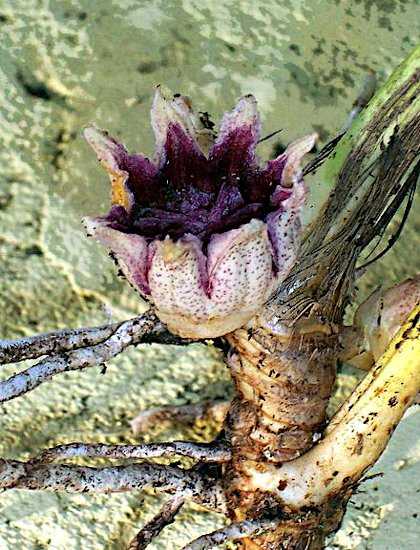
Because it looks like pretty much a mushroom – at least in the initial stages – and bloom directly above the soil.
If all the above is added to his great tolerance, then indeed it is a wonder its rather modest popularity.
With this article, the editorial team of ”Kalliergeia” undertakes the public relations of the plant, aiming to upgrade its “image” and launch its popularity at least until Alpha Centauri.
Cast Iron Plant (Aspidistra elatior) – Description & Uses
Cast Iron Plant Origin

Cast Iron Plant (Aspidistra elatior) – Description & Uses
Cast Iron Plant (Aspidistra elatior) - Brief Description
Family: Asparagaceae
Genus: Aspidistra
Scientific Name: Aspidistra elatior Blume
Common Name: Cast Iron Plant, Bar Room Plant, Aspidistra
General Characteristics
Leaf Persistence
Evergreen
Form
Perennial Herbaceous
Texture
Coarse
Growth Rate
Slow
Flowering Period
Spring
Fruiting Period
Autumn
Height (Outdoor | Indoor)
0.5-1 m (1.6-3.2 ft) | 0.3-0.6 m (1-2 ft)
Diameter
0.5-1 m (1.6-3.2 ft)
Shapes and Colours
Leaves Shape
Lanceolate-Oblong
Foliage Colour
Green
Autumn Foliage Colour
Green
Flowers Shape
Bell-Shaped
Flowers Colour
Brownish-Pale Purple
Fruit
Berry
Plantation
Soil Type: Well-drained, sand, clay, loam
Exposure: Half-shade, Shade
Soil pH: 5.5-7
Watering: Moderate
Hardiness: – 5 °C (23 °F – USDA Hardiness Zone 9b)
Uses
In parks, gardens, in pots and planters indoors and outdoors, as a cut leaf in compositions
Cast Iron Plant (Aspidistra elatior) – Description & Uses
Cast Iron Plant (Aspidistra elatior) - Etymology
Etymology of the Genus Name
The Englishman John Ker Gawler (1764 – 1842) was not only a gentleman botanist, but he had, among other things, a torque, a research passion for the words, which led him in the writing of the essay Archaeology of Popular Phrases and Nursery Rhymes of 1837, which through it became widely known.
Fifteen years earlier, and certainly less well known, in 1822, the gentleman studied not words, but specimens of a new genus monocotyledons plants; however, a little bit of the fact that the new genus was unbaptized, a little bit of its literal-minded appeal, decided to give it a name and this was the Aspidistra.
Of course, the Latinized word Aspidistra was his own invention, and somehow compound, since he gave to the Ancient Greek ασπίς (aspis – shield; genitive: ασπίδος – aspidos) or ασπίδιον (aspidion – small round shield), the ending-istra, borrowed from a related genus of plants, the Tupistra.
The choice of the word ασπίς, even better ασπίδιον, was apt: attributed with an extremely vivid way the shape of the stigma, of the plant flower’s pistil, which indeed reminds a small round shield.
As for the ending-istra, no comment can be made, because after all, he was the godfather and whatever name with whatever ending he wanted to give.
The only thing that will be reported here, if not objected to by the English colleague John Ker Gawler, is that the word ασπίς is formed from ἀ – the negative and the verb σπίζω (spizo), which in turn produced, in all likelihood, from the Proto-Indo-European root *spey-, which means to extend, expand, stretch.
Etymology of the Species Name
In the name of the species is not involved in any way John Ker Gawler, and maybe that’s the reason which used the simple Latin word ēlātior, which in simply Latin means taller, being the comparative degree of the adjective tall.
Of course, we must note that the origin of the word ēlātior is not exactly simple, since it comes from the word elatus which is the perfect passive participle of the Latin verb efferō, which is produced from the prefix ex– (out of) and the verb ferō (carry, bear).
On the other hand, the verb ferō derives its origin from the Ancient Greek word φέρω (fero), which means bear or carry, while in its turn probably derives from the Proto-Indo-European root *bʰer – which also means, bear or carry.
To conclude and to summarise the above, we could say that the word ēlātior is quite rightly attributed to a relatively higher height of this species than to others of the same genus.
Cast Iron Plant (Aspidistra elatior) – Description & Uses
Cast Iron Plant (Aspidistra elatior) - Origin & Life Span
Origin
There are not few authors who claim that Aspidistra elatior originates from China or other Asian mainland regions that extend up to the Himalayas.
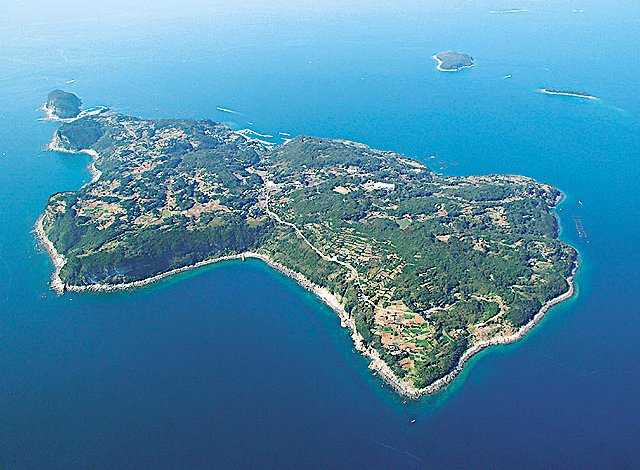
In reality, however, Aspidistra elatior is of purely Island origin, having as its birthplace the islands of the South Japanese Archipelago, namely the islands of Osumi (大隅諸島), which include Uzi Islands (宇治群島), Kuroshima (黒島), and Suvanosejima (諏訪之瀬島).
Ecology - Habitat
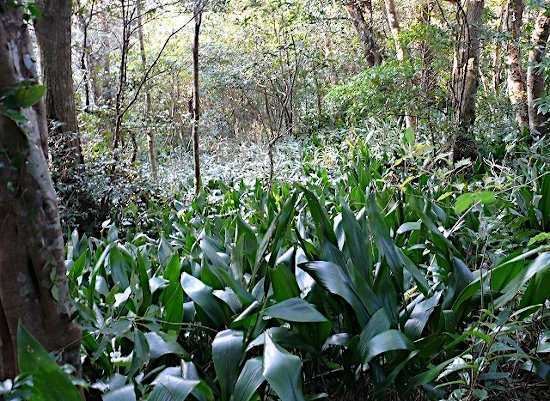
On the islands of the Archipelago Uzi is found in great abundance, while on the island of Kuroshima forms the understory in the subtropical forests of Castanopsis sieboldii (Itajii Chinkapin).
The climate is humid subtropical. Indicatively, the average annual temperature on the island of Kuroshima is 23 °C (74 °F) while the average annual rainfall is 642 mm. Further, in the Kuroshima island the lowest average monthly temperature is recorded in January with 3 °C (38 °F) and the highest in July with 33 °C (92 °F), while the lowest monthly average rainfall recorded in October with a 37 mm and the highest in December to 83 mm.
Life Span
The Cast Iron Plant in cultivation lives about 25 years, while there are no missing references to plants that have exceeded half a century of life. In England there are even family records from the Victorian era, where it is reported that some Cast Iron Plants were passed down from generation to generation.
Cast Iron Plant (Aspidistra elatior) – Description & Uses
Cast Iron Plant (Aspidistra elatior) - Landscape Attributes
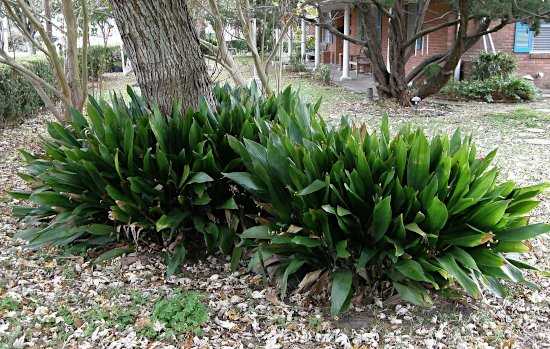
The Aspidistra elatior is a herbaceous and rhizomatous perennial and evergreen plant of small size and upright appearance.
It has a slow growth rate, its shape is hemispherical flattened, the shoots are missing, while its leaves are large and are carried on long petioles.
Plant’s crown is symmetrical, has average density, is rather non-regular outlined, and is characterized as coarse texture.
It reaches a height of 0.5 to 1m (1.6-3.3 ft) within a period of 2 to 5 years from its planting.
Cast Iron Plant (Aspidistra elatior) – Description & Uses
Cast Iron Plant (Aspidistra elatior) - Botanical Description
Roots
The rhizome is thick, almost circular cross-section, subterete, and goes smoothly decreasing to the edge. The thickness varies between 5 and 10 mm (0.2-0.4 in), it is brownish – pale yellow, and from this emerge the grayish – white roots.
Leaves
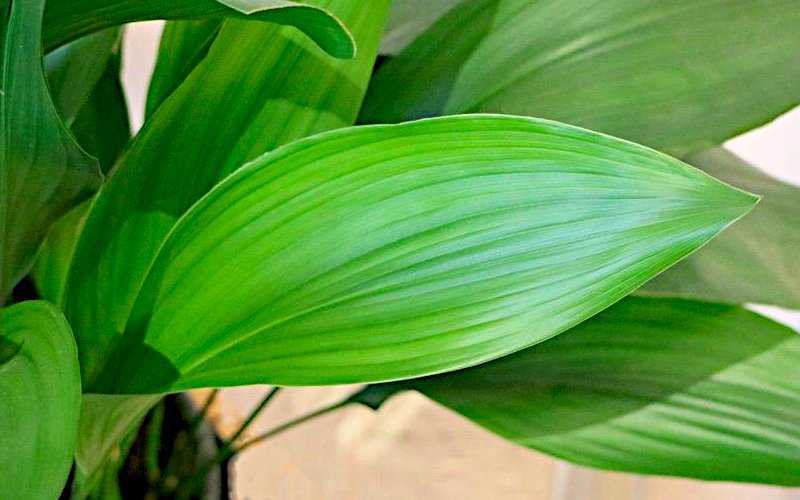
The leaves of the Cast Iron Plant are large, simple, shiny, dark green coloring. The leave blades are shaped lanceolate-oblong result in acute peak. Their margins are entire, the venation is parallel and their arrangement is spiral, while their size varies between 20 and 45 cm (7.8-17.8 in) in length and 6-12 cm (2.3-4.6 in) in width.
As the plant lacks shoots, the leaves grow directly from the rhizome, with which connects furrowed hard petiole, length 5 to 35 cm (2-13.8 in).
Flowers
The flowers are monoecious, solitary, grow directly from the rhizome, with which are connecting by peduncle with a length of 0.5 to 2 cm, and they appear at ground level.
Have broad perianth, with a length and diameter of 3 to 4 cm (1.2-1.6 in), brownish-pale purple usually color, rarely pink, and they are bell-shaped, with 6 to 8 lobes on the top, of which the margins are rather greenish.
The shape of the lobes is deltoid, their dimensions are 6-8 × 3,5 – 4 mm (0.23-0.31 × 0.13-0.15 in), adaxially four-keeled, which form very thick, fleshy and smooth, purple – red keels.
They have a pistil length of up to 8 mm (0.31 in) and a large peltate, orbicular and four-lobed at the margin stigma, diameter 1 to 1,3 cm (0.4-0.5 in).
The stamens are 6 to 8 and are almost enclosed, having emerged internally from the base of the perianth tube, and are between it and their above stigma.
The anthers have an ellipsoid shape and length up to 2 mm (0.07 in).
Pollination (Or What the Japanese Saw - & it Wasn't Tool)
For a very long time, the oddly-shaped flower in the morphology and structure of the Aspidistra elatior, had given food for various not conspiracy theories but pollination – one more exotic than the other.
Some scientists believed that pollination was carried out with slugs and some others that it was achieved with various amphipods, crustaceans or collembola (springtails).
Eventually the mystery was solved on November 15, 2017, when the Japanese professors Suetsugu Kenji (Kobe University Graduate School of Science) and Sueyoshi Masahiro (Forest Zoology Group, Kyushu Research Center), following research carried out in the natural habitat of Aspidistra elatior in the island of Kuroshima, announced that the pollination of the plant mainly made by humble Fungus Gnats (Cordyla sixi and Bradysia spp.).
Where the Fungus Gnats deceived themselves by the intelligent evolutionary mimetic shape of the mushroom-like flower of the plant, and at the same time attracted by the characteristic odor that it emits, they visit, and without wanting carry out the transfer of pollen.
Along the Fungus Gnats, the flower also visits a species of a wasp in the family Diapriidae, which is their natural enemy, contributing – but secondarily – to pollination of the plant.
Fruit
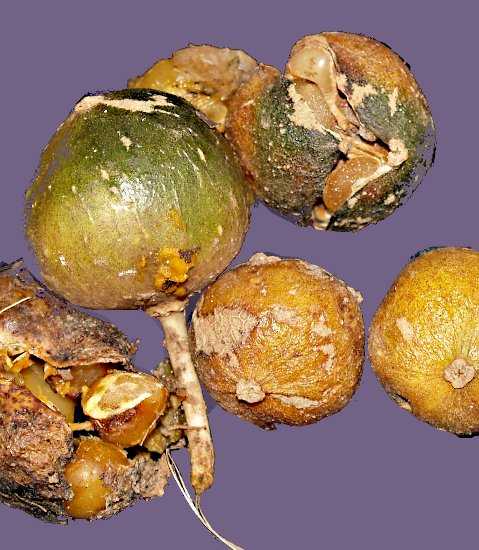
The fruit is a spherical, fleshy single seeded berry. However, rarely found in cultivated Cast Iron Plant.
Cast Iron Plant (Aspidistra elatior) – Description & Uses
Cast Iron Plant (Aspidistra elatior) - Climate and Soil
Temperature
Although the recommendation for Cast Iron Plant planting in areas where the minimum temperature reaches -17.8 °C (0 °F) is found in the literature, this is not correct since the threshold of freeze resistant of the plant is -5 °C (23 °F).
From -5 to -6,5 up to -7 °C (23 to 20.3 up to 19.4 °F) the plant part above the soil is dying, but the rhizome remains alive and regrowth in the spring. But if the temperature even drops below from -7 (19.4 °F) then the rhizome is dried and the plant dies.
As for the maximum values, even at 38 or 40 °C (100-104 °F) – sometimes higher – the plant does not face problems if located in full shade.
It is characteristic that the American Horticultural Society ranks it up to zone 12 (Average Number >210 days / year with temperatures above 30 °C – 86 °F).
Soil and pH
The Cast Iron Plant can be grown in any soil type provided it has excellent drainage. Of course the best results are achieved in medium-textured soils, which are enriched with organic matter.
In terms of pH, it grows in a range of between 5.5 and 7.5, while the optimum is in the range of 6 to 7.
Exposure
Regardless of the planting area – indoor or outdoor – the Cast Iron Plant should always be placed in semi-shaded or shaded sites. Exposure to direct sunlight causes burns to the leaves, much more so if high temperatures prevail.
Cast Iron Plant (Aspidistra elatior) – Description & Uses
Cast Iron Plant (Aspidistra elatior) - Pests & Diseases
It is an indisputable fact that the Aspidistra elatior does not face problems or serious problems from pests and diseases. However, it is also an indisputable fact that once in a while faces. By making the Great Leap Forward, the editorial team of ”Kalliergeia” names them.
Pests
Immediately below are recorded the most important pests of Aspidistra elatior.
Various Insects
- Heliothrips femoralis (Thrips)
- Order Lepidoptera (Moth Caterpillars)
Scales
-
Pinnaspis aspidistrae
-
Aspidiotus hederae
-
Unaspis euonymi (Euonymus Scale)
Acari
-
Tetranychus urticae (Red Spider Mite)
Snails and Slugs
-
Helix sp.
-
Limax sp.
► By the timely use of appropriate preparations, the treatment of entomological and acari pests is effective.
Diseases
After the pests, the recording of the diseases follows.
Fungi
-
Fusarium spp. (Leaf Spot)
-
Fusarium solani (Root and Petiole Rots)
-
Sclerotium rolfsii (Southern Blight)
-
Alternaria alternata (Leaf Spot, Rots and Blights)
-
Ascochyta aspidistrae
► With the exception of Fusarium solani which is relatively difficult to treat, early interventions with appropriate fungicidal preparations give rather satisfactory results.
Cast Iron Plant (Aspidistra elatior) – Description & Uses
Cast Iron Plant (Aspidistra elatior) - Toxicity & Allergenic Pollen
Toxicity
The Aspidistra elatior is not toxic to humans, cats, dogs, and more generally to pets.
Allergenic Pollen
Aspidistra does not cause allergic reactions.
Cast Iron Plant (Aspidistra elatior) – Description & Uses
Cast Iron Plant (Aspidistra elatior) - Varieties & Cultivars
The Cast Iron Plant attracts the interest of the breeders, resulting in the creation of several varieties of the plant. A special place among them have the different types of variegated.
For these and other varieties of Aspidistra elatior we promise – once again – a special tribute. For the time being let the ever-patient reader of “Kalliergeia” simply record the most important of them.
Cast Iron Plant Varieties
-
Aspidistra elatior ‘Asahi’
-
Aspidistra elatior ‘Hoshi Zora’
-
Aspidistra elatior ‘Lennon’s Song’
-
Aspidistra elatior ‘Milky Way’
-
Aspidistra elatior ‘Variegata’ (syn. Aspidistra elatior ‘Okame’)
Cast Iron Plant (Aspidistra elatior) – Description & Uses
Cast Iron Plant (Aspidistra elatior) - Use
The Aspidistra elatior is used in many ways. These include the ethnobotany therapeutic use of the rhizome of the plant, the ornamental use of either as a houseplant or as a plant suitable for planting in the garden in areas with mild climate, even the cultivation of the plant for the beautiful and large leaves which are particularly valued in Japanese flower arrangement art Ikebana in form of Seika.
Ethnobotany
Aspidistra elatior‘s rhizome has been used ethno-botanically by Chinese Traditional Medicine, for the relief and treatment of various diseases.
It is believed to enhance blood circulation and also attributed diuretic properties.
It is used against lumbago, abdominal pain owing to amenorrhea, headache and toothache, as well as for treating diarrhoea. It is also given against the stranguria from urolithiasis.
Use as an Indoor Plant
The Cast Iron Plant with its great strength, slow growth, as well as the ability to exploit places even in the north rooms of houses or in the corresponding parts of professional spaces where light is scarce, is an excellent choice.
Use in Garden and Landscape
In areas characterized as suitable for its development, it can be planted both in soil and in pots, but always in semi-shady and shady places.
Thus, it could be said that Cast Iron Plant is being exploited:
- As a soil cover plant
- In plantings to protect the soil from erosion
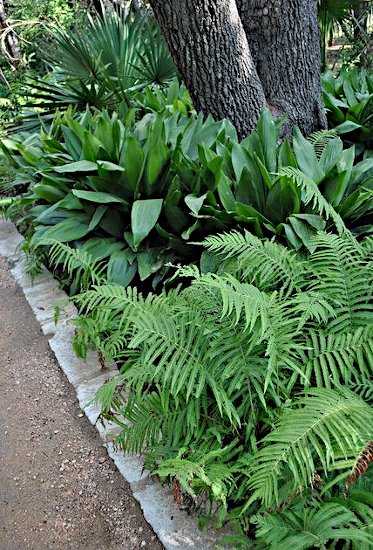
- In mass plantings of gardens or parks under trees
- In front of a border edging bush
- In combination with other plants, such as Boston Fern (Nephrolepis exaltata), Box Honeysuckle (Lonicera nitida) and Columbine (Aquilegia spp.)
References
The References of the article that bears not only the completely original title Cast Iron Plant (Aspidistra elatior) – Description & Uses, but also some of the imperial sea breeze as well as the flora and fauna of the islands of the Japanese Archipelago, are presented by the important Japanese musician Kimio Eto (衛藤公雄) with his composition Choryu (潮流).
… Meanwhile, selected members of the “Kalliergeia” editorial team have begun the first exploratory contacts with their colleagues from the Alpha Centauri to spread the plant to the two planets of the system, namely the Alpha Centauri Cb, and Alpha Centauri Cc.
The first assessments of the selected members are more than encouraging – as long as they continue to receive their daily psychiatric drugs with the same enthusiasm.
- Boodley, J. W. (1997). The Commercial Greenhouse. Delmar Pub.
- Brickell, C. (2019). RHS Encyclopedia of Plants and Flowers. London: Dorling Kindersley Limited.
- Gilbert, V. (2006). Foliage for Florists. Jo Jarvis.
- Rice, G. (2012). Planting the Dry Shade Garden: The Best Plants for the Toughest Spot in Your Garden. Timber Press.
- Ruscaceae: Sansevieria Trifasciata, Aspidistra Elatior, Ophiopogon Japonicus, Sansevieria Cylindrica, Beaucarnea Recurvata, Dasylirion Wheeleri. (2010). Books LLC.
- Suetsugu, K., & Sueyoshi, M. (2017). Subterranean Flowers Of Aspidistra Elatior are Mainly Pollinated by not Terrestrial Amphipods but Fungus Gnats. Ecology, 99(1), 244-246.
- Turner, R. G. (1996). The Ultimate Plant & Garden Book. New York, NY: Crown.
- Aspidistra elatior Blume: Royal Botanic Gardens – KEW
- Aspidistra elatior Blume: Global Biodiversity Information Facility (GBIF)
Clarification
Of course, it is needless to say – but we will emphasize it – that in this handmade website, no article has been and will not be written with recourse to Artificial intelligence (AI). Natural Intelligence, that is, as much of it as we have and for as long as we are allowed to have it, is enough for us.
Sharing
The use of the material, where third-party rights are not mentioned or implied (such as photos or audiovisual files - with the exception of those belonging to "Kalliergeia"), is absolutely free. Its sharing, possibly, useful.