Introduction
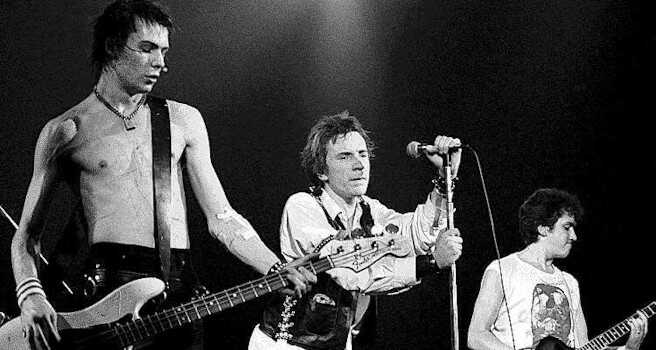
With God Save the Queen – and other musical goodies – the Sex Pistols, a happy group of young and talented Punk musicians with a deep knowledge of over 3 1/2 chords each, decided, with the wise guidance of Malcolm McLaren their manager, to promote their then recent musical work in the market of the the society of the spectacle, through their participation in the celebrations of 1977 for the Silver Jubilee of Queen Elizabeth II, that is, of her 25 years of hard work on the throne.
To pay their respects to the Crown, the Sex Pistols on June 7th rented a boat, the Queen Elizabeth, with which they set sail on the celebrated waters of the Thames, and passing through various tourist attractions of celebrating London, such as Parliament and the Palace, diffuse into the atmosphere the concert’s electric verve of the band.
Of course the whole artistic happening contained – and no one can deny it – something else, which was nothing more than a clear statement to Her Majesty that there was another category of (non) subjects – workers – artists who did not even the Queen liked, neither the monarchy, nor that the monarchy represented.
God Save The Queen or The Stigma Of The Crown
The truth is that neither the Queen of England nor the devotees of the royal institution liked such subjects.
Especially those who showed only by their indisputable existence in public space that they represented, against the beautified images and the disputed statistics, in the heart of the developed West, a social stratum of “Untouchables“, western Dalits.
A social stratum that, even worse, showed that it did not want to be integrated or assimilated by the social regime represented by the Queen and the royal institution.
The only ambition of this stratum was to become the ticks of the toothless but always predictable British Empire, an indelible Stigma of the Crown.
And to some extent they succeeded.
The Sex Pistols, the British Police & British Humor
After the performance of God Save The Queen, the British police, making a show of British humor, interrupted the on board concert of the Sex Pistols, as revealed in the video at the end, stormed on the river boat and arrested the members of the band’s entourage and the manager.
The band itself managed to got away. The members who earned such an honor are listed below.
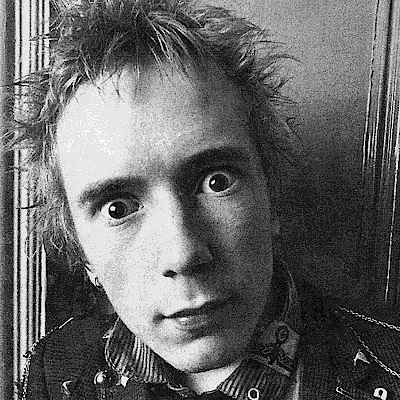
Johnny Rotten
Vocals
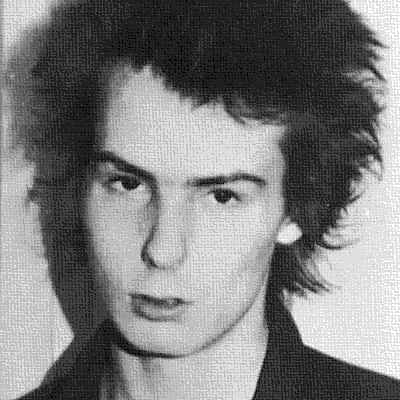
Sid Vicious
Bass
Steve Jones
Guitar
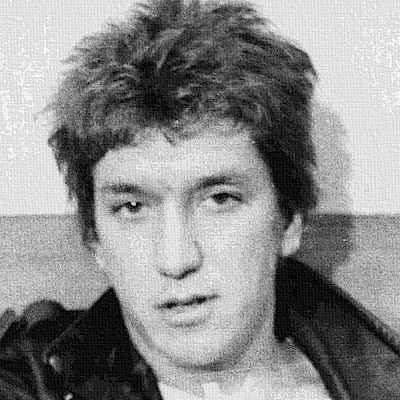
Paul Cook
Drums
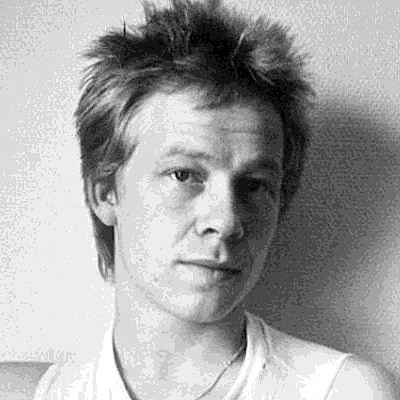
God Save the Queen & the Music Industry
The God Save The Queen is the national anthem of the United Kingdom. The song of the Sex Pistols God Save The Queen (The God Save the Queen Symphony), with the original title No Future, is their own version and critique, on the validity and truth of the first – the blindly hymn of each King or Queen as well as its emotional and symbolic use.
In a way, it is just a continuation of the tradition of parody national anthems, as, for example, happened with the American national anthem in its unique performance by Jimmy Hendrix, in the midst of the Vietnam War.
The Sex Pistols’ song, against the show of Imperial Fist with the total ban on its performing by state audiovisual institutions and the media it controlled (BBC), as well as against its ban on distribution by major record stores, was a huge success.
Within a year of the day it was released (May 27, 1977) made gold the album that included it, and up to date has reportedly sold about 1.3 million copies worldwide.
And of course it became the Flagship for the consolidation of the new music genre, the Punk Rock, which renewed rock music and also filled the coffers of the Music Industry.
Therefore, and in market terms, the critique was in every way very constructive.
Audiovisual Document
After playing their song God Save the Queen on the River Thames on June 7, 1977, the Sex Pistols were chased by the British police. This historic event was immortalized on film by English director Julien Temple in the following video.
- Buckley, P. (2003). The Rough Guide Rock. Rough Guides.
- Laing, D. (2015). One Chord Wonders: Power and Meaning in Punk Rock. PM Press.
- Smith, P. (2018). Sex Pistols: The Pride of Punk. Rowman & Littlefield.
- 1977, The Queen’s Punk Jubile: The Observer (The Guardian)
Clarification
Of course, it is needless to say – but we will emphasize it – that in this handmade website, no article has been and will not be written with recourse to Artificial intelligence (AI). Natural Intelligence, that is, as much of it as we have and for as long as we are allowed to have it, is enough for us.
Sharing
The use of the material, where third-party rights are not mentioned or implied (such as photos or audiovisual files - with the exception of those belonging to "Kalliergeia"), is absolutely free. Its sharing, possibly, useful.