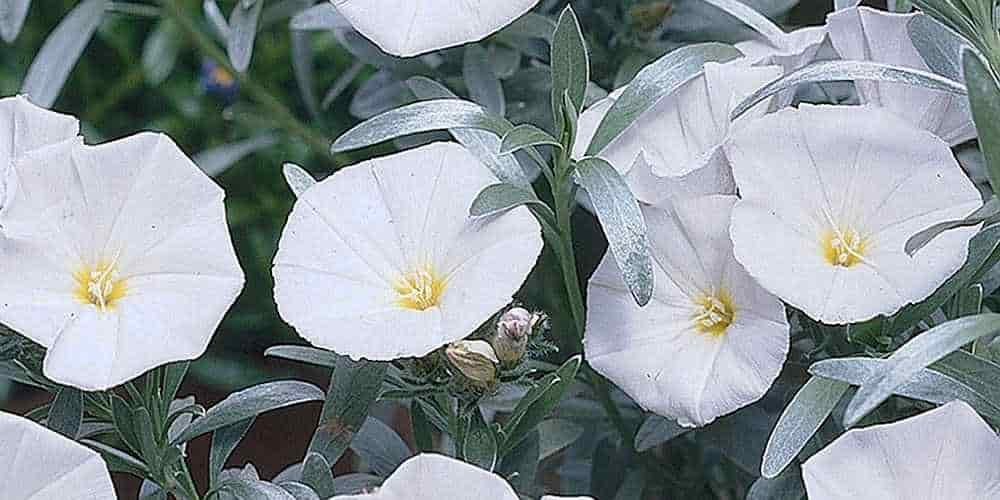
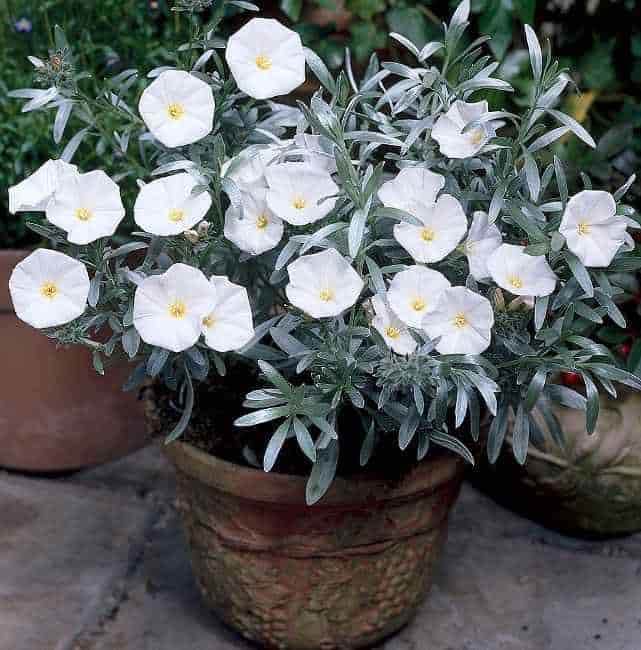
The Silverbush Plant or Bush Morning Glory is a subshrub, with excellent ornamental features – but not only. Having attractive silvery foliage, beautiful white flowers and abundant flowering that attracts bees and butterflies, gives color and life to every garden.
In addition, it gives the motivation for sports to the flower lover, as bigoted insects will hunt to sting them. Of course, if they also happen to be butterfly enthusiasts, they have an added incentive to take up the butterfly net and transform themselves from prey into predators.
So Silverbush Plant contributes to a significant increase in biodiversity, a profuse aesthetic upgrade, but also, undoubtedly, to the acquisition of perfect physical condition by the regular visitors to the gardens where it has been planted.
All of the above, and clearly much more, is discussed at length by the legendary editorial team of “Kalliergia” below.
Silverbush Plant (Convolvulus cneorum) – Description, Care & Uses
Silverbush Plant Origin

Silverbush Plant (Convolvulus cneorum) – Description, Care & Uses
Silverbush Plant (Convolvulus cneorum) - Brief Description
Family: Convolvulaceae
Genus: Convolvulus
Scientific Name: Convolvulus cneorum L.
Common Name(s): Silverbush, Silver Bush, Bush Morning Glory, Silver Bush Morning Glory, Shrubby Bindweed
General Characteristics
Leaf Persistence
Evergreen
Form
Spreading Undershrub
Texture
Fine
Growth Rate
Moderate
Flowering Period (Northern Hemisphere)
April – September
Fruiting Period
Summer – Autumn
Height
0.6-0.7 m (2-2.3 ft)
Diameter
1-1.2 m (3.2-4 ft)
Shapes and Colours
Leaves Shape
Lanceolate
Foliage Colour
Silver Green
Autumn Foliage Colour
Silver Green
Flowers Shape
Funnel-Shaped
Flowers Colour
White
Fruit
Brown Capsule
Plantation
Soil Type: Well-drained, sand, sandy loams, neutral to slightly alkaline
Exposure: Sun
Soil pH: 7-8
Watering: Low
Hardiness: −9 °C (15 °F – USDA Hardiness Zone 8b)
Uses
Specimen, mass planting, in gardens, parks, squares, rooftop gardens, pots and containers
Silverbush Plant (Convolvulus cneorum) – Description, Care & Uses
Silverbush Plant (Convolvulus cneorum) - Etymology
Etymology of the Genus Name
The name of the genus Convolvulus is a Latin word and means, without complications, ‘bindweed’ and / or ‘caterpillar’. It also comes from the Latin convolvo, which is interpreted as rolling together or twining.
The word convolvo is of course complex, since it consists of the equally Latin con and volvō, which mean the first with, together, and the second roll. The distant origin of both is located respectively in the Proto-Indo-European roots *ḱóm (with, together) and *welH- (to turn, round, but also wind).
The botanical name of the genus as Convolvulus is particularly apt, as it attributes a feature of most of the approximately 200 species included in it.
Etymology of the Species Name
The name of the species cneorum has a slightly more complex origin. It comes from the Ancient Greek word ‘κνέωρον’, which is of unknown etymology, a word with which the Ancient Greeks called – in all likelihood – the plant ‘κνῆστρον’.
But which is – in all likelihood – this plant? It is the evergreen medium-sized shrub Daphne gnidium, whose leaves are very similar to the leaves of the olive.
And because the similarity between Silverbush plant and Daphne gnidium is only in the silvery foliage and not in the fact that the latter species has poisonous fruits (to be precise, all parts of the Daphne gnidium plant are extremely toxic), the combinational thinking of botanists led them, in the poisonous poetic baptism of Silverbush plant as a cneorum.
And with this name, the species now goes forward botanically and necessarily.
Silverbush Plant (Convolvulus cneorum) – Description, Care & Uses

Silverbush Plant (Convolvulus cneorum) - Origin & Life Span
Origin
The Silverbush plant originates from the Mediterranean and specifically from the seaside areas of the Croatian islands, Albania and Italy.
In Italy, populations are located on the island of Capri, the neighboring islands of Capri Li Galli and western Sicily.
In mainland Italy are located in the coastal areas of Tuscany – whose capital Florence remains the place of birth not of Silverbush plant but of the Italian Renaissance.
Life Span
Silverbush plant, if allow it to carry out its work in peace, spends its life merry and lives for more than 15 to 20 years.
Silverbush Plant (Convolvulus cneorum) – Description, Care & Uses
Silverbush Plant (Convolvulus cneorum) - Landscape Attributes
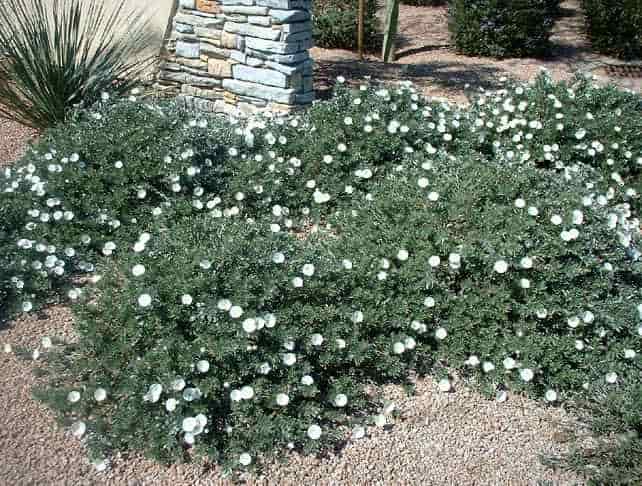
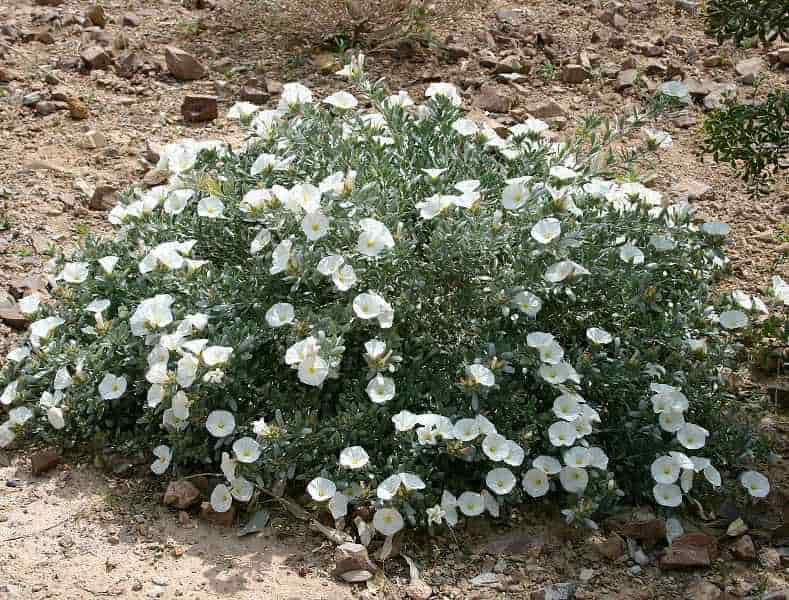
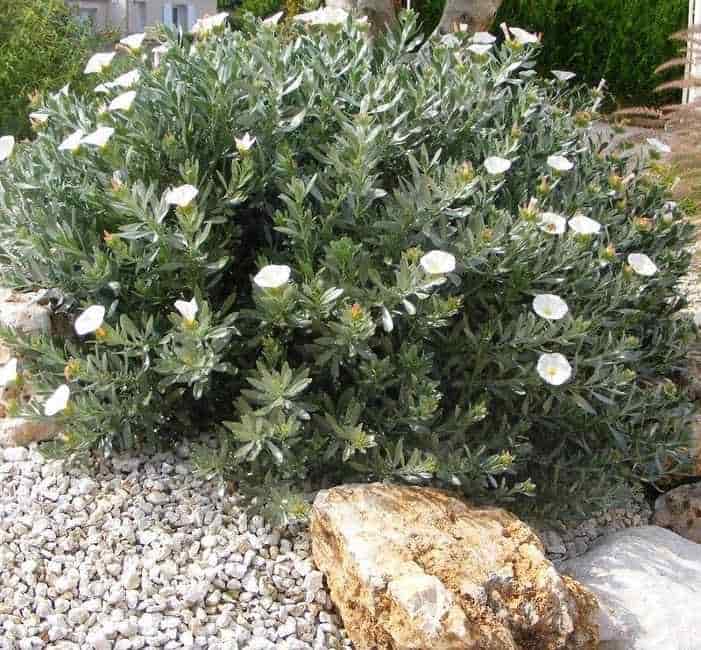
Silverbush Plant is a medium to fast growth evergreen compact subshurb with spreading shoots. Its final dimensions, which it reaches between 5 and 10 years of age, depending on conditions, are approximately 70 cm in height and 120 cm in width.
It has a round or flattened hemispherical shape and a canopy that is fine in texture, dense and symmetrical with a rather irregular outline. The silvery foliage creates pleasant contrasts when combined with plants wich have red leaves.
However, the most ornamental feature of the plant is its rich and prolonged flowering, which often lasts more than 120 days. At that point, the entire plant is literally lost beneath the multitude of flowers.
Silverbush Plant (Convolvulus cneorum) – Description, Care & Uses
Silverbush Plant (Convolvulus cneorum) - Botanical Description
Shoots
The nice arch shoots of the Silverbush plant almost all come from the base of the plant and are slightly branched.
Leaves
Its leaves are oblong to oblanceolate in shape and silvery in color. They owe their characteristic densely grey-sericeous appearance to the fact that, like all the plant’s vegetative parts, are covered in fine hairs.
They are sessile, attenuate at base, with entire margins, and shortly acute or obtuse. The leaves range in size from 2 to 3.5 by 6 cm (0.7 to 1.4 up to 2.3 in) in length and 0.3 to 0.8 by 1.2 cm (0.1 to 0.3 up to 0.5 in) in width.
Flowers
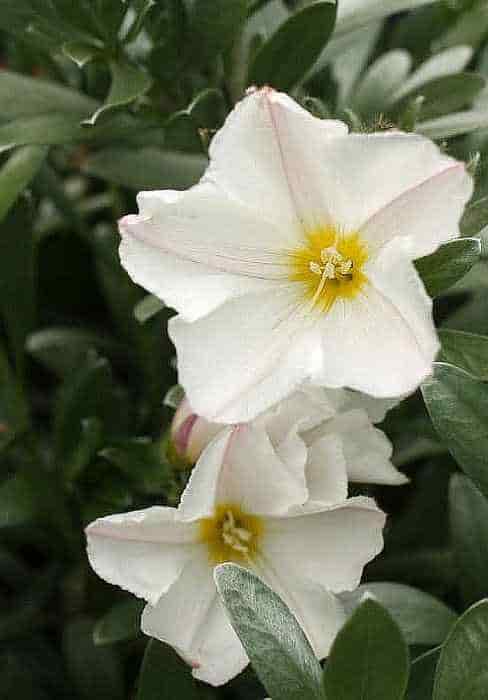
The flowers are bisexual (hermaphrodite) and have a funnel-like shape (actinomorphic). Their color is white – sometimes pink – with a yellow center, while they are carried in dense terminal cymose clusters, one to two in in the axils of bracts.
The bracts resemble the leaves but are smaller, while the bracteoles are 9–14 × 1 mm, linear, acuminate and apiculate.
The peduncle of the flowers is 1 to 2 to 4 cm long and the sepals, which are hirsutes and oblong to oblanceolate in shape, measure 7–9 × 2–3 mm.
The corolla is unlobed, densely pilose, and ranges in length from 2 to 7 cm (0.8 to 2.7 in) and in width from 2 to 2.5 cm (0.8 to 1 in). A characteristic feature of the Silverbush plant’s flowers is that they open with sunlight and the evening are closed.
Pollination
Pollination occurs mainly with the insects among which – weirdly – include bees and butterflies.
Fruit
The fruit is dry and smooth, a 2-locular, loculicidal capsule, covered at least at the apex with silky fine hairs. It is brown in color and ovate to globose in shape, with a length ranging between 5 and 6 mm. The calyx at the base is covered with hirsute, and the sepals are smaller than the capsule. Each capsule contains 1 to 2 seeds, and more rarely 4 seeds.
Seeds
The seeds are dark brown and triangular in shape. They are densely pubescent over their entire surface. They measure up to 4 mm in length and 2–3 mm in width.
Silverbush Plant (Convolvulus cneorum) – Description, Care & Uses
Silverbush Plant (Convolvulus cneorum) - Climate & Soil
Temperature
Silverbush plant is generally a plant highly adaptive since cultivated within the natural temperature range of the species. The minimum temperatures, which are also the lowest tolerance limit, range between -6 and -9 °C (20-15 °F).
However, it is a particularly sensitive plant in the heavily frozen northern winds as and the frosts and it must be avoided to planted in areas where the prevailing wind is north or the regions are frosty.
With high temperatures the plant’s behavior is excellent. The AHS (American Horticultural Society) classifies the plant in zones 8-11 and indeed, temperatures that often exceed 40 °C have no negative effect on the plant.
Soil and pH
In relation to the soil, Silverbush plant prefers light to moderately textured soils, which have excellent drainage. In its natural habitat, it grows in calcareous, gravelly soils, even in rocky places in coastal areas.
In terms of pH it is recommended to plant in neutral to slightly alkaline soil reaction with values ranging from 7 to 8.
Exposure
Silverbush plant is suggested to planted in places of southern orientation and full exposure to the sun. As a plant, it also tolerates the half-shade, but then the flowering is reduced and also its flowers do not fully open. The reason is the one mentioned above: to fully open the flowers must accept the sunlight directly.
Silverbush Plant (Convolvulus cneorum) – Description, Care & Uses
Silverbush Plant (Convolvulus cneorum) - Care
Fertilization
Silverbush plant fertilization takes place from the end of the winter to the end of the summer. It can be used a complete fertilizer containing the main elements N-P-K at a ratio of 1: 1: 1 (20-20-20).
Administration is done either once, provided it is controlled release, or in doses at a frequency of 1 every 20 to 30 days. The amount of administration for the established plants is 10 to 15 g. Additionally, a trace minerals foliar application in early spring is beneficial to the plant. No other fertilization is made after the end of the summer.
Irrigation
Silverbush plant, as a xerophyte, has minimal water requirements and if established, it can cope with long drought periods. However, where it is possible to irrigate, it is recommended to watery when the soil at a depth of 3 to 5 cm has dried.
Pruning
Generally systemic pruning is not necessary for the plant unless it is desired to limit its growth. Then it can be pruned annually at the end of the winter to early spring, at 20 to 30 cm.
In all other cases, rejuvenation pruning can handle once every 3 to 4 years.
Silverbush Plant (Convolvulus cneorum) – Description, Care & Uses
Silverbush Plant (Convolvulus cneorum) - Pests & Diseases
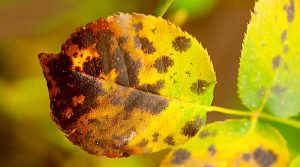
In practice, it does not face problems from pests and diseases. However, sometimes, from the insects, the scales can attack the plant, while rusts and root rots are reported from fungi. Root rots are largely due to insufficient drainage.
Pests
Immediately below are listed the most important pests of Convolvulus cneorum.
Scales
- Saisetia oleae (Black Scale)
- Coccus hesperidum (Brown Soft Scale)
► By using the appropriate insecticides their treatment is satisfactory.
Diseases
After the pests, the recording of the diseases follows.
Fungi
- Puccinia spp. (Chrysanthemum Rusts)
- Athelia rolfsii (Sclerotium Rot)
► By the timely use of appropriate formulations the treatment of fungi is satisfactory.
Silverbush Plant (Convolvulus cneorum) – Description, Care & Uses
Silverbush Plant (Convolvulus cneorum) - Toxicity & Allergenic Pollen
Toxicity
There are no reports indicating that Convolvulus cneorum is toxic to humans or pets.
Allergenic Pollen
The plant is entomophilous and does not cause allergic reactions in the respiratory system.
Silverbush Plant (Convolvulus cneorum) – Description, Care & Uses
Silverbush Plant (Convolvulus cneorum) - Varieties
Although it is a widespread species, especially for plantings in Mediterranean or xeriscape gardens and landscapes, few varieties of Silverbush plant have been created.
Of these, the most important are:
- Convolvulus cneorum ‘Silvery Moon’
- Convolvulus cneorum ‘Snow Angel’
Silverbush Plant (Convolvulus cneorum) – Description, Care & Uses
Silverbush Plant (Convolvulus cneorum) - Uses
Silverbush plant is used as an ornamental, thanks to its glowing silver-colored foliage, in its highly interesting form and of course thanks to its rich and continuous flowering, which under ideal conditions lasts from 150 to 180 days.
By specifying it, it could be said that Silverbush plant can be used:
- As a groundcover plant
- In plantings on slopes – in rocky fissures
- In the planting of rock gardens
- In the rooftop gardens
- As a plant for xeriscape gardens and semi-arid areas
- For planting in coastal areas
- In combination with other shrubs and hedges, such as Autumn Sage (Salvia greggii), Pink Rock-rose (Cistus creticus), Common Hibiscus (Hibiscus syriacus ‘White Chiffon’) and Buchanan’s Sedge (Carex buchananii)
References
A silver artist for a silver plant: the outstanding jazz composer and pianist Horace Silver, with his classical composition ‘Senor Blues’, presents the References of the Senor Convolvulus Cneorum of Κνῆστρον.
- Beekes, R. S., & Beek, L. V. (2009). Etymological Dictionary of Greek. Leiden Indo-European Etymologi.
- Brickell, C. (2019). RHS Encyclopedia of Plants and Flowers. Dorling Kindersley.
- Carter, S., Becker, C., & Lilly, B. (2007). Perennials: The Gardener’s Reference. Timber Press (OR).
- Clausen, R. R., Christopher, T., Detrick, L., & Detrick, A. L. (2015). Essential Perennials: The Complete Reference to 2700 Perennials for the Home Garden. London: Timber Press, Inc.
- Gilmer, M. (2018). The Colorful Dry Garden: Over 100 Flowers and Vibrant Plants for Drought, Desert & Dry Times. Sasquatch Books.
- Idzojtic, M. (2019). Dendrology: Cones, Flowers, Fruits and Seeds. Academic Press.
- Landscape Plants for Arriyadh Region, A Reference Manual. (2014). Riyadh: High Commission for the Development of Arriyadh, Saudi Arabia.
- Moody, M. (2001). Encyclopedia of Flowers: Over 1,000 Popular Flowers, Flowering Shrubs and Trees. San Francisco, CA: Fog City Press.
- Scotland, R., Wood, J., R.M. Williams, B., Mitchell, T. C., Carine, M., & Harris, D. (2015). A Foundation Monograph of Convolvulus L. (Convolvulaceae). PhytoKeys, 51, 228.
- Tassoula, L., Papafotiou, M., Liakopoulos, G., & Kargas, G. (2015). Growth of the Native Xerophyte Convolvulus cneorum L. on an Extensive Mediterranean Green Roof under Different Substrate Types and Irrigation Regimens. HortScience, 50(7), 1118-1124.
- Turner, R. G. (Ed.). (1996). The Ultimate Plant and Garden Book. Crown.
Convolvulus cneorum: Global Biodiversity Information Facility (GBIF)
Clarification
Of course, it is needless to say – but we will emphasize it – that in this handmade website, no article has been and will not be written with recourse to Artificial intelligence (AI). Natural Intelligence, that is, as much of it as we have and for as long as we are allowed to have it, is enough for us.
Sharing
The use of the material, where third-party rights are not mentioned or implied (such as photos or audiovisual files - with the exception of those belonging to "Kalliergeia"), is absolutely free. Its sharing, possibly, useful.