The genus Ficus – fig trees – represents a very special group of plants. This is largely due to the botanical, biological and ecological characteristics of most of its species.
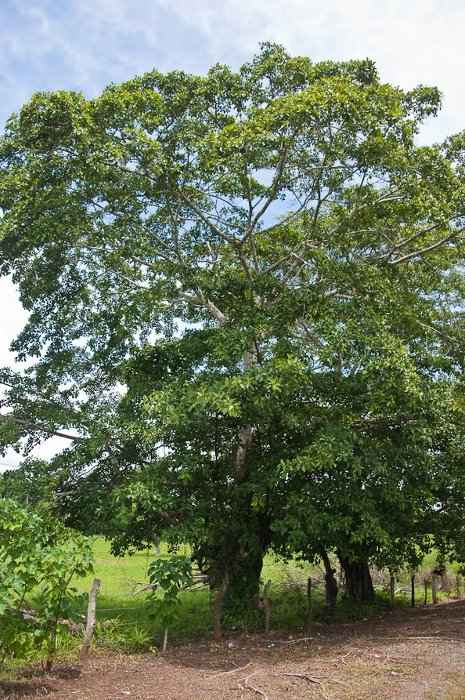
Some of them are particularly impressive in appearance and performance, the latter being mainly due to their size, as they tend to grow spectacularly not so much in height as in width, occupying remarkably large areas of land.
From the foregoing it is rather obvious – even to the most sluggish members of the editorial team of ‘Kalliergeia’ – that the present article is devoted entirely to the genus Ficus. Where, indeed, in this article an attempt will be made to give, in the usual eloquent and lengthy manner of that editorial team, a descriptive picture of most of the essential elements that define this -literally- distinct genus.
And of course every effort will be made to bring out the highly entertainingly strangling aspects of several of its species.
Genus Ficus (Ficus L.): Classification, Description and Uses
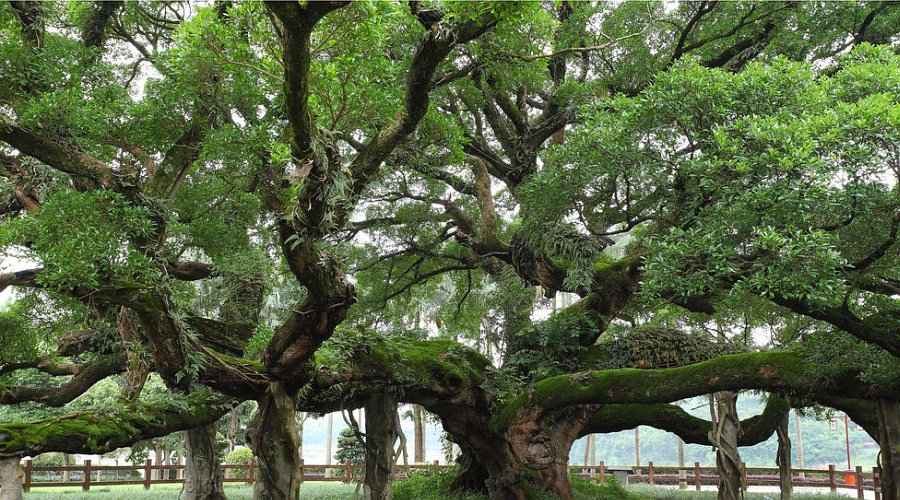
‘The Great Banyan’ Tree

Genus Ficus (Ficus L.): Classification, Description and Uses
Genus Ficus (Ficus L.) - General Elements
Genus Ficus is one of the most numerous taxonomic units of the plant world. But beyond what actually counts more than 750 species is distinguished and stands out for two other reasons:
-
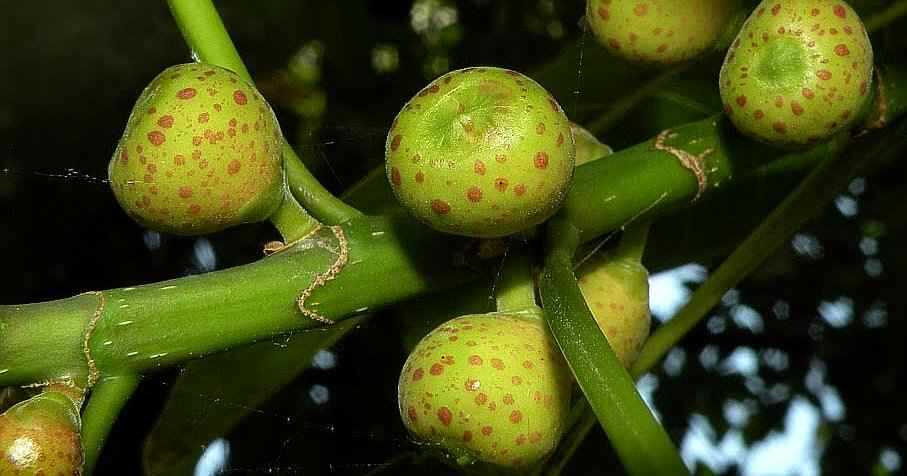
For its unique inflorescence resembling an urn shaped structure commonly called a syconium
-
For its almost absolute symbiotic relationship with the wasps of the family Agaonidae, which pollinate exclusively its species
However, these will be discussed below. At present it will be said that the species included in the genus Ficus are found mainly in the tropical regions of the planet and few in the subtropical. Of these, the maximum diversity, more than 500 species exhibits in Asian-Australian region – specifically in the Asiatic mainland about 170, New Guinea 132 and Borneo Island 129.
Genus Ficus (Ficus L.): Classification, Description and Uses


Genus Ficus (Ficus L.) - Morphology & ‘The Great Banyan’
Morphology
The genus Ficus falling within evergreen, semi-evergreen and deciduous species, which occupy almost any possible plant form, such as trees of large, medium and low growth, as well as shrubs, vines and climbers. On the other hand, several species are epiphytes and other hemiepiphytes, while some are rheophytes and some other purely lithophytes.
Amongst their undoubtedly distinct place possess the ‘stranglers‘ species. This is the case of Ficus bengalensis – the rather accidentally national tree of India. Being hemiepiphyte, it initially grows on the branches of other trees from seed that have deposited frugivorous birds. From there it develops blastogenic roots that penetrate the soil.
The aerial part of these roots becomes trunkish while at the same time continuing to develop blastogenic roots. The whole process results in – literally – strangling the trees on which it is based.
‘The Great Banyan’
The peculiar form of development of Ficus bengalensis – the rather accidentally national tree of India – leads to the emergence of imposing tree species. Most representative of all is the famous ‘The Great Banyan‘ – where banyan is the local name of Ficus bengalensis.
‘The Great Banyan’ occupies a surface of no more than 18,918 square metres (1.89 hectares), the highest branch rises to 24.5 m (80 ft) and counts only 3772 aerial roots so far, making extremely proud for its performance, the tree that was strangled by it.
Genus Ficus (Ficus L.): Classification, Description and Uses
Genus Ficus (Ficus L.) - Comprehensive Botanical Description
Sap
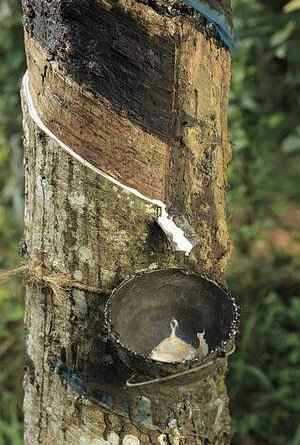
All plant parts of species belonging to the genus Ficus contain white to yellowish milky latex, rarely aqueous.
Leaves
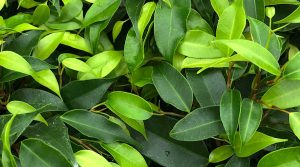
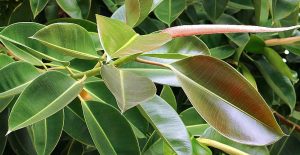
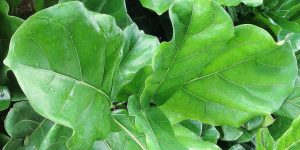
The leaves of the plants are simple, entire or lobate. They are predominantly arranged alternately and rarely are opposite, subopposite or subwhorledor. Their petiole is short or elongate while the stipules are amplexicaul or lateral, rounded or elongate.
Flowers
Flowers are found on the same or different plants (monoecious or dioecious), and they produced in the interior of an axillary inflorescence which forms the syconium. The calyx is small and membranaceous while the corolla is absent.
The male flowers have a perianth consisting of 2 to 6 segments and bearing 1 to 3 stamens, the female flowers have a perianth consisting of 2 to 7 segments and bearing 1 to 2 stigmas.
Fruit
In the interior of syconium plethora of ‘real fruits’, the achenes, are produced.
Genus Ficus (Ficus L.): Classification, Description and Uses
Genus Ficus (Ficus L.) - Mutualism
Taking into account that the genus Ficus is estimated to be 60 to 100 million years old and that all these years are reproduced solely thanks to the Fig wasps of the Agaonidae family, it can be said with great precision that this relationship really lasted in time.
But as with all the long-term relationships, so too is not one-sided. And it is not because thanks to and exclusively to the genus Ficus the Fig wasps of the Agaonidae family can also be reproduced.
In other words, the survival of the Ficus also depends on the survival of the Fig wasps – and vice versa.
Genus Ficus (Ficus L.): Classification, Description and Uses
Genus Ficus (Ficus L.) - Pollination
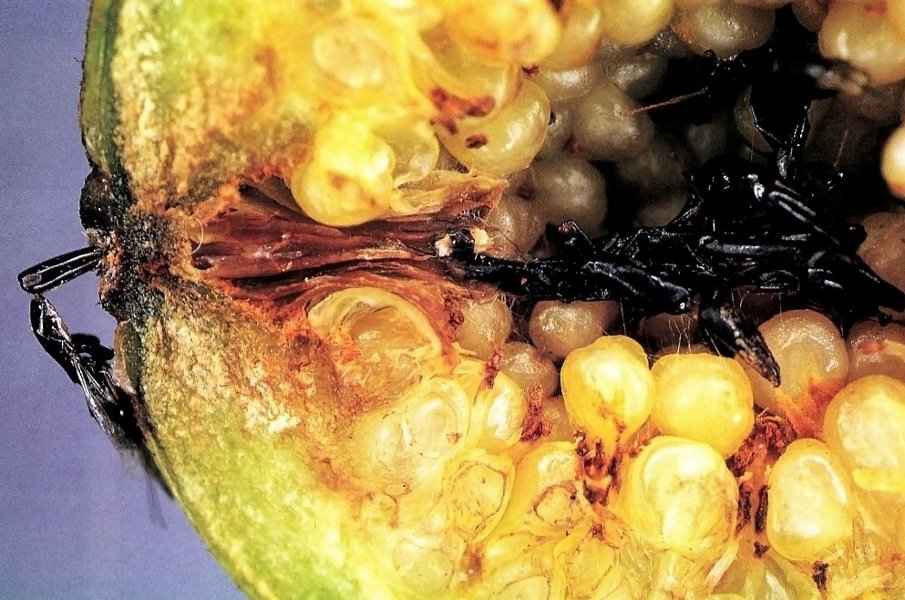
Almost for every species of Ficus corresponds a species of Fig wasp that pollinates it and the few exceptions simply confirm the rule. The pollination is carried out by female wasps that have wings – unlike males that are wingless and can not leave the syconium.
And although the life cycle of females ends on average within 24 to 48 hours, they can pollinate Ficus, whose trees may be as close as hundred kilometers to each other, as recorded for an African Fig wasp.
Females detect the appropriate syconiums due to the emission of volatile substances. As soon as the pollinator wasps detect them, inspect the syconium followed by entry into the syconium from the ostiole – a small opening of the top. There they do the pollination, depositing the pollen that they bear on the pistil’s stigmas. Then they oviposit and complete their biological cycle.
The process as described above concerns more than 50% of species belonging to the genus Ficus and are monoecious. For dioecious species, there is a slight variation, since female Fig wasps oviposit on the trees that have male flowers, whose syconiums are suitable for that. However, they pollinate also the ‘female’ syconiums, as they can not distinguish males from the female figs due to a similar morphology and identical emission of volatile signals.
Genus Ficus (Ficus L.): Classification, Description and Uses
Genus Ficus (Ficus L.) - Ecology
The species belonging to the genus Ficus contribute in many ways to the ecological balance, biodiversity and conservation of tropical forests. Their full presentation will be the exclusive subject of a future tribute (… pigs might fly). Here we will only briefly mention some of them.
Sufficient Food Supply
As a kind of symbiotic relationship to Fig wasp-pollinators and their ability to offer many generations within the year, Fig fruits production is continuous. This has the effect of providing adequate food for mammals and birds in tropical forests. Food sufficiency leads to the maintenance of high populations.
Forest Restoration
Related researches has shown that the contribution, in particular of the large growth of Ficus trees,is more effective forest restoration agents than other remnant trees of tropical rainforests, that they have undergone significant degradation.
Antierosion Agent
The strong and broad root system of the majority of Ficus species contributes significantly to the stabilization of the lands of the riparian tropical forests and their protection against erosion is also decisive.
Genus Ficus (Ficus L.): Classification, Description and Uses
Genus Ficus (Ficus L.) - Classification
As with all plant species, the genus Ficus is honoured by systematic botany with its classification. Below is given the, shall we say, prevailing taxonomic scheme with the hope that upcoming phylogenetic research will allow its reliability at least until next week.
Classification of Genus Ficus L.
- Domain: Eukaryota (Eukaryotes)
- Kingdom: Plantae (Plants)
- Subkingdom: Viridaeplantae (Green Plants)
- Superphylum: Embryophyta
- Phylum: Tracheophyta (Vascular Plants)
- Subphylum: Euphyllophytina
- Class: Mangoliopsida (Dicotyledons)
- Order: Rosales
- Family: Moraceae (Fig Family)
- Genus: Ficus L. (Fig Trees)
- Subgenus:
Subgenus: Ficus
1.1. Section: Ficus
Subsection: Ficus
Subsection: Frutescentiae
1.2. Section: Eriosycea
Subsection: Auratae
Subsection: Eriosycea
Subgenus: Synoecia
2.1. Section: Rhizocladus
Subsection: Plagiostigma
Subsection: Pogonotrophe
Subsection: Punctulifoliae
Subsection: Trichocarpeae
2.2. Section: Kissosycea
Subgenus: Sycidium
3.1. Section: Sycidium
3.2. Section: Palaeomorphe
Subgenus: Sycomorus
4.1. Section: Sycomorus
Subsection: Sycomorus
Subsection: Neomorphe
4.2. Section: Hemicardia
4.3. Section: Adenosperma
4.4. Section: Bosscheria
4.5. Section: Dammaropsis
4.6. Section: Papuasyce
4.7. Section: Sycocarpus
Subsection: Macrostyla
Subsection: Sycocarpus
Subgenus: Pharmacosycea
5.1. Section: Pharmacosycea
Subsection: Bergianae
Subsection: Petenenses
5.2. Section: Oreosycea
Subsection: Glandulosae
Subsection: Pedunculatae
Subgenus: Urostigma
6.1. Section: Americana
6.2. Section: Urostigma
Subsection: Conosycea
Subsection: Urostigma
6.3. Section: Malvanthera
Subsection: Malvantherae
Subsection: Hesperidiiformes
Series: Glandiferae
Series: Hesperidiiformes
Series: Xylosyciae
Subsection: Platypodeae
Series: Crassipes
Series: Eubracteatae
Series: Obliquae
Series: Rubiginosae
Section: Galoglychia
Subsection: Galoglychia
Subsection: Platyphyllae
Subsection: Chlamydodorae
Subsection: Crassicostae
Subsection: Cyathistipulae
Subsection: Caulocarpae
Genus Ficus (Ficus L.): Classification, Description and Uses
Genus Ficus (Ficus L.) - Interesting Species
Among the species of the genus Ficus of particular interest are the following:
- Ficus altissima Blume
- Ficus aspera Forst. f.
- Ficus aurea Nutt.
- Ficus auriculata Lour.
- Ficus benghalensis L.
- Ficus benjamina L.
- Ficus carica L.
- Ficus citrifolia Mill.
- Ficus cotinifolia Kunth
- Ficus deltoidea Jack
- Ficus drupacea Thunb.
- Ficus elastica Roxb. ex Hornem.
- Ficus glomerata L.
- Ficus godeffroyi Warb.
- Ficus lyrata Warb.
- Ficus lutea Vahl
- Ficus maclellandii King
- Ficus macrophylla Desf. ex Pers.
- Ficus microcarpa L.
- Ficus obliqua G.Forst.
- Ficus obtusifolia Kunth
- Ficus pantoniana King
- Ficus petiolaris Kunth
- Ficus prolixa G. Forst.
- Ficus pumila L.
- Ficus racemosa L.
- Ficus religiosa L.
- Ficus rubiginosa Desf. ex Vent.
- Ficus subulata Blume
- Ficus spiralis Corner
- Ficus sycomorus L.
- Ficus villosa Blume
- Ficus virens Aiton
- Ficus watkinsiana F.M.Bailey
Genus Ficus (Ficus L.): Classification, Description and Uses

Genus Ficus (Ficus L.) - Uses
Many species of Ficus were used in various ways by traditional societies to meet various needs. Two of them, the Common Fig Tree (Ficus carica L.) and the Sycamore Tree (Ficus sycomorus L.), have been companions of man since its inception in its long journey towards civilization, being among the first cultivated plants since early Neolithic times for their fruits.
And modern societies, too, have not benefited or benefited less from the elite members of the genus, as they are exploited for economic, nutritional, and medical purposes.
Ethnobotany
In many areas of China, the ethnobotany use of Ficus species covers nutritional, therapeutic and practical needs. Edible species of Ficus include Ficus auriculata (edible young leaves and female fruit), F. callosa (edible young leaf) and F. oligodon (edible mature female fruit), while Ficus semicordata is used both as edible fruit, but also for its roots, which are used to treat bladder diseases.
Similar use is made in India, Pakistan, Myanmar, Vietnam, Malaysia and Nepal.
In Southeast Asia, Australia and Papua New Guinea, they use plant parts of Ficus septica as antifungals, laxatives and as antidotes.
In tropical Asia, the fibers from the bark of Ficus benghalensis are used for the production of ropes and paper, the latex serves as birdlime, while the traditional therapeutic use of all its plant parts is innumerable.
Among the many therapeutic uses of F. benghalensis it is mentioned that it is used as an styptic, haemostatic, anti-bronchial, anti-asthmatic, expectorant and tonic.
Finally (there is no finally but let us say …) Ficus benjamina, the very popular ornamental plant, is used from Nepal to the tropical areas of Australia to receive latex, while its leaves and bark are harvested in various forms to relieve pain from arthritis and rheumatism
Pharmaceuticals
Ficus glomerata leaf extracts have analgesic properties as well as those of the Ficus bengalensis bark. Extracts from all plant parts of Ficus deltoidea have shown efficacy in the treatment of ulcer.
For the treatment of diabetes, bark extracts of Ficus bengalensis have shown remarkable action. Anti-fungal activity have the methanolic extracts of Ficus carica (Common Fig) and Ficus exasperate.
Significant antibacterial activity has been shown fruit extracts of Ficus sycomorus, F. benjamina, F. bengalensis and F. religiosa. The ethanolic extract of the Ficus religiosa bark has a significant anti-asthmatic effect
Ornamental
Many species of Ficus are used in interior decoration, while in areas where climatic conditions allow it, they are used both in gardening and in landscape architecture.
References
The References to the article with the heroic title Genus Ficus (Ficus L.): Classification, Description and Uses are presented by the Heroic band Stranglers with the song No More Heroes.
- Bajaj, Y. (2010). Trees III.Berlin: Springer-Verlag Berlin and Heidelberg GmbH & Co.
- Cottee-Jones, H., Bajpa, O., Chaudhar, L., & Whittaker, R. (2016). The Importance of Ficus (Moraceae) Trees for Tropical Forest Restoration. Biotropica, 48(3), 413-419.
- Cullen, J. (2006). Practical Plant Identification: Including a Key to Native and Cultivated Flowering Plants in North Temperate Regions. Cambridge University Press.
- Dhungana, P., Devi, P., & Borthakur, S. (2013). Pharmaceutical Properties of Indian Species of Ficus Linn. J. of Pharm. & Life Sci. (IJPLS), 4(1), 2314-2319.
- Gregory, P. J. (2006). Plant Roots: Growth, Activity and Interactions with the Soil. Wiley-Blackwell.
- Lansky, E. P., & Paavilainen, H. M. (2010).Figs: The Genus Ficus. CRC Press.
- Mansfeld, R., & Büttner, R. (2001). Mansfeld’s Encyclopedia of Agricultural & Horticultural Crops: (Except Ornamentals). Springer Science & Business Media.
- Varma, A. (Ed.). (2008). Mycorrhiza: State of the Art, Genetics and Molecular Biology, Eco-Function, Biotechnology, Eco-Physiology, Structure and Systematics. Springer.
- Γκανιάτσας, Κ. (1982). Συστηματική Βοτανική – Μέρος Β [Systematic Botany – Part B].Θεσσαλονίκη.
- Μπαμπαλώνας, Δ., & Κοκκίνη, Σ. (2004). Συστηματική Βοτανική: Φυλογενετική – Φαινετική Προσέγγιση της Ταξινόμησης των Φυτικών Οργανισμών [Systematic Botany: Phylogenetics]. Θεσσαλονίκη: Αϊβάζη.
- Ficus L.: ITIS Report
Clarification
Of course, it is needless to say – but we will emphasize it – that in this handmade website, no article has been and will not be written with recourse to Artificial intelligence (AI). Natural Intelligence, that is, as much of it as we have and for as long as we are allowed to have it, is enough for us.
Sharing
The use of the material, where third-party rights are not mentioned or implied (such as photos or audiovisual files - with the exception of those belonging to "Kalliergeia"), is absolutely free. Its sharing, possibly, useful.