Home » PLANTS & GARDEN »
Ornamental Plants Frost Protection
CONTENTS ⌵
The ornamental plants frost protection is always a matter of concern for the plant lovers and amateur gardeners, as the temperatures drop and approach the 0 °C.
Frost is undoubtedly a great danger and clearly represents a threat to plants – and not just to ornamental plants. On the other hand the damages it brings can reach up to their total destruction.
So frost is an enemy.
After the in-depth study of Carl von Clausewitz’s book ‘On War‘, the editorial team of ‘Kalliergeia’ was prepared to be able to cope with this terrible and horrible enemy.
And with a remarkable regular maneuver, it gives the responsibility for conducting this war, to the plant lover.
The team itshelf travels towards the Tropics.
Ornamental Plants Frost Protection
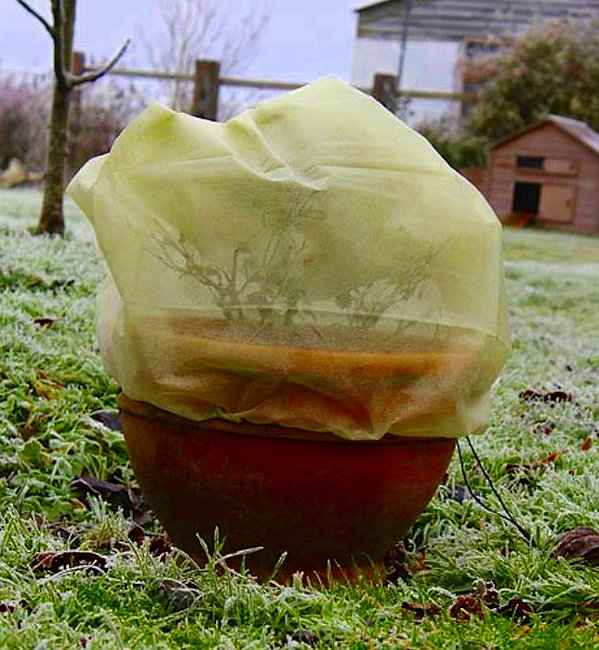
The Effect of Cold and Low Temperatures on Plants
The effect of cold and low temperatures on plants can be beneficial or adverse.
It is beneficial when exposed to cold those plants that need a certain number of low temperature hours in order to stop the buds dormancy. Adverse is when the exposure of plants to low temperatures leads to various degrees of damage – even to their total destruction.
The degree of adverse effects by cold and low temperatures on plants depends on:
-
The species of plant
-
The age of the plant
-
The kind of plant organ or tissue exposed to low temperatures
-
The season
-
The exposure time of the plant or plant parts and organs at low temperatures
For many plants in the tropical and subtropical regions of the planet, temperatures ranging between 0 and 15 °C, ie those called chilling temperatures, can be devastating. Conversely, for most species of the temperate zone, temperatures from 0 °C and below are dangerous, ie the exposure of plants to freeze and frost.
Ornamental Plants Frost Protection
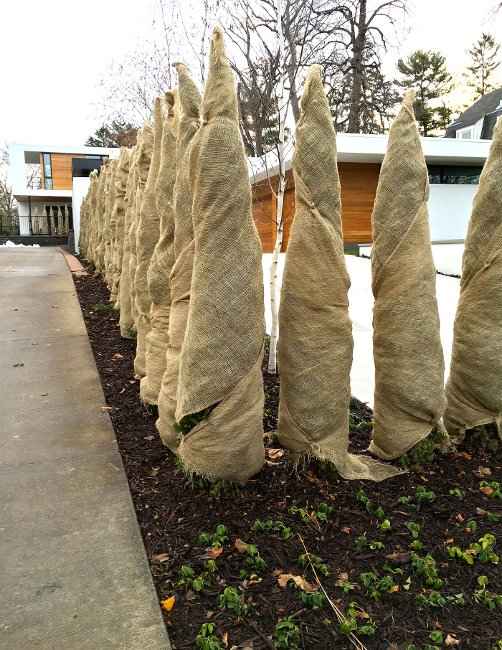
What is Frost and the Types of Frost
Frost, in meteorology, is the weather phenomenon where the air temperature drops to 0 °C and/or below.
In order to form the characteristic ice crystals, ie to have a direct condensation of the atmospheric water vapor without passing through the liquid phase, it should be:
- Drop in the air temperature at 0 °C and/or below
- The atmospheric humidity low
- Light wind or still air
Depending on the way that temperature drop at 0 °C and/or below, as well as on the possibility of condensation of humidity, three types of frost are mainly listed as:
- The radiation frost (or hoar frost )
- Advective frost (or wind frost)
- And black frost (or killing frost
Ornamental Plants Frost Protection
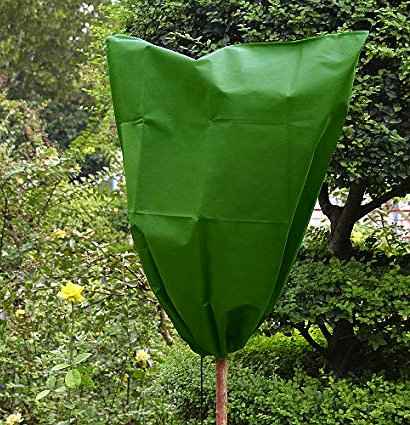
Types of Frost: Radiation Frost, Advective Frost & Black Frost
Radiation Frost
Radiation frost is created when the amount of night radiation emitted from the ground is greater than the amount it receives. In radiation frost it is observed a temperature inversion and the temperature at an average height of 15 m above ground is higher than soil temperature by 4 to 5 °C.
To cause radiation frost should be:
-
Anticyclone centers and a lack of barometric field
-
Still air or wind speed less than 5 m/sec
-
Relative humidity moderate or low
-
Clear sky
Advective Frost
Advective frost is created by the invasion of cold air masses, which mostly follow the cold front passage. It is observed throughout the 24-hour period and does not depend on the presence of clouds or not. In particular, in order to cause advective frost must be:
-
After the cold front passes a strong change in atmospheric pressure
-
Relative humidity low
-
Strong wind
Black Frost
Black frost is created by the combination of cold air masses from poles, temperatures below 0 °C, very low atmospheric humidity, and absence of condensation and ice crystals.



The Effect of Frost on Ornamental Plants
Frost causes mechanical damage and dehydration of ornamental plants – plants in general. The evolution of the phenomenon occurs at the cellular level, where observe freezing, crystallisation and water expand, resulting in destruction of the cell walls.
Under frost conditions, it has been shown that bacteria also contribute to the formation of ice crystals both inside and outside the plants through the substances they produce.
More precisely, the enzymes formed during their metabolism, function as ice base structure because of the similarity of the crystalline lattice to ice.
Ornamental Plants Frost Protection

Physiological, Passive and Active Active Protection from Frost of Ornamental Plants
The ornamental plants frost protection could be distinguished in physiological, passive and active.
Physiological Protection
The physiological protection of ornamental plants from frost rests on the natural and physiological mechanisms and functions that plants develop in order to successfully perform frost conditions, including among others:
-
The dormancy of deciduous species
-
The hardening of ornamental plants
-
The increase in carbohydrate content in plant tissues
-
The highest concentration of antioxidants
-
The formation of smaller cell size
-
The reduction of the water potential of the cells
Passive Protection
Passive ornamental plants frost protection goes back to those methods and techniques used by professionals and amateurs growers and gardeners to reduce the chance of injuring plants and/or increase their tolerance. The passive ornamental plants frost protection, among others, includes:
-
The selection of appropriate ornamental species and varieties according to the microclimate of the respective planting areas
-
The proper planting arrangement of ornamental plants
-
The creation of windbreaks in order to influence the improvement of the microclimate
-
The planting of the appropriate ornamental soil cover plants
-
The right fertilization – especially the timely addition and proper dose of nitrogen fertilizers
-
The early and effective pruning
-
Chemical assistance to ornamental plants by administration of growth regulators
-
The cover of all ornamental plants
-
The cover of the soil with various organic materials
Active Protection
The active ornamental plants frost protection rests on the effort by using artificial means, influencing the fundamental factors that contribute to creating the phenomenon, such as air temperature and relative humidity. The active ornamental plants frost protection, among others, includes:
-
The use of foggers
-
The use of heaters and lamps
-
The continuous watering of ornamental plants through irrigation systems with sprinklers
-
The surface irrigation
-
The use of wind machines, turbines and helicopters – means in someway unsuitable for small and medium sized family gardens
Ornamental Plants Frost Protection

Practical Ways to Treat Frost on Ornamental Plants
In order to directly protect ornamental plants from frost or to reduce injuries and damages, some preventive interventions can be carried out by the plant lover, the amateur grower as well as by the professional gardener.
These interventions are usually labor intensive and highly beneficial to the plants.
So among other things it is recommended:
-
The spraying of plants with copper formulations, which aims to reduce the ice forming bacteria (Pseudomonas syringae)
-
Spraying plants with aminoacid formulations
-
Spraying plants with molasses
-
The complete covering of ornamental trees and shrubs with anti-frost fabrics
-
The installation of an outdoor lamp (60 to 100-watt) or Christmas lights on the base of the covered tree
-
The full coverage of tree trunks with insulating materials
-
Covering tree trunks with soil up to a height of 50 to 60 cm
-
The complete covering of the ornamental perennials with organic materials, such as straw – covering which must be removed when the temperature rises above 0 °C
-
To mulch the soil with organic materials, such as pine bark
-
The grouping of ornamental plants in pots and containers to reduce lateral heat losses
Ornamental Plants Frost Protection
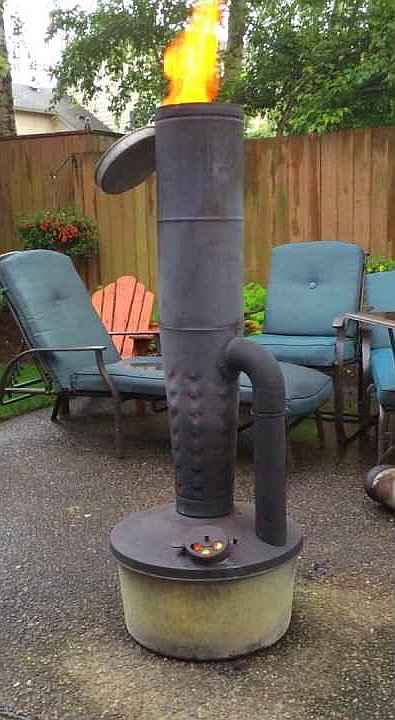
References
After all the necessary steps have been taken to protect ornamental plants from frost, the time of battle also comes: by Sergei Prokofiev for Sergei Eisenstein’s Alexander Nevsky film, the Battle on the Ice.
- Snyder, R. L., & Melo-Abreu, J. P. (2005). Frost Protection: Fundamentals, Practice and Economics. FAO.
- Kerruish, R. M. (2014). Plant Protection: Control Methods and Their Management (4th ed.). Canberra: RootRot Press ACT.
- Taylor, J. (1998). Weather in the Garden. John Murray Pubs.
- Waggoner, P.(Ed.), (2016). Agricultural Meteorology. Springer.
- Χρονοπούλου – Σερέλη, Α., & Φλόκας, Α. (2010). Μαθήματα Γεωργικής Μετεωρολογίας και Κλιματολογίας [Agricultural Meteorology and Climatology]. Θεσσαλονίκη: ΖΗΤΗ.
- Winter Protection of Ornamental Plants: University of Georgia Extension
Clarification
Of course, it is needless to say – but we will emphasize it – that in this handmade website, no article has been and will not be written with recourse to Artificial intelligence (AI). Natural Intelligence, that is, as much of it as we have and for as long as we are allowed to have it, is enough for us.
Sharing
The use of the material, where third-party rights are not mentioned or implied (such as photos or audiovisual files - with the exception of those belonging to "Kalliergeia"), is absolutely free. Its sharing, possibly, useful.